Funk after midnight, soul before dawn,
boogie for the afterparty and gospel for the morning after. Every one of these
starts with a question -- what would happen if you let the bassline decide the mood,
let the quiet storm have the whole hour, let the church say amen one more time before
the needle drops on something the radio would never play. These are songlists built
from the artist database. Each one is a room in the house.
gospel · 12 tracks
Sunday Service
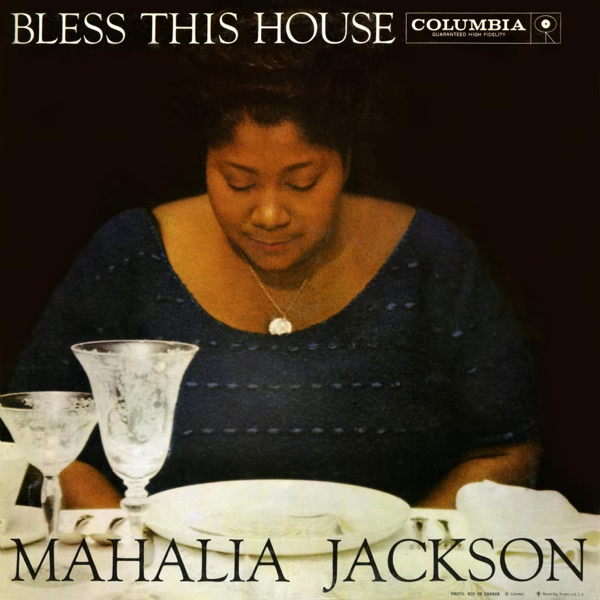
Gospel before it became a commodity. Mahalia Jackson at Newport turning a jazz festival into a revival tent. Blind Willie Johnson in 1927, one man and a bottleneck, sending moans into space on the Voyager Golden Record. Thomas Dorsey, a blues pianist who buried his wife and child, wrote the song MLK asked for before he died.
Clara Ward wrote 'How I Got Over' and watched Mahalia take it around the world. Roberta Martin integrated gospel groups when that cost everything. Kirk Franklin brought hip-hop into the sanctuary. Twelve tracks documenting gospel when it was just the sound of people believing.
Hip-hop in the sanctuary. Critics called it selling out. The congregation grew anyway.
soul · 10 tracks
Love Jones
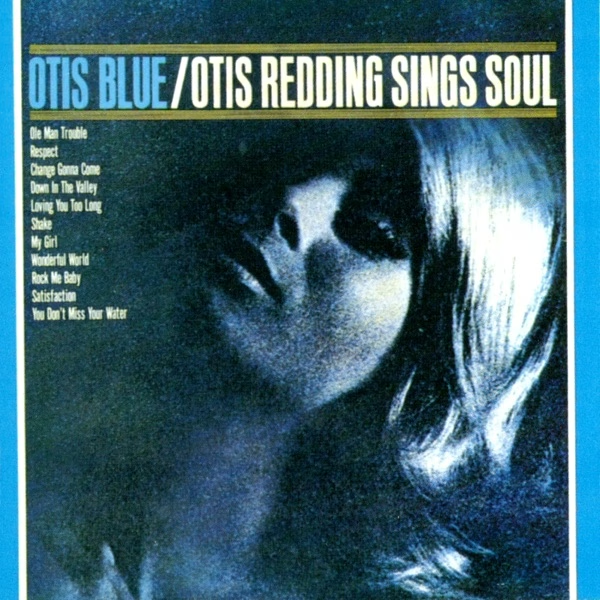
Love as mosaic, not monolith. Sam Cooke's Cupid arrives in the same sequence as Smokey's tracks of tears, because infatuation and heartbreak are rooms in the same house. Al Green makes commitment sound effortless. Aretha declares herself a natural woman. Otis builds from a whisper to a command and back again.
The church-trained voices sing about earthly love, knowing exactly which register they are borrowing from. The same men who sang 'Let's Stay Together' preached on Sunday. The same woman who demanded respect sang about being completed. Every track maps a different coordinate on the same emotion and every one of them is right.
Stevie's harmonica solo is the sound of finally finding love. Pure joy in three minutes.
gospel · 12 tracks
Prayer Meeting
Not the Sunday morning service with the robes and the program. The Wednesday night gathering with the windows open and anybody can testify. Aretha recorded 'Amazing Grace' live at the New Temple Missionary Baptist Church in Los Angeles, two nights in January 1972, her father's congregation, her voice returning to the building that raised her.
The Staple Singers before they marched with King. Sam Cooke before the secular world claimed him. The Blind Boys of Alabama turning a Tom Waits song into testimony. This is gospel in the small room where the music got raw and personal, where the distance between the singer and the song collapsed into something that could only be called church.
1
Aretha Franklin / Amazing Grace (Live at New Temple Missionary Baptist Church) (1972)
Aretha returned to the church that raised her. Recorded live over two nights in ...
Fred Hammond brought contemporary R&B into gospel without apology. 'No Weapon' i...
soul · 10 tracks
I want you
Quiet storm music's permanent identity crisis. Luther Vandross declares that too much is exactly enough while the arrangement says slow down. Teddy Pendergrass invented the bedroom command. Sade watches love from a distance, her saxophone carrying the longing she will not show. The Isleys spend five minutes telling you it is for love while the groove says something else.
Barry White's basso profundo argues that enough is never enough and the orchestra agrees. Alexander O'Neal bargains with loneliness. Ten tracks blurring the line between wanting and loving until the distinction stops mattering. Lust or love. By the end the question itself is the answer.
A man bargaining with loneliness. Alexander makes absence feel physical.
gospel · 14 tracks
The Gospel
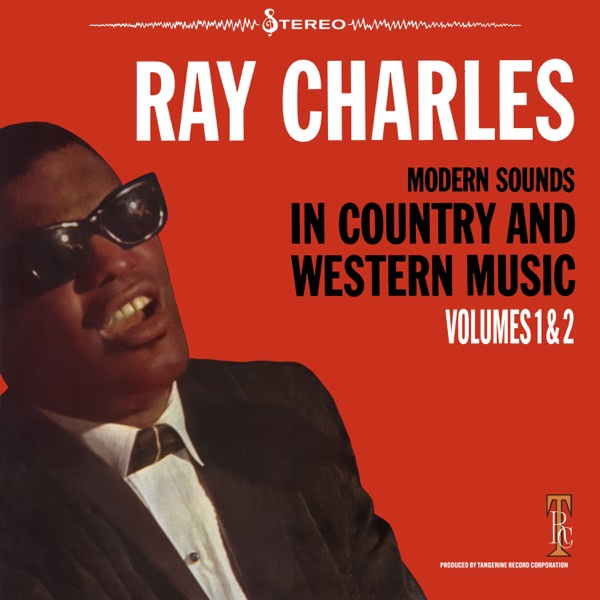
The full argument that this music belongs wherever it is needed. Ray Charles turned a spiritual from the plantation into a swing number in 1959. Cissy Houston carried a children's hymn into a cathedral. The Dixie Hummingbirds had been harmonizing since 1928 when Paul Simon recruited them for a song about mother's love.
Solomon Burke was a bishop who also recorded for Atlantic. Larry Graham played the Lord's Prayer on slap bass. The Impressions turned an amen into a movement anthem. The lineage from church porch to concert hall, from Thomas Dorsey's piano to the Clark Sisters. Gospel is not a genre. It is the root system underneath everything.
Larry Graham, inventor of slap bass, plays the Lord's Prayer on a funk bass. The...
soul · 10 tracks
Obsessing over you
Heartbreak when it still hurts. Not the anger, not the moving on. The raw moment between the end and acceptance when every song is about you and every silence is a reminder. Bill Withers knows she is gone and keeps checking. Etta James sounds like a heart breaking in real time. Otis holds on past dignity and you understand why.
The slower burn hits as hard. The Spinners make waiting dignified. Donny Hathaway turns a piano into an altar. Ann Peebles turns weather into a weapon. These tracks do not offer solutions. They sit with you in it, refusing to move toward the light until you are ready to go yourself.
Rain as a weapon. Ann turns weather into grief. The Hi Records groove makes it danceable and devastating.
covers · 4 tracks
Covers: Post-2005
A song written in 1960 does not stop growing in 1960. It waits for the right voice to find the part of it nobody heard the first time. Mary J. Blige turns Joni Mitchell's piano meditation into a soul-stirring catharsis. Toni Braxton knows exactly how futile it is to make someone love you, and that is what makes it hurt so good.
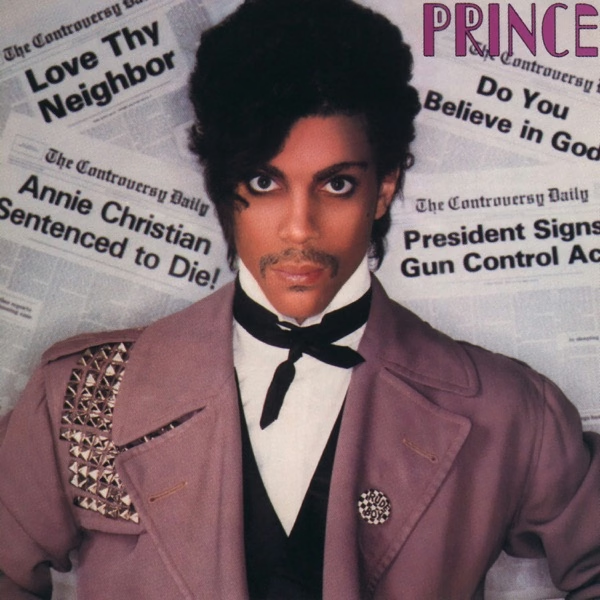
Prince strips the Philly strings away from a Stylistics classic until only the skeleton remains. These recordings are not trying to replace the originals. They are evidence that a well-built song is architecture, not artifact. Every generation renovates with its own tools and its own grief.
Prince strips the Philly strings away and leaves the skeleton. Devastating in its minimalism.
soul · 10 tracks
Grannie's Groove
The one your grandmother put on when she was feeling herself. Before soul got heavy, before it had something to prove. Sam Cooke declares a woman sent him and the world agrees. Ray Charles takes the hallelujah out of church and puts it in a love song. Etta James makes finding love sound like coming home.
Solomon Burke offers a shoulder when love leaves. Otis Redding on his first ballad already vulnerable. Curtis Mayfield trusting enough to let her have her fun. Voices that knew what they were doing, finding joy in the ache and ache in the joy. The generation that taught every singer after them how to do it.
Marvin before the darkness. Pure gratitude for a woman who treats him right.
covers · 8 tracks
Carole King is Flattered
Carole King wrote the songs. These artists made them confessions. Same words, same chords, different architecture in every chest. Amy Winehouse asked 'Will You Love Me Tomorrow' like a woman who already knew the answer. Chaka Khan made the earth move harder than Carole imagined possible, funk as tectonic shift.
Bonnie Raitt found the dark story inside Carole's piano pop. Donny Hathaway turned 'You've Got a Friend' into a covenant, the voice of friendship incarnate. Michael Jackson at sixteen singing about being there before he knew how hard that promise would be. Every singer found a different story in the same lyrics. The song is just the blueprint. The voice is the building.
1
Amy Winehouse / Carole King / The Shirelles (1960) (2011)
Carole King's teenage question, asked by a woman who already knows the answer.
2
Roberta Flack / Carole King / The Shirelles (1960) (1971)
Roberta slows down the teenage question until it becomes a woman's inventory of a relationship.
Teenage Michael singing about being there. He didn't know yet how hard that promise would be to keep.
8
Grand Funk Railroad / Carole King / Little Eva (1962) (1974)
Carole wrote it for her babysitter. Grand Funk made it a hard-rocking #1 with no idea of the backstory.
soul · 10 tracks
Love Before Time
Recorded before 'vintage' was a compliment, back when they were just songs. No nostalgia, no distance. Men and women standing in front of microphones singing about what they wanted, what they lost, what they hoped for. Basement doo-wop harmonies, kitchen-sink gospel, back-porch blues.
The arrangements are simple because the feelings did not need decoration. A bottleneck on a guitar was enough. A piano in a living room was a studio. These are love songs from when a microphone was a rare luxury and singing into one meant the song mattered enough to preserve. The technology was fragile. The emotion was not.
Curtis's first masterpiece. A woman he can't forget, a song he can't improve.
covers · 10 tracks
Covers: Blue-Eyed Soul
The Righteous Brothers invented the term. Dusty Springfield perfected the sound. Joe Cocker proved it could survive the chaos of his own voice. Blue-eyed soul is the story of white singers who understood that soul music was not about skin color but about what happened to a voice when it stopped protecting itself.
Simply Red turned a Curtis Mayfield meditation into a global hit. Michael Bolton found the grit inside a Percy Sledge plea. Adele inherited the whole tradition and made it sound like she invented it. These are the outsiders who found the door anyway, the voices that proved soul is a technology of exposure available to anyone willing to be seen.
Amy sings teenage optimism with the weight of someone who knows it might not be true.
soul · 9 tracks
The new hairdo
A Beyonce song that is not really Beyonce's. A Charles Bradley song written by Black Sabbath. An Amy Winehouse song that was Tammy Wynette's first. Cover songs live in a strange jurisdiction: they belong to nobody and everybody at once. The best ones do not just pay respect to the original. They argue with it.
Charles Bradley found a Black Sabbath riff and turned it into a heartbreak epic he had been waiting his whole life to sing. Aretha took Otis's song and made it a declaration of independence. The cover is not a copy. It is a subpoena. It pulls the original into court and demands it answer for what it really meant.
1
Beyoncé / Glenn Miller (1941) (2008)
Beyonce plays Etta James playing the song Etta made famous. A cover within a cover.
Jill channels Billie's exhaustion through her own gospel-trained instrument. Haunting and beautiful.
9
Buddy Guy / Etta James (1967) (2013)
Buddy's guitar does the crying Etta did with her voice. Two legends speaking the same language.
funk · 10 tracks
Midnight Funk Association
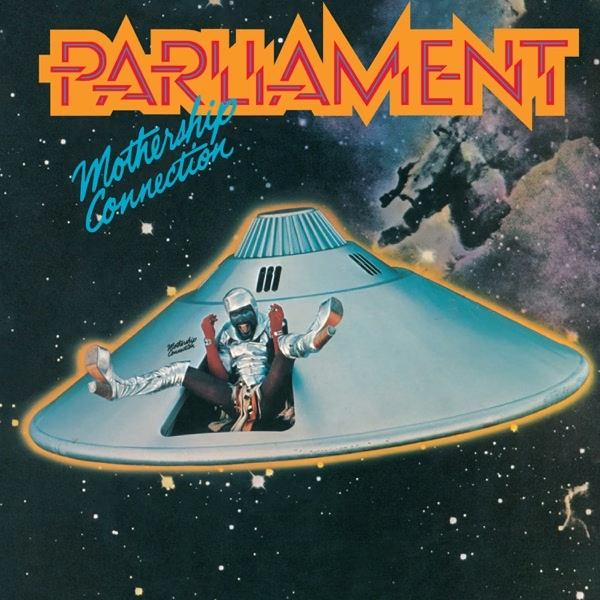
A fellowship of the low end broadcasting on a bass frequency James Brown invented when he told his band to hit the one. Parliament's mothership hovers over the whole thing. Bootsy Collins introduces himself on a stage not big enough for his ego or his bass. The Gap Band drops a bomb and the dancefloor clears.
Kraftwerk's computers learn to count on the same sequence as George Clinton's atomic dog. The B-52's send crustacean distress signals from a beach party in space. E. Mojo is the hybrid zone where P-Funk collides with the machine and the machine learns to strut. The pocket is the only citizenship that matters here.
1
Parliament / Funkentelechy Vs. the Placebo Syndrome (1977)
The mothership lands. Bernie Worrell's synth-bass declares funk a sovereign nation.
2
Bootsy Collins / Stretchin' Out in Bootsy's Rubber Band (1976)
Bootsy stretches the definition of funk. The rubber band holds.
The definitive horn-funk question. Top answers include 'this song.'
soul · 10 tracks
Philadelphia Soul
Before the Philadelphia sound there was a room, a piano, and two writers trying to figure out why Detroit had all the hits. Gamble and Huff built something else. Not just a label but a sonic signature: strings arguing with the rhythm, horns locking like gears, voices singing love as negotiation.
The O'Jays navigating the economics of romance. Harold Melvin led by a drummer who could have preached. Billy Paul slowing Al Green's plea until it sounded like a man who had been through enough. Philadelphia soul was a city's thesis on how love and money and survival all run on the same circuit.
A goodbye so warm it hurts. Blue Lovett's spoken intro cuts deeper than any sung note.
funk · 11 tracks
Flash Your Lights
The dancefloor as a signal system. Every track a different frequency broadcasting from the same source. Talk-boxes, slap bass, electro-boogie, horn stabs, synth-pop all wired into the same circuit where the pocket is the ground and the bassline carries the current. Zapp's talk-box conversation. Rick James taking funk punk and riding it to the bank.
Cameo stripped down to electro and found their biggest groove. The Time dressed in purple swagger with Morris Day checking his reflection between verses. The dancer's body becomes the antenna. Flash your lights means show yourself. Funk as illumination, not decoration. The floor is the transmitter and you are the signal.
A funeral for the mundane, performed by the high priest of Minneapolis funk.
soul · 10 tracks
Soul Voices
No band to hide behind. No production tricks. Just voices that learned to carry the whole weight alone. Sam Cooke's velvet, Aretha's thunder, Donny's vulnerability, Teddy's command. These are the singers who walked to the front of the stage and dared the room to look away.
Bill Withers with nothing but his voice and a truth so plain it sounds like a secret. Etta James letting a microphone capture what heartbreak sounds like when it has no audience. Johnny Taylor proving a voice can be both velvet and blade. Soul voices are the architecture of exposure. When the instruments drop out and the singer keeps going, that is the moment the song becomes a confession.
A love song as confession. Donny's voice trembles with the weight of honesty.
10
Mavis Staples / Be Altitude: Respect Yourself (1972)
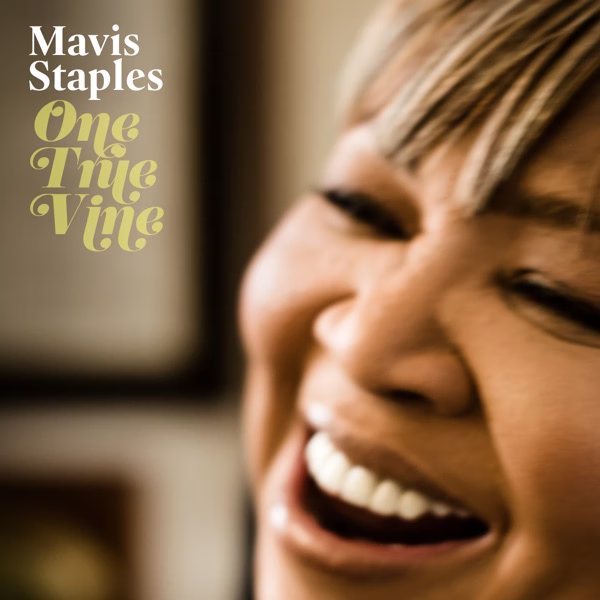
A commandment set to a Muscle Shoals groove. Mavis demands you honor yourself.
funk · 11 tracks
E. Mojo
The hybrid zone where P-Funk's mothership collides with Kraftwerk's computer world and the B-52's intergalactic beach party. Bootsy Collins on rubber band bass stretched past breaking point. Morris Day checking the mirror. Cameo stripping down to electro and finding the biggest groove of their career.
Kraftwerk taught the machines to count. Parliament taught them to strut. The B-52's proved aliens had good taste in guitar solos. This is funk as science fiction, funk as anthropology, funk as proof that the one does not belong to any one country. Minneapolis, Dayton, Brooklyn, Dusseldorf, Athens, Georgia. The pocket is an international language.
Bootsy Collins / Ahh... The Name Is Bootsy, Baby! (1977)
Bootsy introduces himself. The stage is not big enough for his ego or his bass.
10
Kraftwerk / Computer World (1981)
The sound of computers learning to count. Kraftwerk built the machine.
11
The B-52's / The B-52's (1979)
The strangest beach party ever recorded. A guitar solo like crustacean distress signals.
soul · 10 tracks
Want Ads
The personals section of the record store at midnight. Songs about wanting, needing, advertising for love like it was a used car or an apartment with good light. Bobby Womack puts an ad in the paper. Luther Vandross lowers his standards because the loneliness is worse. Any love will do.
Major Harris's falsetto is patience expiring. Lou Rawls warns you will not find this again. Tyrone Davis made the wrong choice and wants it undone. Some are hopeful. Some are desperate. Some are the sound of a person standing at the edge of what they can admit and deciding to admit it anyway. The want ad is the oldest technology of hope.
1
Bobby Womack / The BW Goes C&W / Looking For a Love (1971)
The most literal want ad in soul. Bobby puts an ad in the paper for love.
A man who made the wrong choice and wants it undone. Tyrone's voice is pure regret.
funk · 10 tracks
Let's Work
The songs you put on when you need reminding that people have made it through worse. Not party music. Survival music. James Brown telling you to get up. Stevie Wonder painting the city trying to kill you. Marvin hollering about the bills over the gentlest groove he ever cut.
Bill Withers at the corner when the road gets rough. The Impressions pushing until the road opens up. Sam and Dave promising to be there before you finish asking. These tracks do not pretend everything is fine. They insist you keep moving anyway. Work songs for the soul in an economy where the only benefit is the next downbeat.
The bassline that says 'money' without words. A caution about what work can do to a person.
soul · 10 tracks
Don't Care About You
The other side of the love song. The one you play when you are finally ready to admit you are better off. Not heartbreak. Release. Aretha walks out the door and takes the groove with her. Wilson Pickett hands out an eviction notice disguised as a horn section. The piano intro is a declaration of independence.
Marvin Gaye makes paranoia last seven minutes. Betty Wright warns what happens when you take love for granted. James Carr sounds like a man going under for the last time. Songs about walking out and not looking back. The ones that say what you wish you had said at the time and mean every single word.
The sound of a love that couldn't be saved. Stevie's melody, the Spinners' heartache.
funk · 10 tracks
Foreign Phunk
Funk without the American passport. British bassists who studied Bootsy and took the one to London. A Guyanese collective in South London recorded a song in 1972 that became hip-hop's most sampled secret. Labi Siffre, British and gay and funky as hell, recorded the break that launched Eminem.
Rod Temperton wrote 'Boogie Nights' before he wrote 'Thriller.' A French disco singer taught Luther Vandross how to phrase. Four Brits who play funk like they were born on the bayou with no vocals and all pocket. The pocket is not the property of any geography. It is a frequency you tune into. These tracks found the signal from across the ocean.
A teenager from South London with a voice that sounds like a century of soul. And a funky rhythm section.
10
The New Mastersounds / This Is What We Do (2018)
Four Brits who play funk like they were born on the bayou. No vocals, all pocket.
soul · 10 tracks
Mellow cat
Roberta Flack's piano barely moving over three chords. Al Green's voice floating over a guitar that knows better than to compete with him. Nina Simone's piano hanging like fog over a track that refuses to rush. The power is not in what these musicians play. It is in what they leave out.
Smokey Robinson named a whole genre after the space between the notes. Marvin Gaye observing a world in chaos from a place of stillness. Maze capturing six P.M. as a sound. The quiet is the point. These songs understand that silence is not the absence of music but its architecture. The room between the notes is where the feeling lives.
Marvin whispering in the dark. A prayer so quiet it might just be for him.
funk · 10 tracks
Wants My Funk Uncut
The songs that did not make the radio, the compilations, or the family reunion. The ones you have to dig for. Parliament's mission statement without the radio edit. Bootsy at his most unhinged, bass stretched past breaking point. Larry Graham's bass as the star of its own song, the whole thing riding on low end.
The Meters at their greasiest. Cameo before the electro-pivot. Con Funk Shun named a song after the thing they do. Funk when nobody is watching, no pressure to write a hook, no chorus to repeat. Just the pocket, the stank, and the one. The deep cuts that separate the real ones from the tourists.
Lakeside before Fantastic Voyage made them famous. A raw deep cut that's all the way live.
soul · 10 tracks
Spandex and Glitter
Disco never died. It went underground, came back as a sample, and spent forty years proving the obituary writers wrong. Sylvester's falsetto as liberation, the moment disco became more than music. Nile Rodgers gave Sister Sledge the ultimate family jam and the bassline brings everybody in.
Candi Staton hid the saddest lyrics in the happiest production. Teddy Pendergrass demanded more over a Philly disco groove, his voice commanding armies. The Three Degrees made independence sound danceable. This is not the cartoon version with the mirrored ball. The four-on-the-floor, the strings, the voices that knew they were making music for people who needed to forget for three minutes. Disco as architecture of escape.
Archie Bell's disco advice: don't let love bring you down. The groove won't let it happen.
funk · 10 tracks
Prince B-Sides
The songs Prince kept for himself. Not the singles. Not the videos. The ones buried on album sides or flipped as B-sides to songs you already know. A ballad about a waitress named Dorothy. A funk track with a title that is a sentence. A gospel song about the cross.
'How Come U Don't Call Me' was a B-side so good Alicia Keys built a career move around it. 'She's Always in My Hair' outshines the A-side with a guitar solo that sounds like catharsis. 'The Cross' is the only time he sounded humble. Prince without filters, without the hit-machine, without anybody telling him what a song was.
Prince as international lover over a minimal synth-funk groove. The blueprint.
soul · 10 tracks
Hello heartache
Heartache is not sadness. Sadness settles. Heartache is sharp and specific, a thing you can point to. Every song names the wound: the man who left, the woman who changed, the love that turned out to be hate disguised. Aretha admits the love is not enough, the most vulnerable she ever sounded.
Solomon Burke makes one more chance sound like a dying man's last prayer. The Dells make a ghost beautiful. Donny Hathaway's piano weeps for every child born into struggle. These tracks do not soothe. They describe. Sometimes describing it is enough. The naming of the thing is the beginning of surviving it.
Mavis on a world that doesn't make it easy. Heartache about the state of things.
10
William Bell / The Soul of a Bell (1968)
A man who forgot to love until it was too late. Stax soul at its most regretful.
jazz · 10 tracks
Soul-Jazz Grooves
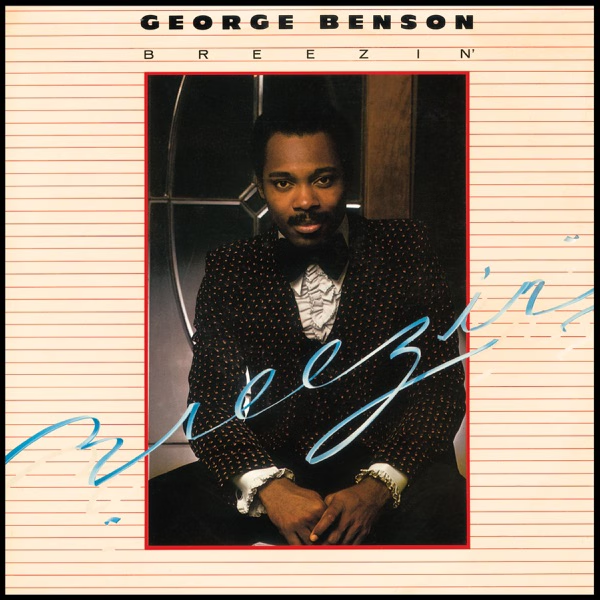
What happens when jazz players fall in love with the downbeat. They stop playing over the rhythm and start playing with it. Herbie Hancock's clavinet bassline rewired funk. George Benson's guitar says everything without saying a word. Roy Ayers's vibes and three chords created eternal relaxation.
Donald Byrd left the jazz club for the dancefloor and never looked back. Bobbi Humphrey turned her flute into a funk weapon. Quincy Jones applied a jazz arranger's precision to a soul groove and produced flawless evidence that the two genres are the same conversation in different dialects. This is what soul sounds like when the musicians know enough theory to know when to ignore it.
Quincy applies a jazz arranger's precision to a soul groove. Flawless.
10
Cannonball Adderley / Mercy, Mercy, Mercy! Live (1966)
A soul-jazz standard born in a fake club. Cannonball's sax is pure blues.
soul · 9 tracks
SunRoof Top
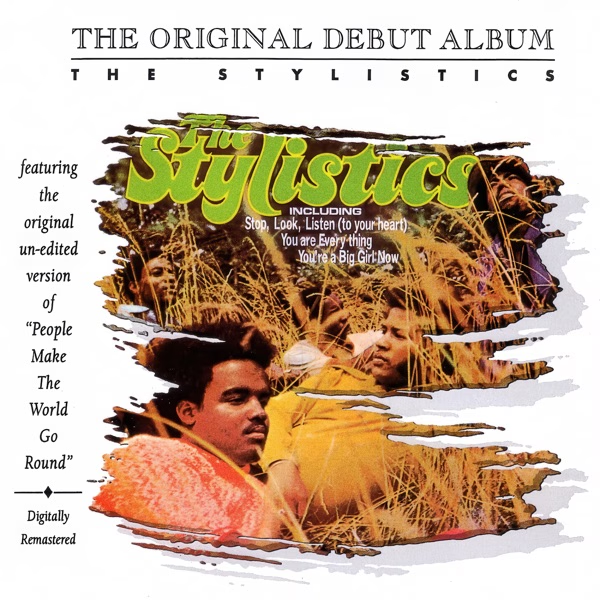
Harmony groups from the era when harmony was enough. No pyrotechnics. No vocal gymnastics. No production tricks. Just voices finding the exact frequency where they disappeared into each other. The Delfonics with horns that announce the singer before he can speak. The Stylistics making breakups sound romantic.
The Manhattans captured peace as a sound, waking up next to someone on the quietest day of the week. Blue Magic solving the mystery of love out loud. The Persuaders walking the thin line between love and hate like a tightrope. This is where vocal group harmony peaked. Not because the singing was flashy, but because it did not need to be. The blend was the point.
Love as a mystery you cannot explain. Blue Magic's harmonies solving a puzzle out loud.
8
The Moments / The Moments (1970)
Love flows both ways or it is a dead end. The Moments turned metaphor into harmony.
9
The Persuaders / Thin Line Between Love and Hate (1971)
A caution about pushing love too far. The Persuaders walk that line like a tightrope.
dance music · 11 tracks
Dance-able
The DJ drops the needle and for three seconds there is nothing but a hi-hat counting you in. Then the bassline walks in and the room changes temperature. Indeep's DJ as savior. Larry Levan's cathedral of reverb. D Train's bassline that never stops walking.
Gospel finding God on the dancefloor. Hi-NRG as a weapon that commands you to move. Italo-disco searching for love over a relentless groove. Jam and Lewis arriving with a drum machine and a bassline negotiating a new sound. These tracks do not ask you to dance. They give you no choice. The hi-hat is the starter pistol and the bass is the finish line.
1
Indeep / Last Night a DJ Saved My Life (1982)
The DJ as savior, the bassline as gospel. Boogie's greatest tribute to itself.
2
The Peech Boys / Don't Make Me Wait (12-inch single) (1982)
Larry Levan's cathedral of reverb. Proto-house that still sounds like the future.
3
D Train / You're the One for Me (1982)
New York boogie that keeps the promise in its title. The bass never stops walking.
4
Central Line / Walking Into Sunshine (single) (1981)
British boogie with a smile. Walking into sunshine is a promise the groove keeps.
5
The Joubert Singers / Stand on the Word (12-inch single) (1982)
Gospel finding God on the dancefloor. The organ doesn't preach, it pulses.
6
First Choice / Delusions (1977)
A woman declares independence over Philly strings. The Shep Pettibone remix made it legendary.
7
Chaz Jankel / Chaz Jankel (1980)
The Blockheads' keyboardist takes the lead. Funk-pop that coasts on charm.
8
Patrick Cowley / Menergy (1981)
Hi-NRG as a weapon. Cowley doesn't ask you to dance, he commands you.
9
Imagination / In the Heat of the Night (1982)
UK boogie about why we go out in the first place. The bass slides tell the story.
10
Change / Miracles (1981)
Luther before Luther. Italo-disco searching for love over a relentless groove.
11
The S.O.S. Band / On the Rise (1983)
Jam and Lewis's arrival. The drum machine and bass are negotiating a new sound.
soul · 11 tracks
Chubby's Chalkboard
The other side of the harmony group story. The ones who brought a groove with the blend. Not just around the mic but locked into a rhythm section, letting the pocket carry the harmonies. The Spinners swinging from tender to triumphant in a single song. The Whispers walking their bassline through the whole club.
The Dells stretched one perfect night into eternity. Tyrone Davis practical and plain about what a woman needs. The Main Ingredient saying hope is closer than you think. Groups that knew a love song needs a beat as much as a melody, because the body listens its own truth before the heart does.
Devotion as understanding, not poetry. Chicago soul practical about what a woman needs.
11
The Escorts / The Escorts (1970)
A man overlooked one too many times. The Escorts harmonized his plea not to be erased.
The Sunday Drop
One song. One story. Every Sunday.
No algorithms. No trending sections. Just a song someone loved and the story behind it. Delivered Sunday morning.
✓Check your email to confirm.
Free. No spam. Unsubscribe anytime.
Image Credits
1,449 artist portraits across 5 genres (Rock, Jazz, Soul, Blues, Folk).
1,363 sourced from Wikipedia (Creative Commons / Public Domain), 50 from
Deezer (promotional artwork).
Funk after midnight. Soul before dawn. Gospel for the morning after. Every playlist starts with a question — and takes you somewhere the radio never would. Come in, stay a while.
Tap a genre to start
Sunday Service
↓
Gospel before it became a commodity. Mahalia Jackson at Newport turning a jazz festival into a revival tent. Blind Willie Johnson in 1927, one man and a bottleneck, sending moans into space on the Voyager Golden Record. Thomas Dorsey, a blues pianist who buried his wife and child, wrote the song MLK asked for before he died.
Clara Ward wrote 'How I Got Over' and watched Mahalia take it around the world. Roberta Martin integrated gospel groups when that cost everything. Kirk Franklin brought hip-hop into the sanctuary. Twelve tracks documenting gospel when it was just the sound of people believing.
Hip-hop in the sanctuary. Critics called it selling out. The congregation grew anyway.
Love Jones
↓
Love as mosaic, not monolith. Sam Cooke's Cupid arrives in the same sequence as Smokey's tracks of tears, because infatuation and heartbreak are rooms in the same house. Al Green makes commitment sound effortless. Aretha declares herself a natural woman. Otis builds from a whisper to a command and back again.
The church-trained voices sing about earthly love, knowing exactly which register they are borrowing from. The same men who sang 'Let's Stay Together' preached on Sunday. The same woman who demanded respect sang about being completed. Every track maps a different coordinate on the same emotion and every one of them is right.
Stevie's harmonica solo is the sound of finally finding love. Pure joy in three minutes.
Prayer Meeting
↓
Not the Sunday morning service with the robes and the program. The Wednesday night gathering with the windows open and anybody can testify. Aretha recorded 'Amazing Grace' live at the New Temple Missionary Baptist Church in Los Angeles, two nights in January 1972, her father's congregation, her voice returning to the building that raised her.
The Staple Singers before they marched with King. Sam Cooke before the secular world claimed him. The Blind Boys of Alabama turning a Tom Waits song into testimony. This is gospel in the small room where the music got raw and personal, where the distance between the singer and the song collapsed into something that could only be called church.
Aretha Franklin / Amazing Grace (Live at New Temple Missionary Baptist Church)
Aretha returned to the church that raised her. Recorded live over two nights in ...
Fred Hammond brought contemporary R&B into gospel without apology. 'No Weapon' i...
I want you
↓
Quiet storm music's permanent identity crisis. Luther Vandross declares that too much is exactly enough while the arrangement says slow down. Teddy Pendergrass invented the bedroom command. Sade watches love from a distance, her saxophone carrying the longing she will not show. The Isleys spend five minutes telling you it is for love while the groove says something else.
Barry White's basso profundo argues that enough is never enough and the orchestra agrees. Alexander O'Neal bargains with loneliness. Ten tracks blurring the line between wanting and loving until the distinction stops mattering. Lust or love. By the end the question itself is the answer.
A man bargaining with loneliness. Alexander makes absence feel physical.
The Gospel
↓
The full argument that this music belongs wherever it is needed. Ray Charles turned a spiritual from the plantation into a swing number in 1959. Cissy Houston carried a children's hymn into a cathedral. The Dixie Hummingbirds had been harmonizing since 1928 when Paul Simon recruited them for a song about mother's love.
Solomon Burke was a bishop who also recorded for Atlantic. Larry Graham played the Lord's Prayer on slap bass. The Impressions turned an amen into a movement anthem. The lineage from church porch to concert hall, from Thomas Dorsey's piano to the Clark Sisters. Gospel is not a genre. It is the root system underneath everything.
Larry Graham, inventor of slap bass, plays the Lord's Prayer on a funk bass. The...
Obsessing over you
↓
Heartbreak when it still hurts. Not the anger, not the moving on. The raw moment between the end and acceptance when every song is about you and every silence is a reminder. Bill Withers knows she is gone and keeps checking. Etta James sounds like a heart breaking in real time. Otis holds on past dignity and you understand why.
The slower burn hits as hard. The Spinners make waiting dignified. Donny Hathaway turns a piano into an altar. Ann Peebles turns weather into a weapon. These tracks do not offer solutions. They sit with you in it, refusing to move toward the light until you are ready to go yourself.
Rain as a weapon. Ann turns weather into grief. The Hi Records groove makes it danceable and devastating.
Covers: Post-2005
↓
A song written in 1960 does not stop growing in 1960. It waits for the right voice to find the part of it nobody heard the first time. Mary J. Blige turns Joni Mitchell's piano meditation into a soul-stirring catharsis. Toni Braxton knows exactly how futile it is to make someone love you, and that is what makes it hurt so good.
Prince strips the Philly strings away from a Stylistics classic until only the skeleton remains. These recordings are not trying to replace the originals. They are evidence that a well-built song is architecture, not artifact. Every generation renovates with its own tools and its own grief.
Prince strips the Philly strings away and leaves the skeleton. Devastating in its minimalism.
Grannie's Groove
↓
The one your grandmother put on when she was feeling herself. Before soul got heavy, before it had something to prove. Sam Cooke declares a woman sent him and the world agrees. Ray Charles takes the hallelujah out of church and puts it in a love song. Etta James makes finding love sound like coming home.
Solomon Burke offers a shoulder when love leaves. Otis Redding on his first ballad already vulnerable. Curtis Mayfield trusting enough to let her have her fun. Voices that knew what they were doing, finding joy in the ache and ache in the joy. The generation that taught every singer after them how to do it.
Marvin before the darkness. Pure gratitude for a woman who treats him right.
Carole King is Flattered
↓
Carole King wrote the songs. These artists made them confessions. Same words, same chords, different architecture in every chest. Amy Winehouse asked 'Will You Love Me Tomorrow' like a woman who already knew the answer. Chaka Khan made the earth move harder than Carole imagined possible, funk as tectonic shift.
Bonnie Raitt found the dark story inside Carole's piano pop. Donny Hathaway turned 'You've Got a Friend' into a covenant, the voice of friendship incarnate. Michael Jackson at sixteen singing about being there before he knew how hard that promise would be. Every singer found a different story in the same lyrics. The song is just the blueprint. The voice is the building.
Teenage Michael singing about being there. He didn't know yet how hard that promise would be to keep.
Grand Funk Railroad / Carole King / Little Eva (1962)
Carole wrote it for her babysitter. Grand Funk made it a hard-rocking #1 with no idea of the backstory.
Love Before Time
↓
Recorded before 'vintage' was a compliment, back when they were just songs. No nostalgia, no distance. Men and women standing in front of microphones singing about what they wanted, what they lost, what they hoped for. Basement doo-wop harmonies, kitchen-sink gospel, back-porch blues.
The arrangements are simple because the feelings did not need decoration. A bottleneck on a guitar was enough. A piano in a living room was a studio. These are love songs from when a microphone was a rare luxury and singing into one meant the song mattered enough to preserve. The technology was fragile. The emotion was not.
Curtis's first masterpiece. A woman he can't forget, a song he can't improve.
Covers: Blue-Eyed Soul
↓
The Righteous Brothers invented the term. Dusty Springfield perfected the sound. Joe Cocker proved it could survive the chaos of his own voice. Blue-eyed soul is the story of white singers who understood that soul music was not about skin color but about what happened to a voice when it stopped protecting itself.
Simply Red turned a Curtis Mayfield meditation into a global hit. Michael Bolton found the grit inside a Percy Sledge plea. Adele inherited the whole tradition and made it sound like she invented it. These are the outsiders who found the door anyway, the voices that proved soul is a technology of exposure available to anyone willing to be seen.
Amy sings teenage optimism with the weight of someone who knows it might not be true.
The new hairdo
↓
A Beyonce song that is not really Beyonce's. A Charles Bradley song written by Black Sabbath. An Amy Winehouse song that was Tammy Wynette's first. Cover songs live in a strange jurisdiction: they belong to nobody and everybody at once. The best ones do not just pay respect to the original. They argue with it.
Charles Bradley found a Black Sabbath riff and turned it into a heartbreak epic he had been waiting his whole life to sing. Aretha took Otis's song and made it a declaration of independence. The cover is not a copy. It is a subpoena. It pulls the original into court and demands it answer for what it really meant.
Beyoncé / Glenn Miller (1941)
Beyonce plays Etta James playing the song Etta made famous. A cover within a cover.
Jill channels Billie's exhaustion through her own gospel-trained instrument. Haunting and beautiful.
Buddy Guy / Etta James (1967)
Buddy's guitar does the crying Etta did with her voice. Two legends speaking the same language.
Midnight Funk Association
↓
A fellowship of the low end broadcasting on a bass frequency James Brown invented when he told his band to hit the one. Parliament's mothership hovers over the whole thing. Bootsy Collins introduces himself on a stage not big enough for his ego or his bass. The Gap Band drops a bomb and the dancefloor clears.
Kraftwerk's computers learn to count on the same sequence as George Clinton's atomic dog. The B-52's send crustacean distress signals from a beach party in space. E. Mojo is the hybrid zone where P-Funk collides with the machine and the machine learns to strut. The pocket is the only citizenship that matters here.
Parliament / Funkentelechy Vs. the Placebo Syndrome
The mothership lands. Bernie Worrell's synth-bass declares funk a sovereign nation.
The definitive horn-funk question. Top answers include 'this song.'
Philadelphia Soul
↓
Before the Philadelphia sound there was a room, a piano, and two writers trying to figure out why Detroit had all the hits. Gamble and Huff built something else. Not just a label but a sonic signature: strings arguing with the rhythm, horns locking like gears, voices singing love as negotiation.
The O'Jays navigating the economics of romance. Harold Melvin led by a drummer who could have preached. Billy Paul slowing Al Green's plea until it sounded like a man who had been through enough. Philadelphia soul was a city's thesis on how love and money and survival all run on the same circuit.
A goodbye so warm it hurts. Blue Lovett's spoken intro cuts deeper than any sung note.
Flash Your Lights
↓
The dancefloor as a signal system. Every track a different frequency broadcasting from the same source. Talk-boxes, slap bass, electro-boogie, horn stabs, synth-pop all wired into the same circuit where the pocket is the ground and the bassline carries the current. Zapp's talk-box conversation. Rick James taking funk punk and riding it to the bank.
Cameo stripped down to electro and found their biggest groove. The Time dressed in purple swagger with Morris Day checking his reflection between verses. The dancer's body becomes the antenna. Flash your lights means show yourself. Funk as illumination, not decoration. The floor is the transmitter and you are the signal.
A funeral for the mundane, performed by the high priest of Minneapolis funk.
Soul Voices
↓
No band to hide behind. No production tricks. Just voices that learned to carry the whole weight alone. Sam Cooke's velvet, Aretha's thunder, Donny's vulnerability, Teddy's command. These are the singers who walked to the front of the stage and dared the room to look away.
Bill Withers with nothing but his voice and a truth so plain it sounds like a secret. Etta James letting a microphone capture what heartbreak sounds like when it has no audience. Johnny Taylor proving a voice can be both velvet and blade. Soul voices are the architecture of exposure. When the instruments drop out and the singer keeps going, that is the moment the song becomes a confession.
A commandment set to a Muscle Shoals groove. Mavis demands you honor yourself.
E. Mojo
↓
The hybrid zone where P-Funk's mothership collides with Kraftwerk's computer world and the B-52's intergalactic beach party. Bootsy Collins on rubber band bass stretched past breaking point. Morris Day checking the mirror. Cameo stripping down to electro and finding the biggest groove of their career.
Kraftwerk taught the machines to count. Parliament taught them to strut. The B-52's proved aliens had good taste in guitar solos. This is funk as science fiction, funk as anthropology, funk as proof that the one does not belong to any one country. Minneapolis, Dayton, Brooklyn, Dusseldorf, Athens, Georgia. The pocket is an international language.
Bootsy introduces himself. The stage is not big enough for his ego or his bass.
Kraftwerk / Computer World
The sound of computers learning to count. Kraftwerk built the machine.
The B-52's / The B-52's
The strangest beach party ever recorded. A guitar solo like crustacean distress signals.
Want Ads
↓
The personals section of the record store at midnight. Songs about wanting, needing, advertising for love like it was a used car or an apartment with good light. Bobby Womack puts an ad in the paper. Luther Vandross lowers his standards because the loneliness is worse. Any love will do.
Major Harris's falsetto is patience expiring. Lou Rawls warns you will not find this again. Tyrone Davis made the wrong choice and wants it undone. Some are hopeful. Some are desperate. Some are the sound of a person standing at the edge of what they can admit and deciding to admit it anyway. The want ad is the oldest technology of hope.
Bobby Womack / The BW Goes C&W / Looking For a Love
The most literal want ad in soul. Bobby puts an ad in the paper for love.
A man who made the wrong choice and wants it undone. Tyrone's voice is pure regret.
Let's Work
↓
The songs you put on when you need reminding that people have made it through worse. Not party music. Survival music. James Brown telling you to get up. Stevie Wonder painting the city trying to kill you. Marvin hollering about the bills over the gentlest groove he ever cut.
Bill Withers at the corner when the road gets rough. The Impressions pushing until the road opens up. Sam and Dave promising to be there before you finish asking. These tracks do not pretend everything is fine. They insist you keep moving anyway. Work songs for the soul in an economy where the only benefit is the next downbeat.
The bassline that says 'money' without words. A caution about what work can do to a person.
Don't Care About You
↓
The other side of the love song. The one you play when you are finally ready to admit you are better off. Not heartbreak. Release. Aretha walks out the door and takes the groove with her. Wilson Pickett hands out an eviction notice disguised as a horn section. The piano intro is a declaration of independence.
Marvin Gaye makes paranoia last seven minutes. Betty Wright warns what happens when you take love for granted. James Carr sounds like a man going under for the last time. Songs about walking out and not looking back. The ones that say what you wish you had said at the time and mean every single word.
The sound of a love that couldn't be saved. Stevie's melody, the Spinners' heartache.
Foreign Phunk
↓
Funk without the American passport. British bassists who studied Bootsy and took the one to London. A Guyanese collective in South London recorded a song in 1972 that became hip-hop's most sampled secret. Labi Siffre, British and gay and funky as hell, recorded the break that launched Eminem.
Rod Temperton wrote 'Boogie Nights' before he wrote 'Thriller.' A French disco singer taught Luther Vandross how to phrase. Four Brits who play funk like they were born on the bayou with no vocals and all pocket. The pocket is not the property of any geography. It is a frequency you tune into. These tracks found the signal from across the ocean.
A teenager from South London with a voice that sounds like a century of soul. And a funky rhythm section.
The New Mastersounds / This Is What We Do
Four Brits who play funk like they were born on the bayou. No vocals, all pocket.
Mellow cat
↓
Roberta Flack's piano barely moving over three chords. Al Green's voice floating over a guitar that knows better than to compete with him. Nina Simone's piano hanging like fog over a track that refuses to rush. The power is not in what these musicians play. It is in what they leave out.
Smokey Robinson named a whole genre after the space between the notes. Marvin Gaye observing a world in chaos from a place of stillness. Maze capturing six P.M. as a sound. The quiet is the point. These songs understand that silence is not the absence of music but its architecture. The room between the notes is where the feeling lives.
Marvin whispering in the dark. A prayer so quiet it might just be for him.
Wants My Funk Uncut
↓
The songs that did not make the radio, the compilations, or the family reunion. The ones you have to dig for. Parliament's mission statement without the radio edit. Bootsy at his most unhinged, bass stretched past breaking point. Larry Graham's bass as the star of its own song, the whole thing riding on low end.
The Meters at their greasiest. Cameo before the electro-pivot. Con Funk Shun named a song after the thing they do. Funk when nobody is watching, no pressure to write a hook, no chorus to repeat. Just the pocket, the stank, and the one. The deep cuts that separate the real ones from the tourists.
Lakeside before Fantastic Voyage made them famous. A raw deep cut that's all the way live.
Spandex and Glitter
↓
Disco never died. It went underground, came back as a sample, and spent forty years proving the obituary writers wrong. Sylvester's falsetto as liberation, the moment disco became more than music. Nile Rodgers gave Sister Sledge the ultimate family jam and the bassline brings everybody in.
Candi Staton hid the saddest lyrics in the happiest production. Teddy Pendergrass demanded more over a Philly disco groove, his voice commanding armies. The Three Degrees made independence sound danceable. This is not the cartoon version with the mirrored ball. The four-on-the-floor, the strings, the voices that knew they were making music for people who needed to forget for three minutes. Disco as architecture of escape.
Archie Bell's disco advice: don't let love bring you down. The groove won't let it happen.
Prince B-Sides
↓
The songs Prince kept for himself. Not the singles. Not the videos. The ones buried on album sides or flipped as B-sides to songs you already know. A ballad about a waitress named Dorothy. A funk track with a title that is a sentence. A gospel song about the cross.
'How Come U Don't Call Me' was a B-side so good Alicia Keys built a career move around it. 'She's Always in My Hair' outshines the A-side with a guitar solo that sounds like catharsis. 'The Cross' is the only time he sounded humble. Prince without filters, without the hit-machine, without anybody telling him what a song was.
Prince as international lover over a minimal synth-funk groove. The blueprint.
Hello heartache
↓
Heartache is not sadness. Sadness settles. Heartache is sharp and specific, a thing you can point to. Every song names the wound: the man who left, the woman who changed, the love that turned out to be hate disguised. Aretha admits the love is not enough, the most vulnerable she ever sounded.
Solomon Burke makes one more chance sound like a dying man's last prayer. The Dells make a ghost beautiful. Donny Hathaway's piano weeps for every child born into struggle. These tracks do not soothe. They describe. Sometimes describing it is enough. The naming of the thing is the beginning of surviving it.
Mavis on a world that doesn't make it easy. Heartache about the state of things.
William Bell / The Soul of a Bell
A man who forgot to love until it was too late. Stax soul at its most regretful.
Soul-Jazz Grooves
↓
What happens when jazz players fall in love with the downbeat. They stop playing over the rhythm and start playing with it. Herbie Hancock's clavinet bassline rewired funk. George Benson's guitar says everything without saying a word. Roy Ayers's vibes and three chords created eternal relaxation.
Donald Byrd left the jazz club for the dancefloor and never looked back. Bobbi Humphrey turned her flute into a funk weapon. Quincy Jones applied a jazz arranger's precision to a soul groove and produced flawless evidence that the two genres are the same conversation in different dialects. This is what soul sounds like when the musicians know enough theory to know when to ignore it.
Quincy applies a jazz arranger's precision to a soul groove. Flawless.
Cannonball Adderley / Mercy, Mercy, Mercy! Live
A soul-jazz standard born in a fake club. Cannonball's sax is pure blues.
SunRoof Top
↓
Harmony groups from the era when harmony was enough. No pyrotechnics. No vocal gymnastics. No production tricks. Just voices finding the exact frequency where they disappeared into each other. The Delfonics with horns that announce the singer before he can speak. The Stylistics making breakups sound romantic.
The Manhattans captured peace as a sound, waking up next to someone on the quietest day of the week. Blue Magic solving the mystery of love out loud. The Persuaders walking the thin line between love and hate like a tightrope. This is where vocal group harmony peaked. Not because the singing was flashy, but because it did not need to be. The blend was the point.
Love as a mystery you cannot explain. Blue Magic's harmonies solving a puzzle out loud.
The Moments / The Moments
Love flows both ways or it is a dead end. The Moments turned metaphor into harmony.
The Persuaders / Thin Line Between Love and Hate
A caution about pushing love too far. The Persuaders walk that line like a tightrope.
Dance-able
↓
The DJ drops the needle and for three seconds there is nothing but a hi-hat counting you in. Then the bassline walks in and the room changes temperature. Indeep's DJ as savior. Larry Levan's cathedral of reverb. D Train's bassline that never stops walking.
Gospel finding God on the dancefloor. Hi-NRG as a weapon that commands you to move. Italo-disco searching for love over a relentless groove. Jam and Lewis arriving with a drum machine and a bassline negotiating a new sound. These tracks do not ask you to dance. They give you no choice. The hi-hat is the starter pistol and the bass is the finish line.
Indeep / Last Night a DJ Saved My Life
The DJ as savior, the bassline as gospel. Boogie's greatest tribute to itself.
The Peech Boys / Don't Make Me Wait (12-inch single)
Larry Levan's cathedral of reverb. Proto-house that still sounds like the future.
D Train / You're the One for Me
New York boogie that keeps the promise in its title. The bass never stops walking.
Central Line / Walking Into Sunshine (single)
British boogie with a smile. Walking into sunshine is a promise the groove keeps.
The Joubert Singers / Stand on the Word (12-inch single)
Gospel finding God on the dancefloor. The organ doesn't preach, it pulses.
First Choice / Delusions
A woman declares independence over Philly strings. The Shep Pettibone remix made it legendary.
Chaz Jankel / Chaz Jankel
The Blockheads' keyboardist takes the lead. Funk-pop that coasts on charm.
Patrick Cowley / Menergy
Hi-NRG as a weapon. Cowley doesn't ask you to dance, he commands you.
Imagination / In the Heat of the Night
UK boogie about why we go out in the first place. The bass slides tell the story.
Change / Miracles
Luther before Luther. Italo-disco searching for love over a relentless groove.
The S.O.S. Band / On the Rise
Jam and Lewis's arrival. The drum machine and bass are negotiating a new sound.
Chubby's Chalkboard
↓
The other side of the harmony group story. The ones who brought a groove with the blend. Not just around the mic but locked into a rhythm section, letting the pocket carry the harmonies. The Spinners swinging from tender to triumphant in a single song. The Whispers walking their bassline through the whole club.
The Dells stretched one perfect night into eternity. Tyrone Davis practical and plain about what a woman needs. The Main Ingredient saying hope is closer than you think. Groups that knew a love song needs a beat as much as a melody, because the body listens its own truth before the heart does.