The Temptations
1960 –
Five Brothers Moving Like One Body

The bass walks in first, then the cymbals, then the voice that sounds like a man who has seen too much to lie about it. The Temptations from Detroit, Michigan, hit the scene in 1960 with a precision that suggested they'd been practicing since birth. They weren't just a vocal group -- they were a conspiracy of five men who understood that harmony could be a political act, a romantic gesture, and a dance move all at once.

0:30
0:30
0:30
0:30

Otis Williams assembled the lineup that would become legend, and the rest of the city had to catch up. Motown had never seen a group with this kind of range, this kind of hunger, this kind of pain in the upper register.

The cost was the lineup itself. David Ruffin, the voice on "My Girl 0:30" -- that rasp, that ache, that impossible tenor -- got fired in 1968 for missing shows and letting the fame unspool him. Eddie Kendricks, the smooth falsetto that gave the group its silk, left in 1971. The Temptations kept going because the institution was bigger than the individuals, but each departure cut something out of the sound. They cycled through members the way Detroit cycled through seasons, and somehow the music never lost its footing. The discipline of the group was the constant, even when the faces changed. The turnover could have destroyed them, but it didn't, because Otis Williams understood that the name mattered more than any one voice.

The Temptations interview 1990

"Papa Was a Rollin' Stone 0:30" is the mothership. That seven-minute epic, produced by Norman Whitfield, tore up the rulebook for what a soul song could be. The wah-wah guitar, the extended instrumental intro, the story of a father whose absence defined the family -- it won three Grammys and proved the Temptations could do more than love songs. But "My Girl" is the pocket, the baseline for every harmony group that came after.

Cloud Nine (1969)

Ruffin's vocal on that track is the dictionary definition of soul singing. They moved from the romantic to the political to the experimental without ever losing the thread that held them together. The range was astonishing: from "Cloud Nine" to "Just My Imagination" to "Ball of Confusion," each song a different room in the same house.

The group is still active, still touring, still carrying the name into the twenty-first century. That longevity says something about the architecture Otis Williams built -- the Temptations didn't just make hits, they made a system that could survive its own genius. Every time a group lines up on a stage and hits a harmony tight enough to cut glass, they're standing in the space the Temptations cleared. The crate holds, and the one keeps calling. Five men from Detroit who turned singing into architecture and made it last.

The Temptations was profiled in the documentary, The Temptations, in 1998.

Image Credits

1,414 artist portraits across 5 genres (Rock, Jazz, Soul, Blues, Folk). 1,363 sourced from Wikipedia (Creative Commons / Public Domain), 50 from Deezer (promotional artwork).

Full attribution breakdown →

The Temptations

1960 –
Five Brothers Moving Like One Body

The bass walks in first, then the cymbals, then the voice that sounds like a man who has seen too much to lie about it. The Temptations from Detroit, Michigan, hit the scene in 1960 with a precision that suggested they'd been practicing since birth. They weren't just a vocal group -- they were a conspiracy of five men who understood that harmony could be a political act, a romantic gesture, and a dance move all at once.

0:30
0:30
0:30
0:30

Otis Williams assembled the lineup that would become legend, and the rest of the city had to catch up. Motown had never seen a group with this kind of range, this kind of hunger, this kind of pain in the upper register.

The cost was the lineup itself. David Ruffin, the voice on "My Girl 0:30" -- that rasp, that ache, that impossible tenor -- got fired in 1968 for missing shows and letting the fame unspool him. Eddie Kendricks, the smooth falsetto that gave the group its silk, left in 1971. The Temptations kept going because the institution was bigger than the individuals, but each departure cut something out of the sound. They cycled through members the way Detroit cycled through seasons, and somehow the music never lost its footing. The discipline of the group was the constant, even when the faces changed. The turnover could have destroyed them, but it didn't, because Otis Williams understood that the name mattered more than any one voice.

The Temptations interview 1990

"Papa Was a Rollin' Stone 0:30" is the mothership. That seven-minute epic, produced by Norman Whitfield, tore up the rulebook for what a soul song could be. The wah-wah guitar, the extended instrumental intro, the story of a father whose absence defined the family -- it won three Grammys and proved the Temptations could do more than love songs. But "My Girl" is the pocket, the baseline for every harmony group that came after.

Cloud Nine (1969)

Ruffin's vocal on that track is the dictionary definition of soul singing. They moved from the romantic to the political to the experimental without ever losing the thread that held them together. The range was astonishing: from "Cloud Nine" to "Just My Imagination" to "Ball of Confusion," each song a different room in the same house.

The group is still active, still touring, still carrying the name into the twenty-first century. That longevity says something about the architecture Otis Williams built -- the Temptations didn't just make hits, they made a system that could survive its own genius. Every time a group lines up on a stage and hits a harmony tight enough to cut glass, they're standing in the space the Temptations cleared. The crate holds, and the one keeps calling. Five men from Detroit who turned singing into architecture and made it last.

The Temptations was profiled in the documentary, The Temptations, in 1998.
Cloud Nine (1969) Cloud Nine (1969)
All Directions (1972) All Directions (1972)
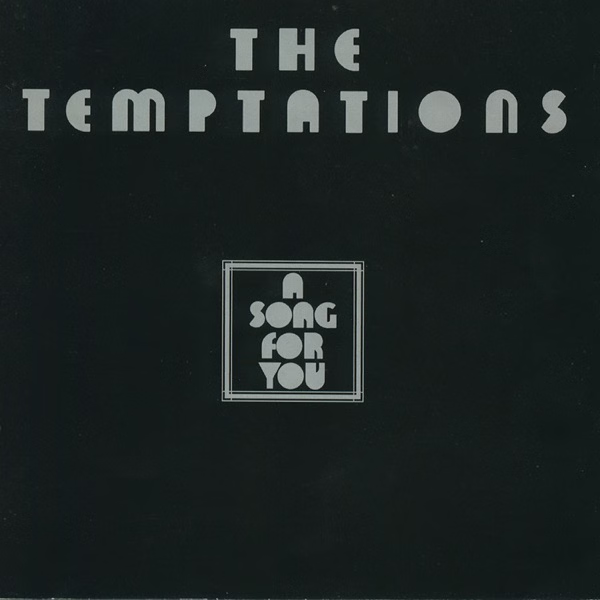
A Song For You (1975) A Song For You (1975)
Meet the Temptations (1964)
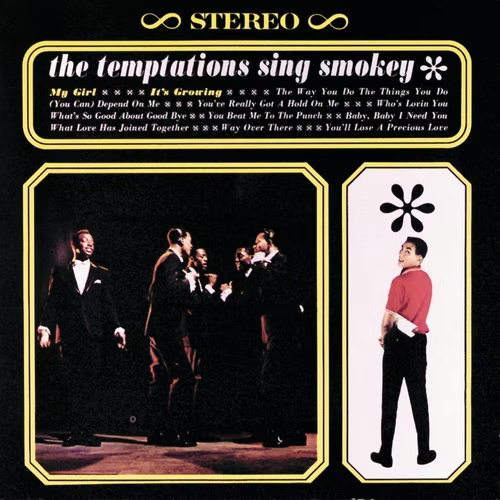
The Temptations Sing Smokey (1965)
Temptin’ Temptations (1965)
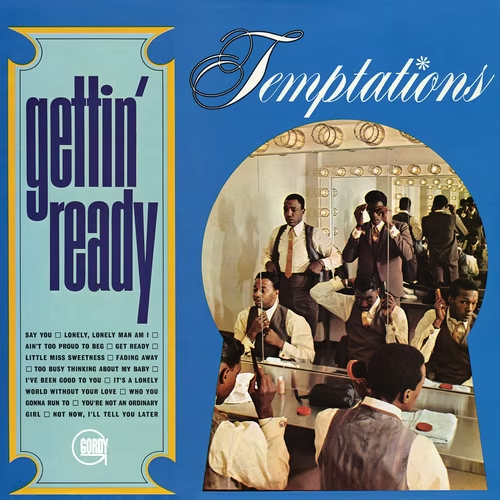
Gettin’ Ready (1966)
With a Lot o’ Soul (1967)
In a Mellow Mood (1967)
Diana Ross & The Supremes Join The Temptations (1968)
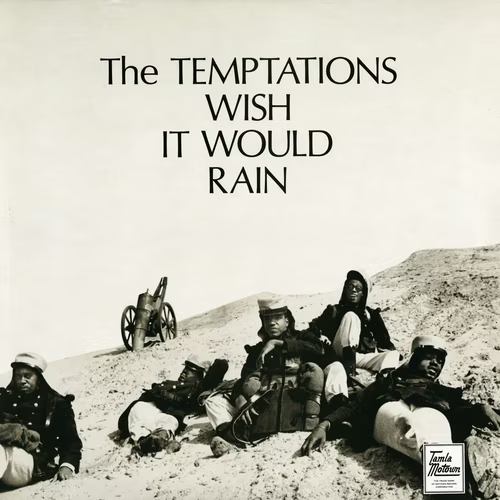
Wish It Would Rain (1968)
Together (1969)
Puzzle People (1969)
Cloud Nine (1969)
Psychedelic Shack (1970)
The Temptations’ Christmas Card (1970)
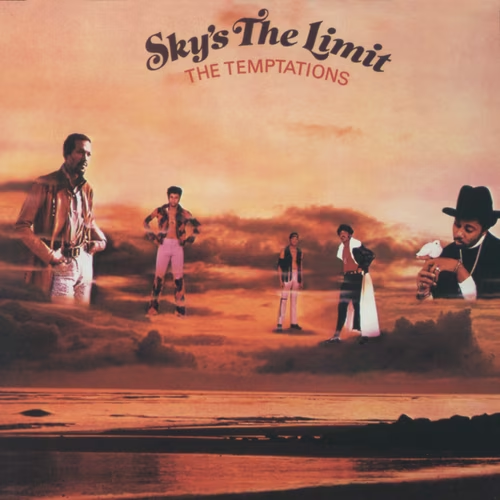
Sky’s the Limit (1971)
All Directions (1972)
A Song For You (1975)
r&bsoulmotown
The Sunday Drop
One song. One story. Every Sunday.

No algorithms. No trending sections. Just a song someone loved and the story behind it. Delivered Sunday morning.

Free. No spam. Unsubscribe anytime.

Image Credits

1,414 artist portraits across 5 genres (Rock, Jazz, Soul, Blues, Folk). 1,363 sourced from Wikipedia (Creative Commons / Public Domain), 50 from Deezer (promotional artwork).

Full attribution breakdown →

0:00
0:00