Roy Ayers
1940 –
Everybody Loves the Sunshine

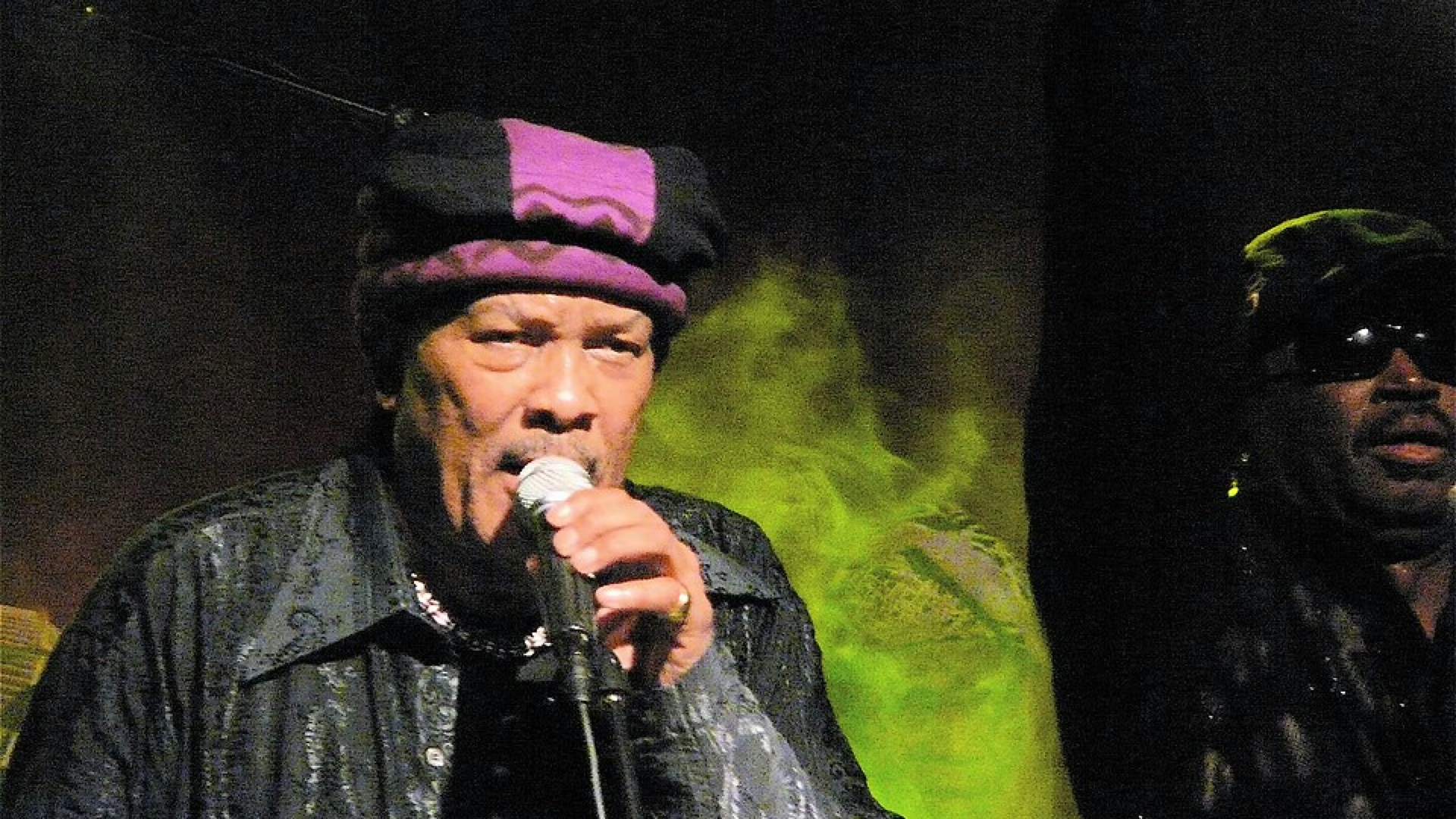
The vibraphone is a ridiculous instrument -- metal bars, spinning disks, a motor that makes the whole thing hum like a kitchen appliance -- and Roy Ayers played it like it was the most natural sound on earth. He made mallets hit metal and somehow conjured warmth, a sunset, a slow ride with the windows down. Every note he struck felt like it had been waiting for permission to ring out.

0:30
0:30
0:30
0:30

The sun didn't set in Los Angeles until Roy Ayers said it could, and even then it lingered. He turned a circus instrument into the voice of calm, and the calm has never left.

Born in Los Angeles in 1940, Ayers grew up in a household where jazz was church music. His father played trombone, and the family was steeped in the Central Avenue scene that had nurtured everyone from Charlie Parker to Dexter Gordon. By the time he was a teenager he had mastered the vibraphone, studying the instrument's lineage from Lionel Hampton to Milt Jackson while developing a touch that belonged to nobody but himself. The 1960s found him working with Herbie Hancock, absorbing the modal experiments that would eventually flower into his own sound. He spent years as a sideman before stepping into the spotlight, learning the pocket from the inside out. The patience paid off in a style that felt effortless because the work had been done in private, long before anyone was watching or taking notes.

Roy Ayers interview 1990

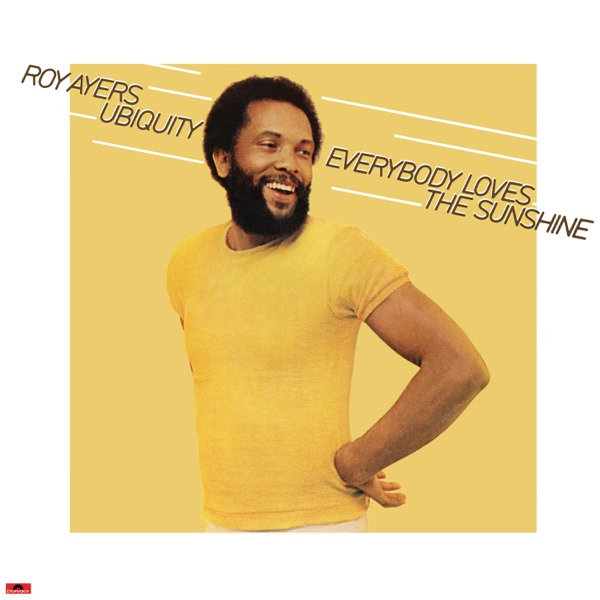
"Everybody Loves the Sunshine 0:30" is the song that refused to age. Recorded in 1976, the track floated into the world on a keyboard riff that sounded like the last thought before sleep, Ayers's vibraphone chiming in lazy circles around a beat that never hurried. The song became a hip-hop cornerstone, sampled by everyone from Mary J. Blige to Common to A Tribe Called Quest, each producer finding a different truth in its warm amber.

West Coast Vibes (1963)

His work with Fela Kuti in the 1970s deepened the pocket, adding Afrobeat polyrhythms to American funk, and the combination proved unstoppable. The track turned a session player into a legend, proving that restraint could hit harder than flash and that warmth was its own kind of power.

Still alive and still vibrating, Roy Ayers built a bridge between the jazz academy and the street corner, between the vibraphone's classical origins and the sampled future. Every producer who digs through the crates for that one perfect loop, every musician who understands that atmosphere is as important as technique, every soul head who knows that "Everybody Loves the Sunshine" is the closest music has come to a perfect afternoon -- they're all standing in the warmth he left for them. The sun is still shining.
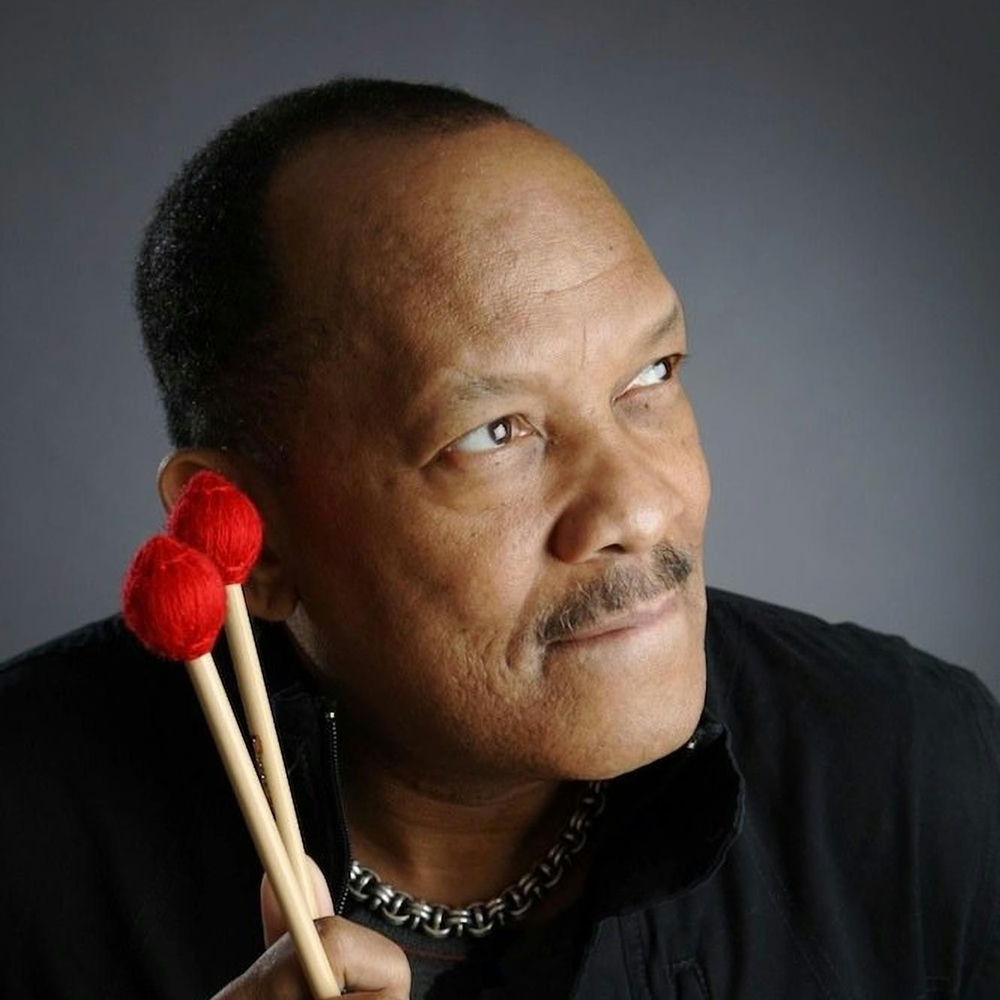
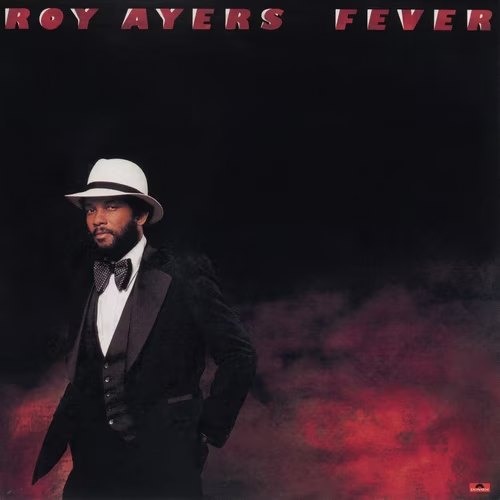
Image Credits

1,414 artist portraits across 5 genres (Rock, Jazz, Soul, Blues, Folk). 1,363 sourced from Wikipedia (Creative Commons / Public Domain), 50 from Deezer (promotional artwork).

Full attribution breakdown →

Roy Ayers

1940 –
Everybody Loves the Sunshine

The vibraphone is a ridiculous instrument -- metal bars, spinning disks, a motor that makes the whole thing hum like a kitchen appliance -- and Roy Ayers played it like it was the most natural sound on earth. He made mallets hit metal and somehow conjured warmth, a sunset, a slow ride with the windows down. Every note he struck felt like it had been waiting for permission to ring out.

0:30
0:30
0:30
0:30

The sun didn't set in Los Angeles until Roy Ayers said it could, and even then it lingered. He turned a circus instrument into the voice of calm, and the calm has never left.

Born in Los Angeles in 1940, Ayers grew up in a household where jazz was church music. His father played trombone, and the family was steeped in the Central Avenue scene that had nurtured everyone from Charlie Parker to Dexter Gordon. By the time he was a teenager he had mastered the vibraphone, studying the instrument's lineage from Lionel Hampton to Milt Jackson while developing a touch that belonged to nobody but himself. The 1960s found him working with Herbie Hancock, absorbing the modal experiments that would eventually flower into his own sound. He spent years as a sideman before stepping into the spotlight, learning the pocket from the inside out. The patience paid off in a style that felt effortless because the work had been done in private, long before anyone was watching or taking notes.

Roy Ayers interview 1990

"Everybody Loves the Sunshine 0:30" is the song that refused to age. Recorded in 1976, the track floated into the world on a keyboard riff that sounded like the last thought before sleep, Ayers's vibraphone chiming in lazy circles around a beat that never hurried. The song became a hip-hop cornerstone, sampled by everyone from Mary J. Blige to Common to A Tribe Called Quest, each producer finding a different truth in its warm amber.

West Coast Vibes (1963)

His work with Fela Kuti in the 1970s deepened the pocket, adding Afrobeat polyrhythms to American funk, and the combination proved unstoppable. The track turned a session player into a legend, proving that restraint could hit harder than flash and that warmth was its own kind of power.

Still alive and still vibrating, Roy Ayers built a bridge between the jazz academy and the street corner, between the vibraphone's classical origins and the sampled future. Every producer who digs through the crates for that one perfect loop, every musician who understands that atmosphere is as important as technique, every soul head who knows that "Everybody Loves the Sunshine" is the closest music has come to a perfect afternoon -- they're all standing in the warmth he left for them. The sun is still shining.
West Coast Vibes (1963) West Coast Vibes (1963)
Jack Wilson Quartet Featuring Roy Ayers (1963) Jack Wilson Quartet Featuring Roy Ayers (1963)
Ramblin' (1966) Ramblin' (1966)
West Coast Vibes (1963)
Jack Wilson Quartet Featuring Roy Ayers (1963)
Ramblin' (1966)
Virgo Vibes (1967)
Stoned Soul Picnic (1968)
Daddy Bug (1969)
Ubiquity (1970)
You Send Me (1978)
Step in to Our Life (1978)
Let's Do It (1978)
No Stranger to Love (1979)
Fever (1979)
Prime Time (1980)
Love Fantasy (1980)
Music of Many Colours (1980)
funkjazzsoulacid jazz
The Sunday Drop
One song. One story. Every Sunday.

No algorithms. No trending sections. Just a song someone loved and the story behind it. Delivered Sunday morning.

Free. No spam. Unsubscribe anytime.

Image Credits

1,414 artist portraits across 5 genres (Rock, Jazz, Soul, Blues, Folk). 1,363 sourced from Wikipedia (Creative Commons / Public Domain), 50 from Deezer (promotional artwork).

Full attribution breakdown →

0:00
0:00