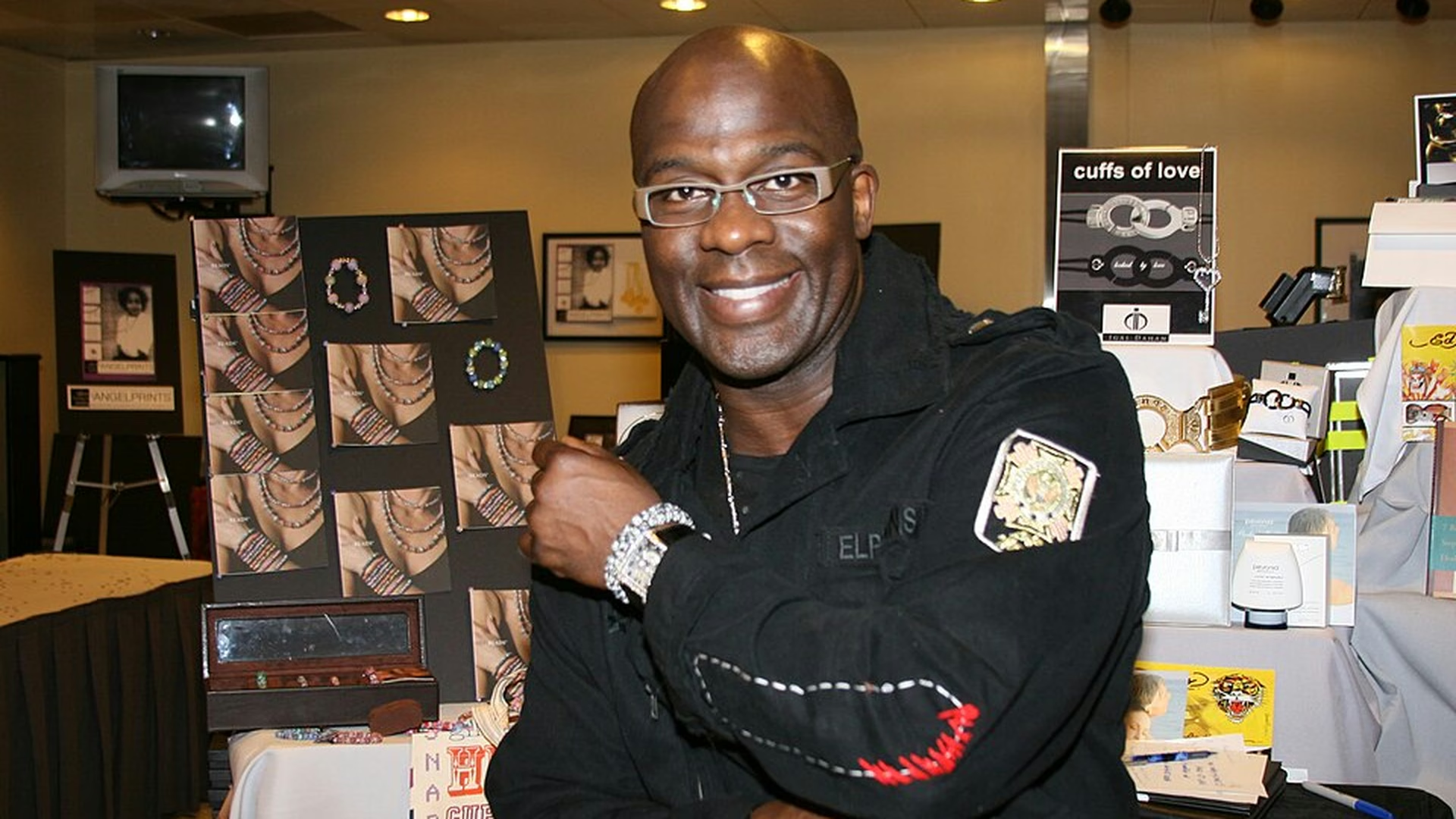
BeBe Winans tracklist updated 08/2026
The Winans were a dynasty before BeBe stepped into a recording booth, and carrying that name meant carrying expectations that would have crushed somebody less sure of his calling. He started singing with CeCe as a duo in the early 1980s, and together they created a sound that bridged the gap between the church and the secular world without apologizing to either side. The cost was the constant negotiation between what the church expected and what the music demanded -- a tightrope walked by every gospel artist who ever wanted to reach beyond the sanctuary walls. He watched Whitney Houston and Aretha Franklin treat him as a peer and still had to fight for the industry to treat gospel with the same respect it gave secular R&B.
The 1994 single "I'll Take You There" did not just cross over; it rebuilt the bridge. Working with a pop sensibility that never surrendered its gospel roots, BeBe and CeCe took the church into the living rooms of people who had never set foot in one. But BeBe's solo work is where the full picture emerges. His collaborations with Whitney Houston and Aretha Franklin showed that his voice was not just a support system but a gravitational force. "Thank You Lord" stands as a track that could only have been made by somebody who understood both the pew and the stage. He wrote songs that functioned as prayers for people who did not know how to pray anymore. That is not a small thing. That is the whole thing. He took the gospel duo format and turned it into a commercial force without ever compromising the message.
BeBe Winans did not change the shape of music by being loud. He changed it by being steady, by showing up, by harmonizing with voices that were already legends and making them sound like they had finally found the partner they had been waiting for. The Winans name is still the standard in gospel family groups, and BeBe is the thread that runs through the whole tapestry. He proved that you do not need to be the loudest person in the room to be the one people remember. Sometimes you just need to be the one who holds the note long enough for everybody else to find their way home. He is still singing, still harmonizing, still showing up. That reliability is its own kind of greatness.
BeBe Winans did not change the shape of music by being loud. He changed it by being steady, by showing up, by harmonizing with voices that were already legends and making them sound like they had finally found the partner they had been waiting for. The Winans name is still the standard in gospel family groups, and BeBe is the thread that runs through the whole tapestry. He proved that you do not need to be the loudest person in the room to be the one people remember. Sometimes you just need to be the one who holds the note long enough for everybody else to find their way home. He is still singing, still harmonizing, still showing up. That reliability is its own kind of greatness.