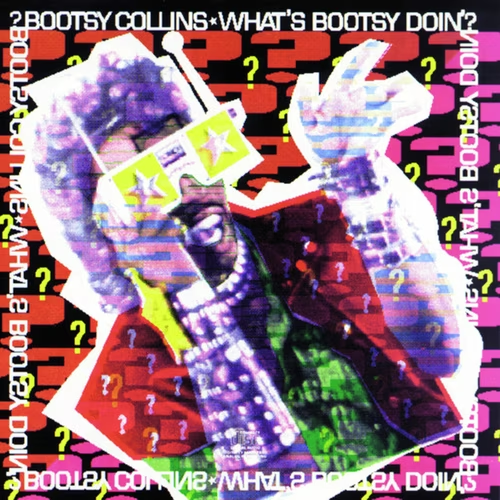
Bootsy Collins tracklist updated 08/2026
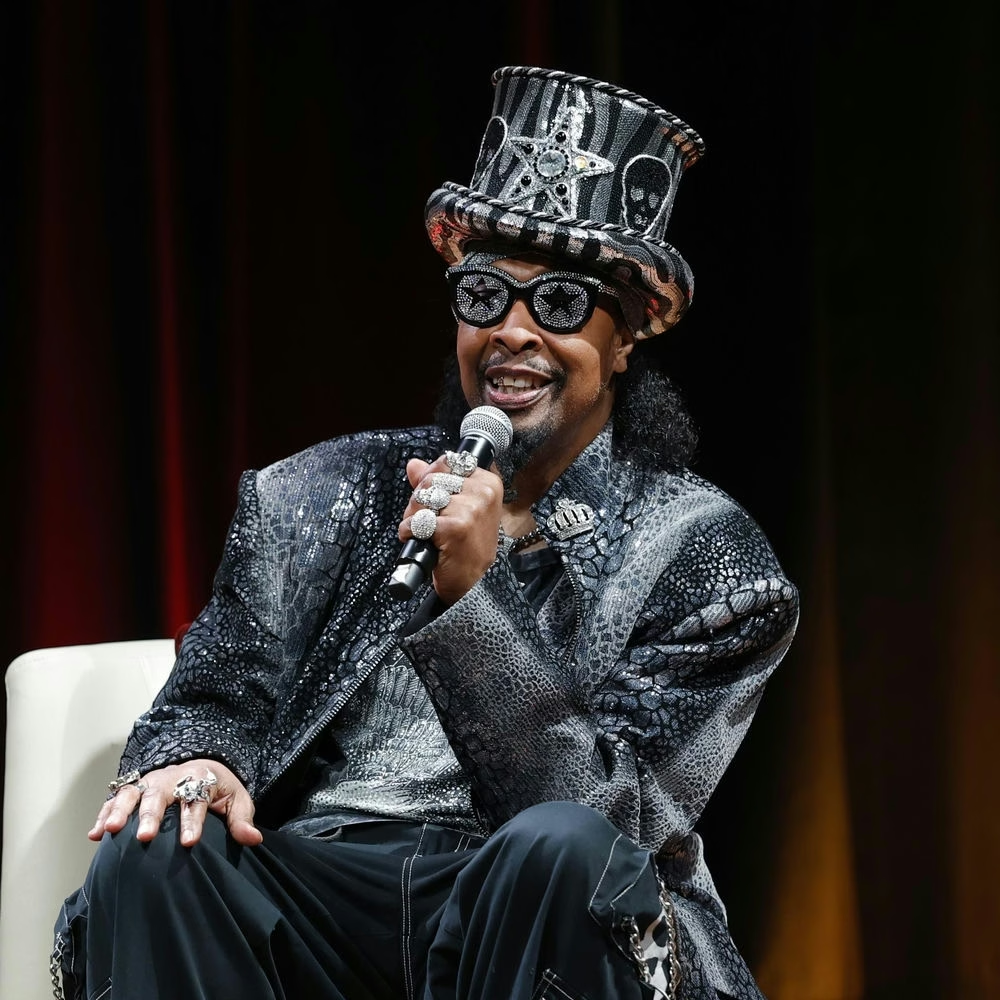
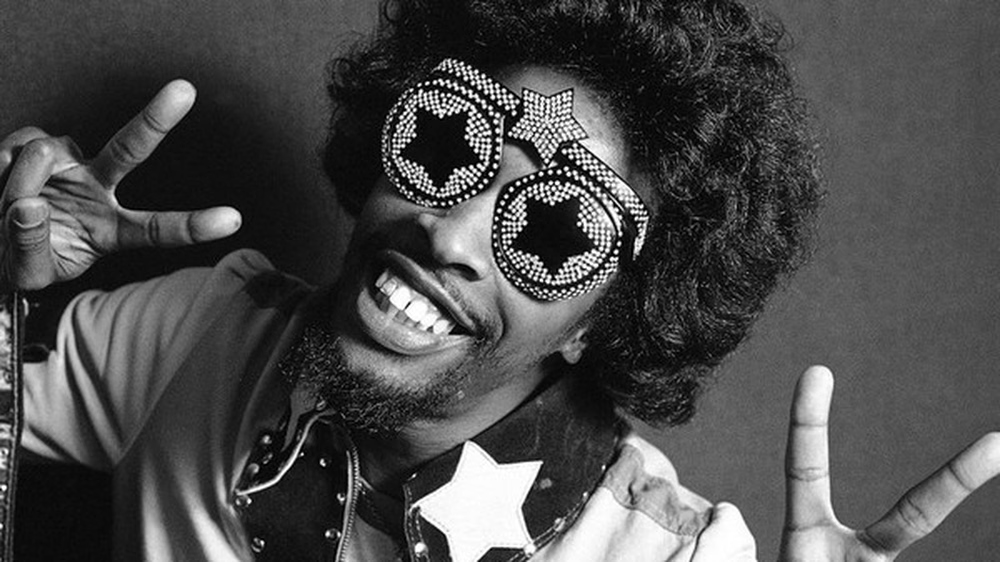
The cost of being Bootsy Collins was being seen as a cartoon. The costumes. The persona. The space-bassist shtick. It was easy for serious critics to miss the genius because the genius was wearing a ridiculous hat. James Brown worked his band hard -- the hardest bandleader in the business, a man who fined musicians for wrong notes. Bootsy learned discipline inside that chaos. He took that discipline to Parliament, where the chaos was deliberate and the discipline made it work. He watched the industry steal from Black artists. He watched the P-Funk empire struggle with money even as it filled arenas. He paid in the currency of being underestimated by people who thought funk was a joke. Funk was not a joke. Funk was a whole army of joy marching through the night.
"I'd Rather Be With You" is Bootsy's masterpiece, a track so warm and slow and deep that it feels like being held. It does not show off. It does not need to. The bassline is not fast. It is sure. It knows exactly where it is going. Bootsy's playing with Parliament and Funkadelic redefined what the bass could do in popular music. It became the lead voice. It became the melody. It became the thing you hummed when you walked down the street. He turned the lowest instrument into the most expressive one. He made it sing. He made it talk. He made it sound like a conversation between the body and the earth, a deep rumble that connected everything.
Bootsy Collins is still alive, still recording, still wearing the spaceman suits, still carrying the funk gospel. He worked with James Brown, with George Clinton, with the Parliament-Funkadelic mothership, and with every generation of musicians who came looking for the secret. He outlasted the critics. He outlasted the trends. He proved that the bass could be a lead instrument, that joy could be radical, and that the groove was always real even if you could not see it. Bootsy did not just play funk. He inhabited it. He was not a musician. He was an ambassador from a planet where everybody dances. We are lucky he landed here.
Bootsy Collins is still alive, still recording, still wearing the spaceman suits, still carrying the funk gospel. He worked with James Brown, with George Clinton, with the Parliament-Funkadelic mothership, and with every generation of musicians who came looking for the secret. He outlasted the critics. He outlasted the trends. He proved that the bass could be a lead instrument, that joy could be radical, and that the groove was always real even if you could not see it. Bootsy did not just play funk. He inhabited it. He was not a musician. He was an ambassador from a planet where everybody dances. We are lucky he landed here.