Teddy Pendergrass
1950 – 2010 (60)
The Teddy Bear

There is a specific kind of masculine soul that emerges only when a voice carries both authority and vulnerability in equal measure. Teddy Pendergrass found that balance before any of his peers did. He was born March 26, 1950 in Philadelphia, the only child of a teenage mother, and he learned to sing in the church before he learned to project in the clubs.

0:30
0:30
0:30
0:30

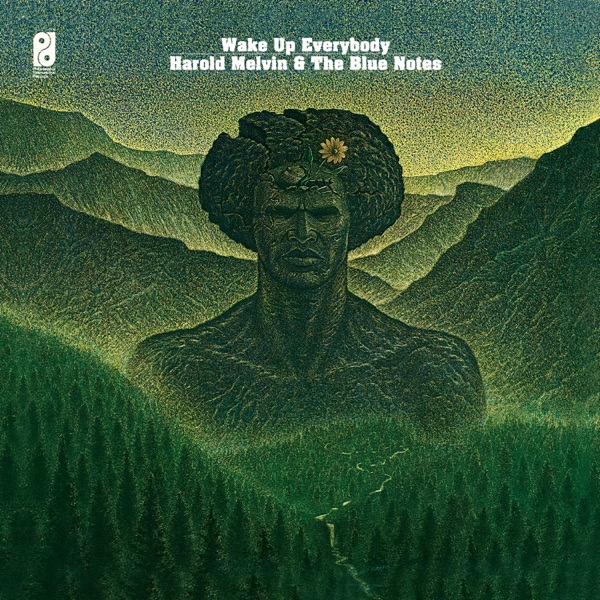
He became a drummer first, then a singer, and by the time he joined Harold Melvin & The Blue Notes in 1970 he had already learned that rhythm was the foundation of everything. He became the voice of a group that was already established and turned it into a vehicle for a sound that had not existed before.

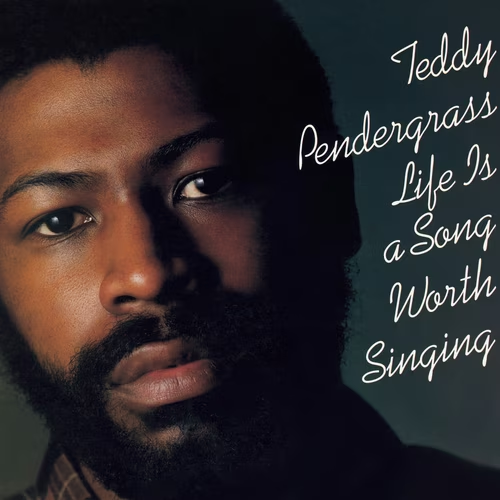
He walked into the Black male sexuality conversation at a time when it was dangerous to have one. The 1970s were the decade when soul music finally admitted that adult desire was a legitimate subject, and Pendergrass was the standard bearer. His voice was a growl that could become a whisper in the space between two breaths. He sang to women and at women and for women, and the women responded by making him the biggest live draw in R&B. The cost was that the industry wanted him to be a caricature of masculine desire when he wanted to be a complete artist. His 1977 self-titled debut and the follow-up "Life Is a Song Worth Singing" showed a range that the "Teddy Bear" persona could not contain. He was a romantic. He was a preacher. He was a lover. He was all of it.

Teddy Pendergrass interview 1990

"Close the Door 0:30" is not a song. It is a slow seduction that happens in real time, a request for privacy that becomes a demand for intimacy. The track is built on a groove that breathes, that waits, that knows exactly when to move forward and when to hold still. Pendergrass understood that the most powerful thing a singer could do was not to shout but to pull back, to make the listener lean in, to create the space that the listener had to fill.

Teddy Pendergrass (1977)

That is what he did on every track. He made you meet him halfway. The live shows became legendary -- women throwing hotel keys on stage, a phenomenon that had no name but became known as "Teddy Bear" pandemonium. He was not just singing. He was creating an experience that his audience participated in creating.

Everything changed on March 18, 1982 when a car accident left him paralyzed from the chest down. The lion could not walk but the voice did not leave him. He returned to recording in 1984 with "Love Language" and proved that the connection was not about physical movement but about vocal presence. He kept singing, kept recording, kept performing from his wheelchair. He died January 13, 2010, but the model he created -- the Black male vocalist as a figure of tenderness and power, strength and vulnerability -- is still the standard. He taught a generation that masculinity in soul music did not have to be aggressive. It could be warm. It could be patient. It could whisper and still be heard across the room.

Teddy Pendergrass was profiled in the documentary, If You Don't Know Me, in 2018.
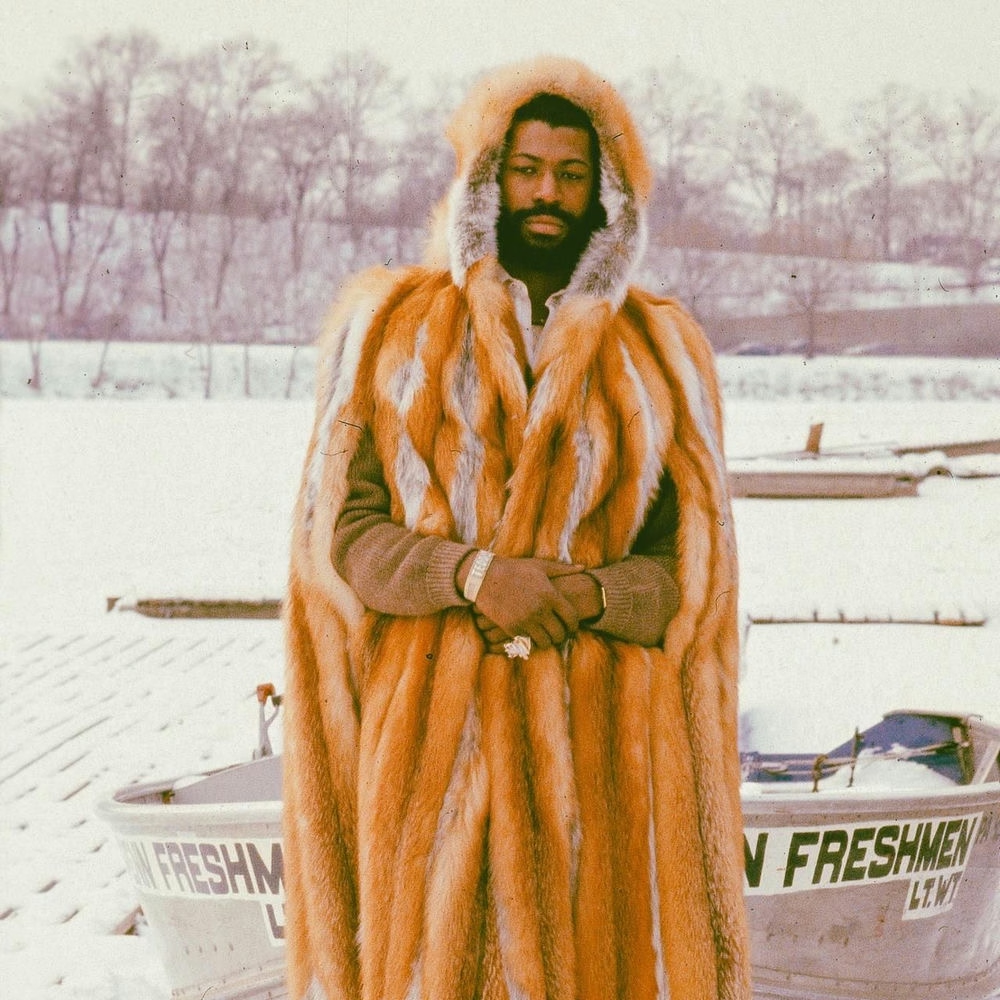
Image Credits

1,414 artist portraits across 5 genres (Rock, Jazz, Soul, Blues, Folk). 1,363 sourced from Wikipedia (Creative Commons / Public Domain), 50 from Deezer (promotional artwork).

Full attribution breakdown →

Teddy Pendergrass

1950 – 2010 (60)
The Teddy Bear

There is a specific kind of masculine soul that emerges only when a voice carries both authority and vulnerability in equal measure. Teddy Pendergrass found that balance before any of his peers did. He was born March 26, 1950 in Philadelphia, the only child of a teenage mother, and he learned to sing in the church before he learned to project in the clubs.

0:30
0:30
0:30
0:30

He became a drummer first, then a singer, and by the time he joined Harold Melvin & The Blue Notes in 1970 he had already learned that rhythm was the foundation of everything. He became the voice of a group that was already established and turned it into a vehicle for a sound that had not existed before.

He walked into the Black male sexuality conversation at a time when it was dangerous to have one. The 1970s were the decade when soul music finally admitted that adult desire was a legitimate subject, and Pendergrass was the standard bearer. His voice was a growl that could become a whisper in the space between two breaths. He sang to women and at women and for women, and the women responded by making him the biggest live draw in R&B. The cost was that the industry wanted him to be a caricature of masculine desire when he wanted to be a complete artist. His 1977 self-titled debut and the follow-up "Life Is a Song Worth Singing" showed a range that the "Teddy Bear" persona could not contain. He was a romantic. He was a preacher. He was a lover. He was all of it.

Teddy Pendergrass interview 1990

"Close the Door 0:30" is not a song. It is a slow seduction that happens in real time, a request for privacy that becomes a demand for intimacy. The track is built on a groove that breathes, that waits, that knows exactly when to move forward and when to hold still. Pendergrass understood that the most powerful thing a singer could do was not to shout but to pull back, to make the listener lean in, to create the space that the listener had to fill.

Teddy Pendergrass (1977)

That is what he did on every track. He made you meet him halfway. The live shows became legendary -- women throwing hotel keys on stage, a phenomenon that had no name but became known as "Teddy Bear" pandemonium. He was not just singing. He was creating an experience that his audience participated in creating.

Everything changed on March 18, 1982 when a car accident left him paralyzed from the chest down. The lion could not walk but the voice did not leave him. He returned to recording in 1984 with "Love Language" and proved that the connection was not about physical movement but about vocal presence. He kept singing, kept recording, kept performing from his wheelchair. He died January 13, 2010, but the model he created -- the Black male vocalist as a figure of tenderness and power, strength and vulnerability -- is still the standard. He taught a generation that masculinity in soul music did not have to be aggressive. It could be warm. It could be patient. It could whisper and still be heard across the room.

Teddy Pendergrass was profiled in the documentary, If You Don't Know Me, in 2018.
Teddy Pendergrass (1977) Teddy Pendergrass (1977)
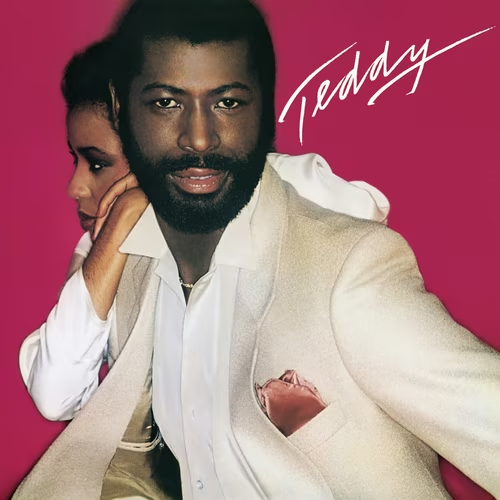
Teddy (1979) Teddy (1979)
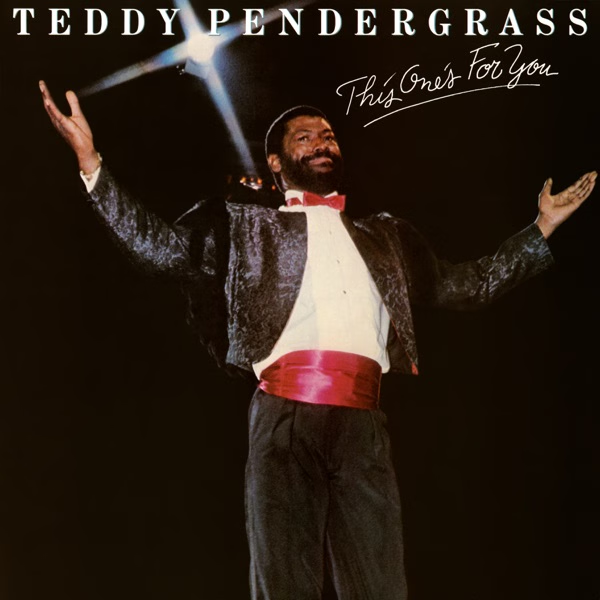
This One’s for You (1982) This One’s for You (1982)
Harold Melvin And The Blue Notes Wake Up Everybody Feat Teddy Pendergrass (1975) Harold Melvin And The Blue Notes Wake Up Everybody Feat Teddy Pendergrass (1975)
Harold Melvin Wake Up Everybody Feat Teddy Pendergrass (1975) Harold Melvin Wake Up Everybody Feat Teddy Pendergrass (1975)
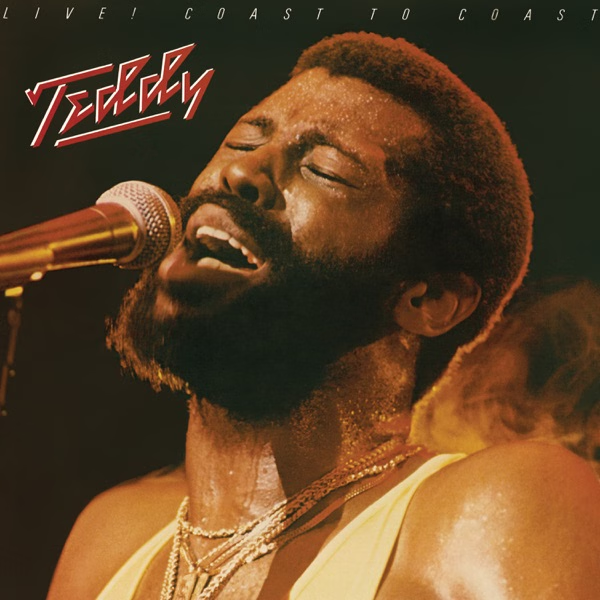
Live Coast To Coast (1979) Live Coast To Coast (1979)
To Be True (1975)
Teddy Pendergrass (1977)
Life Is a Song Worth Singing (1978)
Teddy (1979)
TP (1980)
It’s Time for Love (1981)
This One’s for You (1982)
Heaven Only Knows (1983)
Love Language (1984)
Workin' It Back (1985)
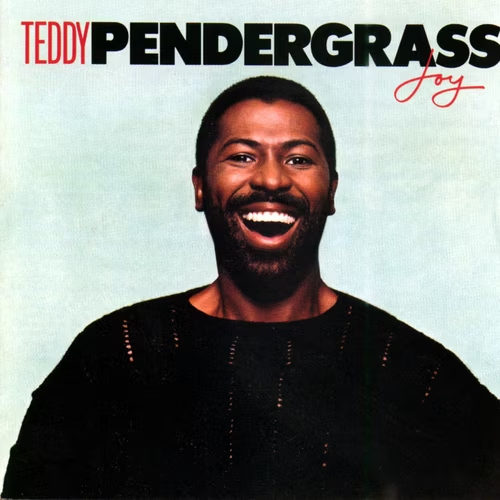
Joy (1988)
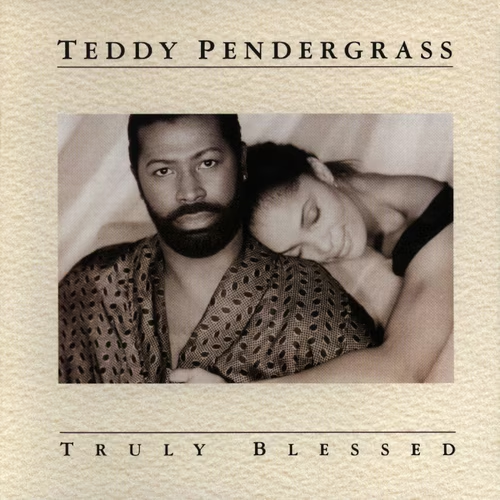
Truly Blessed (1990)
A Little More Magic (1993)
You and I (1997)
Greatest Hits [The Right Stuff] (1998)
Harold Melvin And The Blue Notes Wake Up Everybody Feat Teddy Pendergrass (1975)
Harold Melvin Wake Up Everybody Feat Teddy Pendergrass (1975)
Live Coast To Coast (1979)
r&bsoulquiet storm
The Sunday Drop
One song. One story. Every Sunday.

No algorithms. No trending sections. Just a song someone loved and the story behind it. Delivered Sunday morning.

Free. No spam. Unsubscribe anytime.

Image Credits

1,414 artist portraits across 5 genres (Rock, Jazz, Soul, Blues, Folk). 1,363 sourced from Wikipedia (Creative Commons / Public Domain), 50 from Deezer (promotional artwork).

Full attribution breakdown →

0:00
0:00