Mavis Staples tracklist updated 08/2026
The cost of that voice was the road. Mavis grew up in Chicago but traveled the South with her father Roebuck "Pops" Staples and her siblings. They sang in churches and small halls, often in segregated spaces where the audience could not sit where they pleased and the performers could not eat where the audience ate. The Staple Singers began recording gospel in the 1950s but shifted into message music when Pops saw the civil rights movement rising. "Freedom Highway" became an anthem for the marches. They became the soundtrack of the struggle, singing at rallies and in churches where the movement was organized by people risking their lives. The money was never the point for Pops. The message was the point. He taught Mavis that a song could change things more reliably than a speech could.
"I'll Take You There" is the peak -- a single that rides a bassline so fat it could carry a whole movement by itself. Mavis's voice calls out like a promise that deliverance is coming. The song is gospel, soul, and funk blended into a single statement of hope and solidarity that still hits on every dance floor and every protest march. She kept recording through the 1970s and into the 1980s as the family group slowed down, then found a late-career resurgence working with Prince in the 1990s and Jeff Tweedy in the 2000s. She won a Grammy for the Tweedy-produced album "You Are Not Alone." She got inducted into the Rock and Roll Hall of Fame with the Staple Singers in 1999. She never stopped singing. She never stopped believing the song could change things, even when the world seemed determined to prove otherwise.
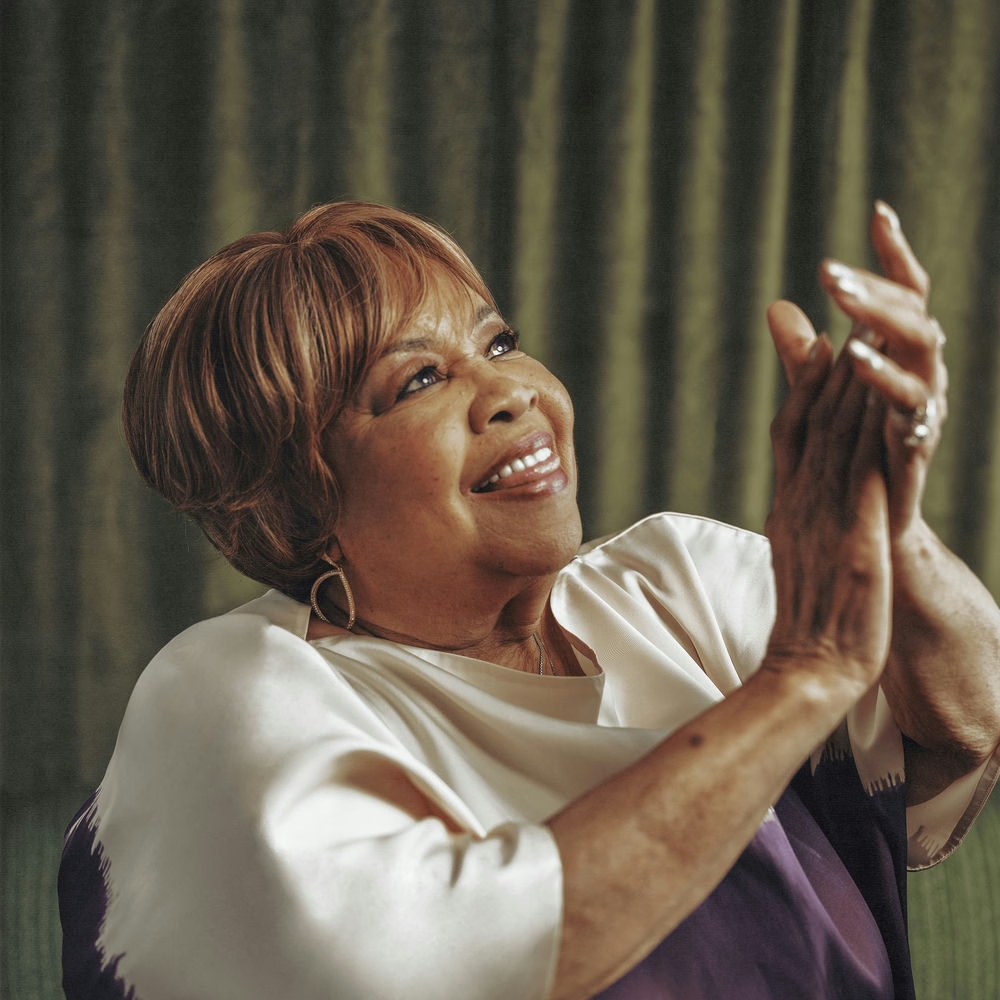
Mavis Staples cost herself the solo spotlight for decades, staying part of the family group until Pops died in 2000. She is still alive and still carrying the message on every stage she steps onto, her voice somehow deeper and richer with age. Every singer who has ever tried to blend the sacred and the political, every artist who has used their voice to say something beyond romance and heartbreak, is walking in the path Mavis helped pave with her father and her siblings. The mothership is a gospel choir. She is still the lead vocalist. The song is still playing.
Mavis Staples cost herself the solo spotlight for decades, staying part of the family group until Pops died in 2000. She is still alive and still carrying the message on every stage she steps onto, her voice somehow deeper and richer with age. Every singer who has ever tried to blend the sacred and the political, every artist who has used their voice to say something beyond romance and heartbreak, is walking in the path Mavis helped pave with her father and her siblings. The mothership is a gospel choir. She is still the lead vocalist. The song is still playing.