Chaka Khan
1953 –
Every Woman

She stepped to the microphone and the room stopped being a room. It became a vessel. Chaka Khan was born in Chicago in 1953, and she came up through the Black church and the Black club circuit and every space where a Black woman had to be twice as loud to be heard once.

0:30
0:30
0:30
0:30

She did not learn to sing. She learned to project survival. By the time she joined Rufus in the early 1970s, she had already done enough living to fill three lifetimes. Her voice did not enter a song. It attacked the song, wrestled it to the ground, and came out holding something that had not been there before. She did not improve songs. She transformed them.

Rufus was a band that needed a singer. They found one who would redefine what a singer could be. The industry tried to contain her -- make her a diva, a sex symbol, a product. She fought every label. She left Rufus for a solo career that included work with Prince, with Quincy Jones, with the best musicians of her generation. She battled the music business's refusal to let Black women evolve beyond the image that first made them famous. She paid in the currency of being called difficult when what she was was uncompromising. "Ain't Nobody 0:30" became the defining record of her career with Rufus, a song that did not just showcase her voice. It proved that her voice was an instrument unlike any other -- a horn, a string section, a drum, all at once.

Chaka Khan interview 1990

What Chaka Khan's music does is remind you that the voice is the original instrument. Before guitars, before pianos, before any technology, there was the human throat. Chaka treated her throat like a miracle. She could scream and whisper in the same phrase.

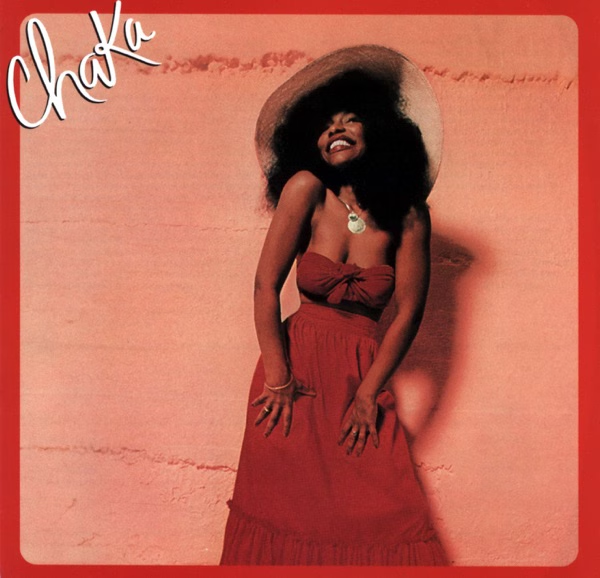
Chaka (1978)

She could sing a note that felt like it was tearing something open and then pull it back at the last second. She influenced every R&B singer who came after her, the whole lineage of women who understood that the voice was not just for melody. It was for truth-telling. Her work with Prince in the 1980s and with Quincy Jones proved that she could move across genres without ever losing her center. She was not a genre. She was a force.

She is still alive, still recording, still fighting. Chaka Khan never became comfortable because comfort was never the goal. She became legendary. The legend is deserved. She took the tradition of the Black female vocalist and she added something that only she could add: a wildness that could not be tamed, a freedom that could not be restricted. She did not just sing the song. She became the song. And the song became a weapon and a prayer and a party all at once. That is what Chaka Khan was built to do. She did it. She is still doing it. Every note she sings carries the weight of everything she has survived. That weight is what makes her voice unstoppable.
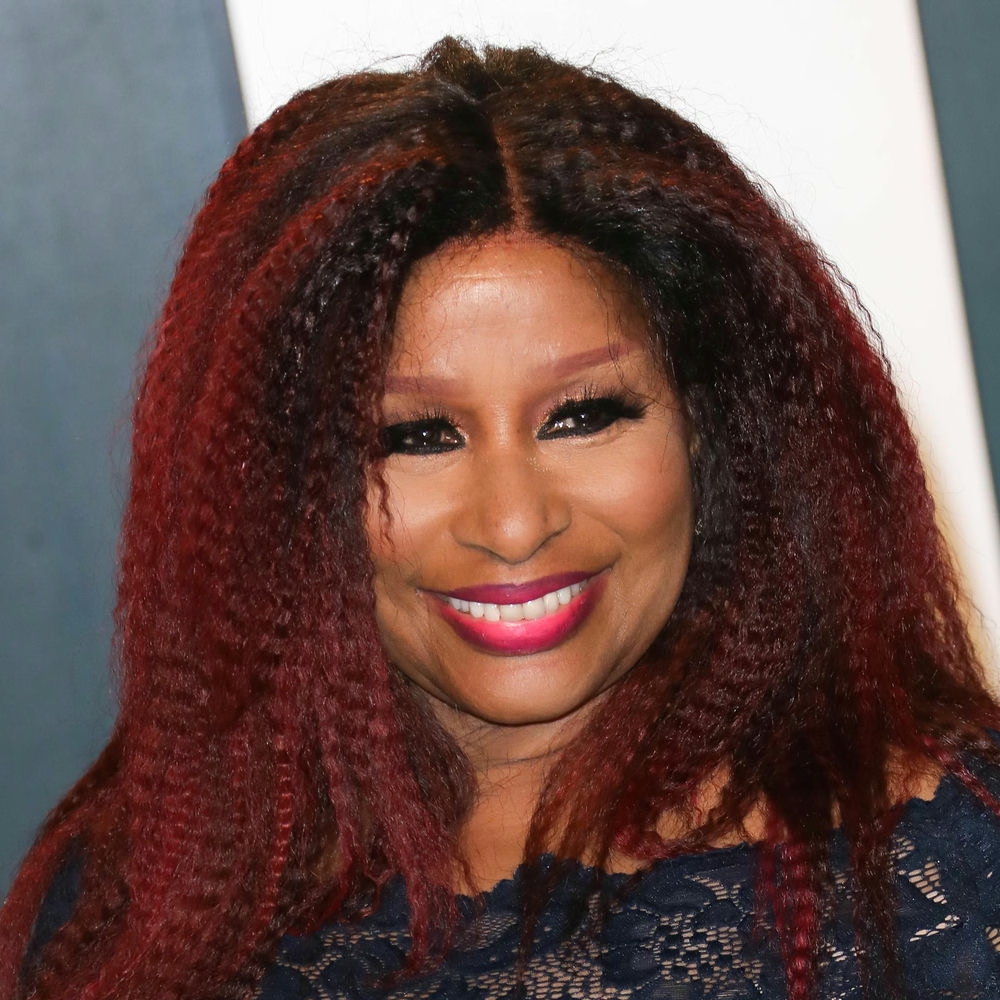
Image Credits

1,414 artist portraits across 5 genres (Rock, Jazz, Soul, Blues, Folk). 1,363 sourced from Wikipedia (Creative Commons / Public Domain), 50 from Deezer (promotional artwork).

Full attribution breakdown →

Chaka Khan

1953 –
Every Woman

She stepped to the microphone and the room stopped being a room. It became a vessel. Chaka Khan was born in Chicago in 1953, and she came up through the Black church and the Black club circuit and every space where a Black woman had to be twice as loud to be heard once.

0:30
0:30
0:30
0:30

She did not learn to sing. She learned to project survival. By the time she joined Rufus in the early 1970s, she had already done enough living to fill three lifetimes. Her voice did not enter a song. It attacked the song, wrestled it to the ground, and came out holding something that had not been there before. She did not improve songs. She transformed them.

Rufus was a band that needed a singer. They found one who would redefine what a singer could be. The industry tried to contain her -- make her a diva, a sex symbol, a product. She fought every label. She left Rufus for a solo career that included work with Prince, with Quincy Jones, with the best musicians of her generation. She battled the music business's refusal to let Black women evolve beyond the image that first made them famous. She paid in the currency of being called difficult when what she was was uncompromising. "Ain't Nobody 0:30" became the defining record of her career with Rufus, a song that did not just showcase her voice. It proved that her voice was an instrument unlike any other -- a horn, a string section, a drum, all at once.

Chaka Khan interview 1990

What Chaka Khan's music does is remind you that the voice is the original instrument. Before guitars, before pianos, before any technology, there was the human throat. Chaka treated her throat like a miracle. She could scream and whisper in the same phrase.

Chaka (1978)

She could sing a note that felt like it was tearing something open and then pull it back at the last second. She influenced every R&B singer who came after her, the whole lineage of women who understood that the voice was not just for melody. It was for truth-telling. Her work with Prince in the 1980s and with Quincy Jones proved that she could move across genres without ever losing her center. She was not a genre. She was a force.

She is still alive, still recording, still fighting. Chaka Khan never became comfortable because comfort was never the goal. She became legendary. The legend is deserved. She took the tradition of the Black female vocalist and she added something that only she could add: a wildness that could not be tamed, a freedom that could not be restricted. She did not just sing the song. She became the song. And the song became a weapon and a prayer and a party all at once. That is what Chaka Khan was built to do. She did it. She is still doing it. Every note she sings carries the weight of everything she has survived. That weight is what makes her voice unstoppable.
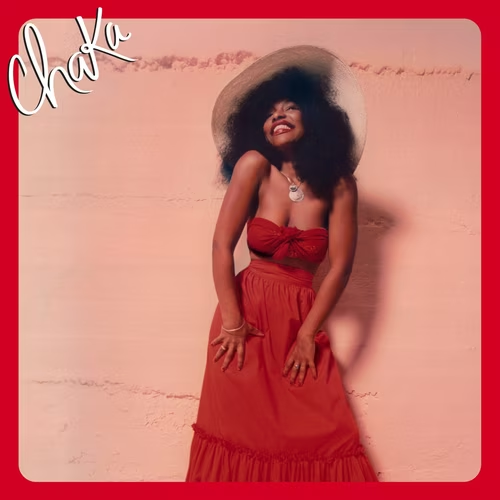
Chaka (1978) Chaka (1978)
Naughty (1980) Naughty (1980)
I Feel for You (1984) I Feel for You (1984)
Rags to Rufus (1974)
Rufusized (1974)
Rufus featuring Chaka Khan (1975)
Ask Rufus (1977)
Chaka (1978)
Street Player (1978)
Masterjam (1979)
Naughty (1980)
Camouflage (1981)
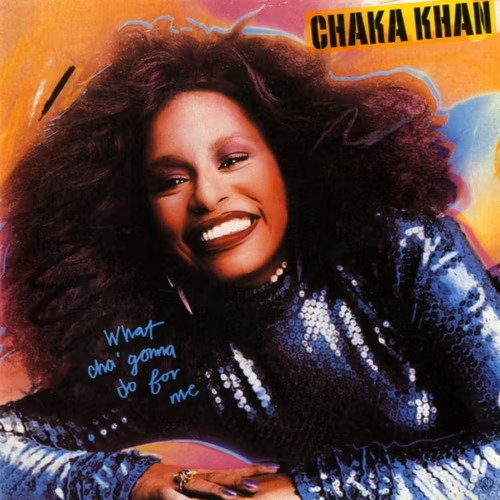
What Cha’ Gonna Do for Me (1981)
Chaka Khan (1982)
I Feel for You (1984)
Destiny (1986)
C.K. (1988)
Life Is a Dance: The Remix Project (1989)
funksoulr&bpop
The Sunday Drop
One song. One story. Every Sunday.

No algorithms. No trending sections. Just a song someone loved and the story behind it. Delivered Sunday morning.

Free. No spam. Unsubscribe anytime.

Image Credits

1,414 artist portraits across 5 genres (Rock, Jazz, Soul, Blues, Folk). 1,363 sourced from Wikipedia (Creative Commons / Public Domain), 50 from Deezer (promotional artwork).

Full attribution breakdown →

0:00
0:00