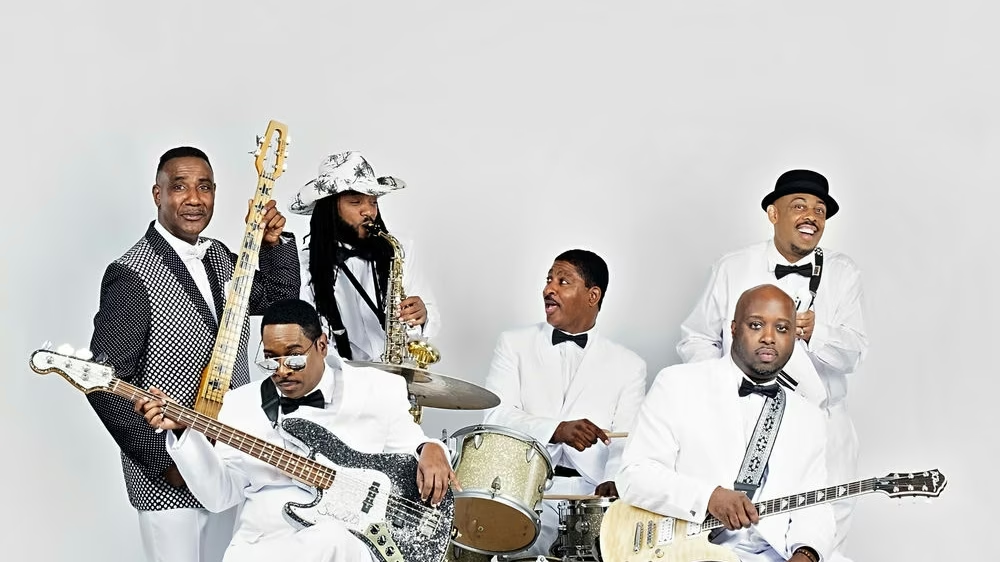
Zapp & Roger Troutman
1951 – 1999 (48)

The voice came out of the guitar. That was the first thing people noticed -- that sound, like a man talking through a tube from another dimension, robotic and human at the same time, impossible to place. Roger Troutman was born in Dayton, Ohio in 1951, and he spent his life chasing that liminal space between man and machine.

0:30
0:30
0:30
0:30

With his brothers in Zapp, he built a funk empire on a gimmick that turned out to be no gimmick at all. The talk box was not a novelty. It was a philosophy. It said that technology could sweat. It said that the future of Black music did not have to choose between the body and the circuit board.

Zapp formed in the early 1970s, a band of brothers making funk in a city nobody associated with funk. Dayton was not Detroit. It was not Philadelphia. It was an industrial town in the Midwest where the young Black musicians had to invent something new or get swallowed by the silence. They found Bootsy Collins, who connected them to George Clinton and the Parliament-Funkadelic universe, where the rules were different and the bass was the lead voice. The connection changed everything. "More Bounce to the Ounce 0:30" hit in 1980 and the floorboards across America started splintering. The Troutmans paid for that success in the usual ways: industry theft, creative control battles, the slow realization that the machine that distributes music is never your friend. Roger kept innovating because that was cheaper than fighting.

Zapp & Roger Troutman interview 1990

What "More Bounce to the Ounce" did to the body was simple and profound. It made the low end the lead voice. The bassline was the melody. The drums were the grammar.

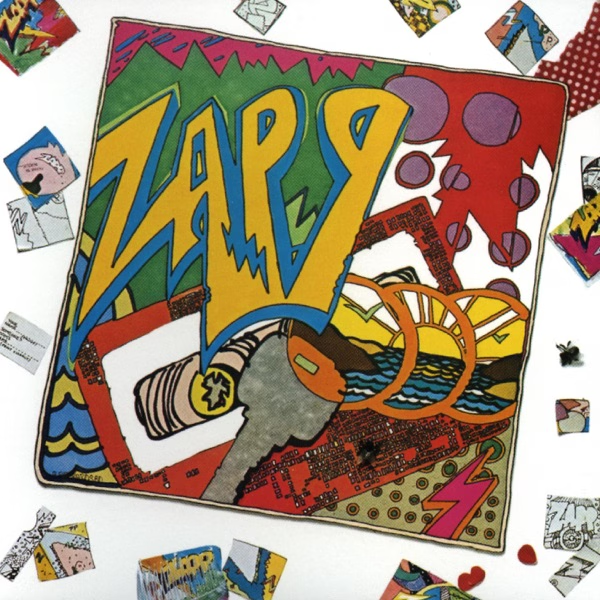
Zapp (1980)

And the talk box was the narrator, a cyborg preacher telling you to move. The track did not just work in clubs. It worked in cars, at house parties, on boomboxes on street corners -- anywhere people needed to feel the pocket. Zapp's sound became foundational. Tupac Shakur worked with Roger directly, knowing that the talk box carried something no other instrument could carry: the sound of a Black man talking through a machine and still sounding like himself. The robot had a soul, and Roger Troutman was its keeper.

Roger Troutman was shot and killed in Dayton in 1999, murdered outside his own studio. The man who made the future of funk sound like a machine with a heart died at forty-seven in the city he never left. His brothers carried on. The music he made never stopped bouncing. Every time a producer reaches for a vocoder or a talk box or any effect that blurs the line between the human voice and electronic sound, they are walking through a door Roger Troutman built. He was a one-man bridge between the organic and the synthetic, between the body and the machine. He made the circuit board testify. That is a kind of miracle. It is also just good funk.
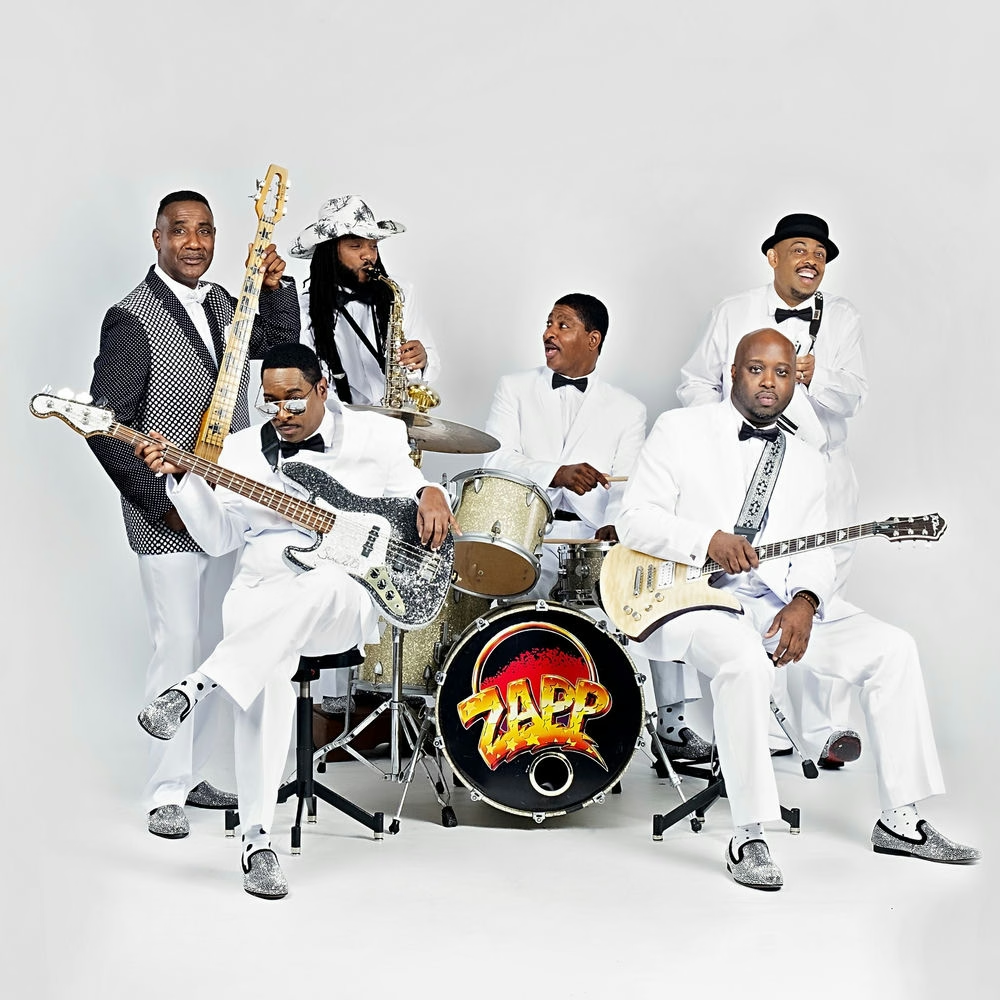
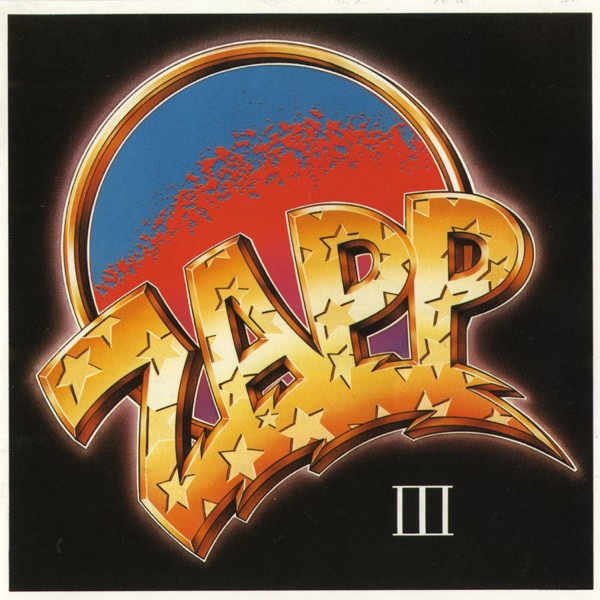
Image Credits

1,414 artist portraits across 5 genres (Rock, Jazz, Soul, Blues, Folk). 1,363 sourced from Wikipedia (Creative Commons / Public Domain), 50 from Deezer (promotional artwork).

Full attribution breakdown →

Zapp & Roger Troutman

1951 – 1999 (48)

The voice came out of the guitar. That was the first thing people noticed -- that sound, like a man talking through a tube from another dimension, robotic and human at the same time, impossible to place. Roger Troutman was born in Dayton, Ohio in 1951, and he spent his life chasing that liminal space between man and machine.

0:30
0:30
0:30
0:30

With his brothers in Zapp, he built a funk empire on a gimmick that turned out to be no gimmick at all. The talk box was not a novelty. It was a philosophy. It said that technology could sweat. It said that the future of Black music did not have to choose between the body and the circuit board.

Zapp formed in the early 1970s, a band of brothers making funk in a city nobody associated with funk. Dayton was not Detroit. It was not Philadelphia. It was an industrial town in the Midwest where the young Black musicians had to invent something new or get swallowed by the silence. They found Bootsy Collins, who connected them to George Clinton and the Parliament-Funkadelic universe, where the rules were different and the bass was the lead voice. The connection changed everything. "More Bounce to the Ounce 0:30" hit in 1980 and the floorboards across America started splintering. The Troutmans paid for that success in the usual ways: industry theft, creative control battles, the slow realization that the machine that distributes music is never your friend. Roger kept innovating because that was cheaper than fighting.

Zapp & Roger Troutman interview 1990

What "More Bounce to the Ounce" did to the body was simple and profound. It made the low end the lead voice. The bassline was the melody. The drums were the grammar.

Zapp (1980)

And the talk box was the narrator, a cyborg preacher telling you to move. The track did not just work in clubs. It worked in cars, at house parties, on boomboxes on street corners -- anywhere people needed to feel the pocket. Zapp's sound became foundational. Tupac Shakur worked with Roger directly, knowing that the talk box carried something no other instrument could carry: the sound of a Black man talking through a machine and still sounding like himself. The robot had a soul, and Roger Troutman was its keeper.

Roger Troutman was shot and killed in Dayton in 1999, murdered outside his own studio. The man who made the future of funk sound like a machine with a heart died at forty-seven in the city he never left. His brothers carried on. The music he made never stopped bouncing. Every time a producer reaches for a vocoder or a talk box or any effect that blurs the line between the human voice and electronic sound, they are walking through a door Roger Troutman built. He was a one-man bridge between the organic and the synthetic, between the body and the machine. He made the circuit board testify. That is a kind of miracle. It is also just good funk.
Zapp (1980) Zapp (1980)
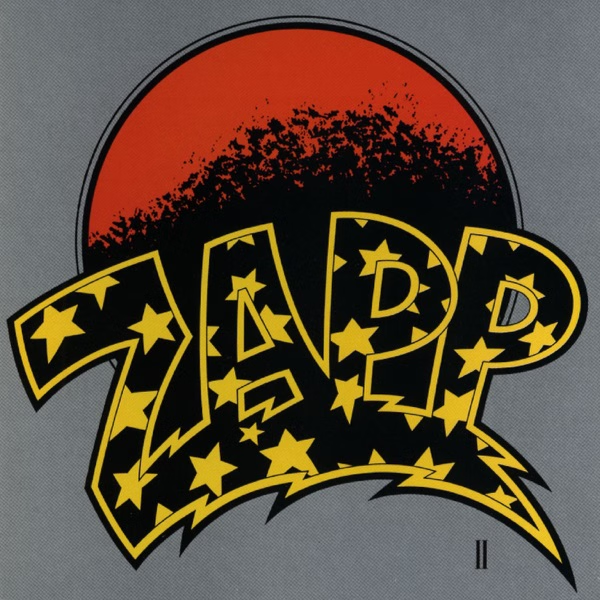
Zapp II (1982) Zapp II (1982)
Zapp III (1983) Zapp III (1983)
Zapp (1980)
Zapp II (1982)
Zapp III (1983)
funkelectrosoul
The Sunday Drop
One song. One story. Every Sunday.

No algorithms. No trending sections. Just a song someone loved and the story behind it. Delivered Sunday morning.

Free. No spam. Unsubscribe anytime.

Image Credits

1,414 artist portraits across 5 genres (Rock, Jazz, Soul, Blues, Folk). 1,363 sourced from Wikipedia (Creative Commons / Public Domain), 50 from Deezer (promotional artwork).

Full attribution breakdown →

0:00
0:00