Curtis Mayfield
1942 – 1999 (57)
The Conscience of Chicago Soul

He sang like a man who had seen the future and the future was not safe. Curtis Mayfield was born in Chicago in 1942, and he watched poverty and social upheaval shape the lives of everyone around him. He did not respond with anger.

0:30
0:30
0:30
0:30

He responded with an almost impossible gentleness in his voice -- a tenor that floated above the grit of the world like it was not quite of this earth. That gentleness was not weakness. It was strategy. He understood that the most radical message must be sung sweetly, because the people who need to hear it will not listen if you shout. The sweetness was the delivery system for the truth.

Mayfield started in the Impressions, the vocal group that became one of the defining sounds of the Civil Rights movement. "People Get Ready 0:30 0:30" was not a protest song in the traditional sense. It was a gospel song dressed in secular clothes, a train metaphor that told Black Americans that change was coming and they had better be on it. The cost of that leadership was constant pressure. The movement needed anthems and he wrote them. The industry wanted hits and he gave them hits. And then the rising militancy of the late 1960s made some wonder if his gentle tenor was still relevant. He did not change. He deepened. He channeled everything he witnessed into a sound that kept getting richer, more complex, more sure of itself.

Curtis Mayfield interview 1990

The 1970s brought his solo career and his greatest work. "Move On Up 0:30" was a triumph, a seven-minute suite of horns and strings and that unmistakable voice, telling Black America to rise. He worked with Gladys Knight and Aretha Franklin and every major voice of the era. His falsetto was not a gimmick.

Curtis (1970)

It was a weapon, a sound so distinctive that you knew it the instant you heard it. He turned the Black experience into music that was beautiful enough to be universal and specific enough to be true. He did not need to shout. He floated above the noise, and everyone looked up to see where the sound was coming from. That was his power. He made you listen by being impossible to ignore.

He died in 1999 in Roswell, Georgia, but his music had already become permanent. Curtis Mayfield showed that Black music could be political without being preachy, that it could be gentle without being weak, that it could carry the weight of a movement without collapsing under it. "People Get Ready" will be sung as long as there is a struggle for justice. "Move On Up" will fill dance floors as long as there are bodies that need to move. He made the connection between the spiritual and the political feel natural because it was natural. He just had the grace to prove it. And he had the voice to make you believe it. That voice still carries, still floats, still tells us to get ready.

Curtis Mayfield was profiled in the documentary, Darker Than Blue, in 1995.
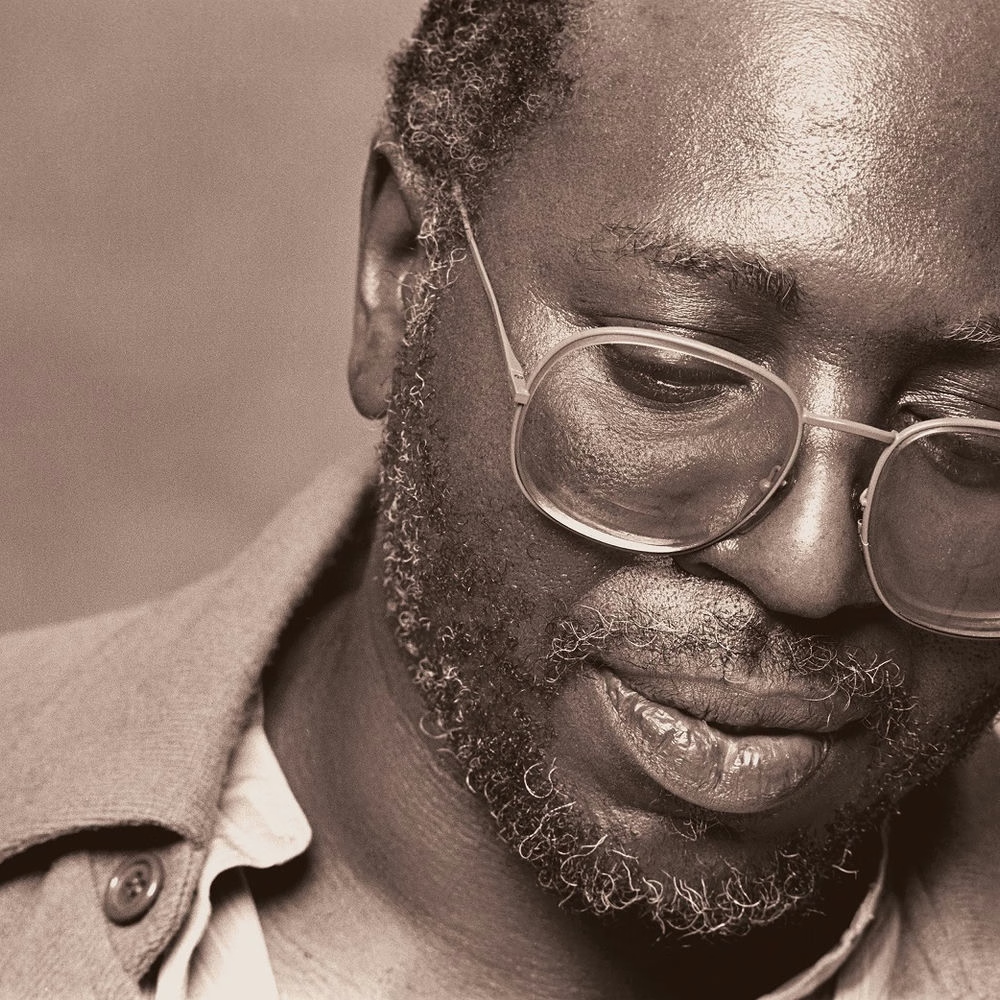
Image Credits

1,414 artist portraits across 5 genres (Rock, Jazz, Soul, Blues, Folk). 1,363 sourced from Wikipedia (Creative Commons / Public Domain), 50 from Deezer (promotional artwork).

Full attribution breakdown →

Curtis Mayfield

1942 – 1999 (57)
The Conscience of Chicago Soul

He sang like a man who had seen the future and the future was not safe. Curtis Mayfield was born in Chicago in 1942, and he watched poverty and social upheaval shape the lives of everyone around him. He did not respond with anger.

0:30
0:30
0:30
0:30

He responded with an almost impossible gentleness in his voice -- a tenor that floated above the grit of the world like it was not quite of this earth. That gentleness was not weakness. It was strategy. He understood that the most radical message must be sung sweetly, because the people who need to hear it will not listen if you shout. The sweetness was the delivery system for the truth.

Mayfield started in the Impressions, the vocal group that became one of the defining sounds of the Civil Rights movement. "People Get Ready 0:30 0:30" was not a protest song in the traditional sense. It was a gospel song dressed in secular clothes, a train metaphor that told Black Americans that change was coming and they had better be on it. The cost of that leadership was constant pressure. The movement needed anthems and he wrote them. The industry wanted hits and he gave them hits. And then the rising militancy of the late 1960s made some wonder if his gentle tenor was still relevant. He did not change. He deepened. He channeled everything he witnessed into a sound that kept getting richer, more complex, more sure of itself.

Curtis Mayfield interview 1990

The 1970s brought his solo career and his greatest work. "Move On Up 0:30" was a triumph, a seven-minute suite of horns and strings and that unmistakable voice, telling Black America to rise. He worked with Gladys Knight and Aretha Franklin and every major voice of the era. His falsetto was not a gimmick.

Curtis (1970)

It was a weapon, a sound so distinctive that you knew it the instant you heard it. He turned the Black experience into music that was beautiful enough to be universal and specific enough to be true. He did not need to shout. He floated above the noise, and everyone looked up to see where the sound was coming from. That was his power. He made you listen by being impossible to ignore.

He died in 1999 in Roswell, Georgia, but his music had already become permanent. Curtis Mayfield showed that Black music could be political without being preachy, that it could be gentle without being weak, that it could carry the weight of a movement without collapsing under it. "People Get Ready" will be sung as long as there is a struggle for justice. "Move On Up" will fill dance floors as long as there are bodies that need to move. He made the connection between the spiritual and the political feel natural because it was natural. He just had the grace to prove it. And he had the voice to make you believe it. That voice still carries, still floats, still tells us to get ready.

Curtis Mayfield was profiled in the documentary, Darker Than Blue, in 1995.

Curtis (1970) Curtis (1970)
Roots (1971) Roots (1971)
Superfly (1990) Superfly (1990)
Curtis (1970)
Roots (1971)
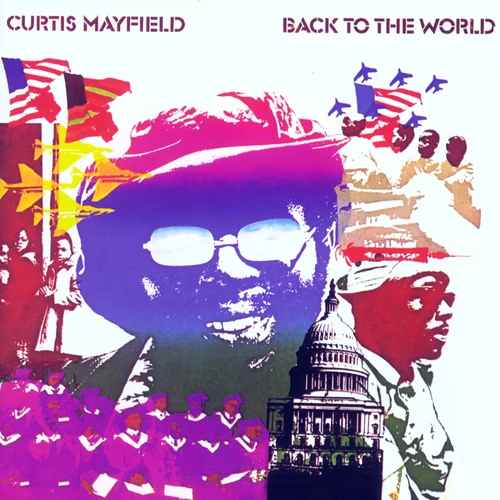
Back to the World (1973)
Got to Find a Way (1974)
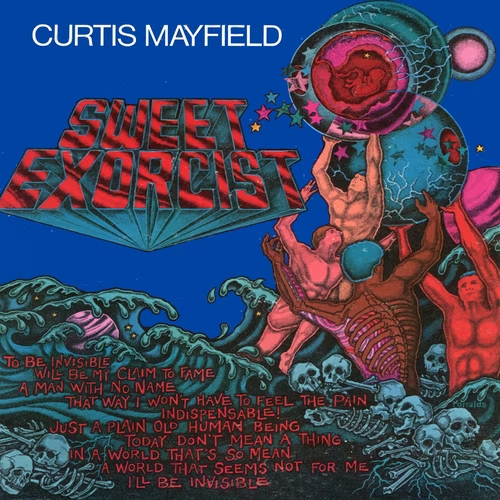
Sweet Exorcist (1974)
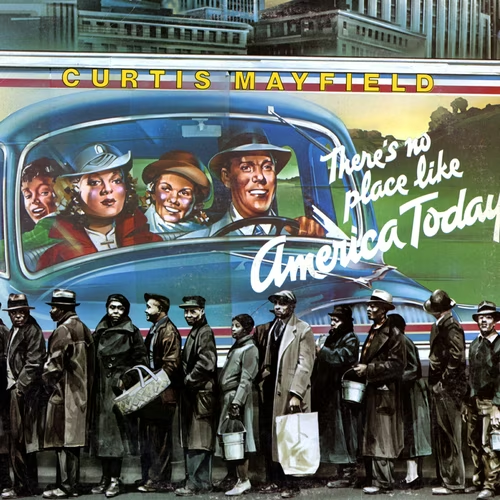
There’s No Place Like America Today (1975)
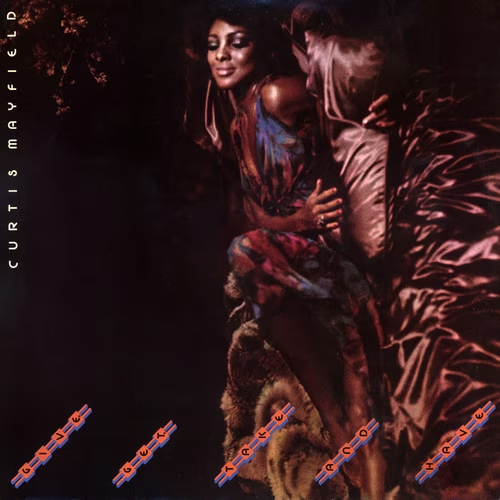
Give
Get
Take and Have (1976)
Never Say You Can’t Survive (1977)
Do It All Night (1978)
Heartbeat (1979)
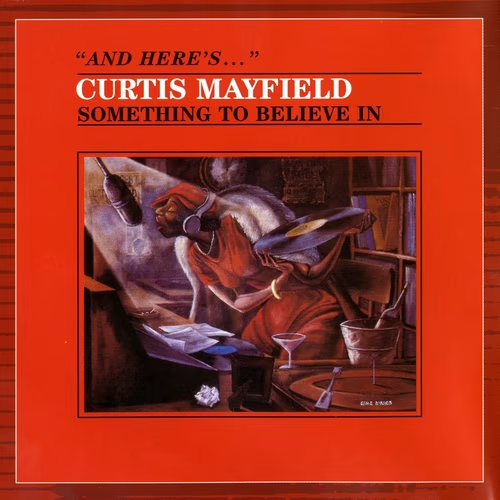
Something to Believe In (1980)
The Right Combination (1980)
Love Is the Place (1981)
Honesty (1982)
We Come in Peace With a Message of Love (1985)
Superfly (1990)
soulfunkr&b
The Sunday Drop
One song. One story. Every Sunday.

No algorithms. No trending sections. Just a song someone loved and the story behind it. Delivered Sunday morning.

Free. No spam. Unsubscribe anytime.

Image Credits

1,414 artist portraits across 5 genres (Rock, Jazz, Soul, Blues, Folk). 1,363 sourced from Wikipedia (Creative Commons / Public Domain), 50 from Deezer (promotional artwork).

Full attribution breakdown →

0:00
0:00