The Meters tracklist updated 08/2026
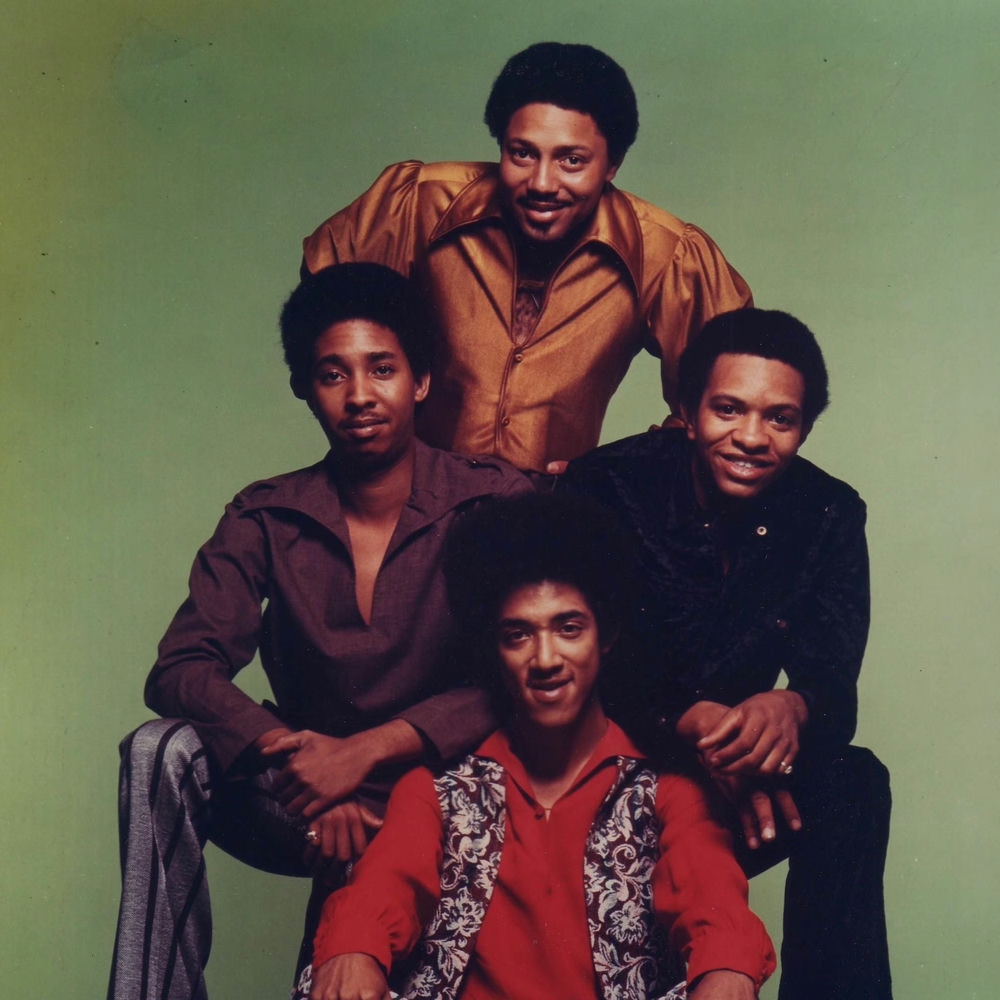
They walked into a music industry that was obsessed with stars, with singers, with frontmen who could sell records on charisma alone. The Meters were a band without a lead singer. They did not need one. The instruments talked. "Cissy Strut" was released in 1969 and it does not have a single word of lyrics. It does not need them. The guitar line is a conversation, the bass is the argument, the drums are the punctuation. The cost of being a purely instrumental funk band in an era of vocal-driven soul was that they never became household names the way the artists they backed did. They were the house band for Allen Toussaint's production empire, backing everybody from Lee Dorsey to Dr. John to Patti LaBelle. They were the engine running underneath other people's hits.
The Meters created a sound that defined New Orleans funk and then watched it become the bedrock of hip-hop. When you hear a breakbeat that makes your head nod, there is a good chance it came from Zigaboo Modeliste's kick drum. When you hear a bass line that walks the line between melody and rhythm, George Porter Jr. probably played it first. "Cissy Strut" has been sampled by countless hip-hop producers because it is perfect -- locked in, funky, economical, every note in its exact place. The band's peak was the run from 1969 to 1977, the years when they were simultaneously a recording act and the first-call session band for New Orleans music. They did not just play funk. They defined a regional sound that became a global language.
The Meters broke up in 1977, but their music kept working. The samples kept coming. The influence kept spreading. Every funk band that has formed since has had to answer the question: can you get the pocket as deep as The Meters got it? The answer is usually no. They were a band of four individuals who thought as one organism, a New Orleans institution that never needed the spotlight because they had the groove. They proved that the most powerful thing in music is not the voice or the star or the hit single. It is the pocket. And when the pocket is right, everything else follows. The Meters made the pocket right. Everything else is still following.
The Meters broke up in 1977, but their music kept working. The samples kept coming. The influence kept spreading. Every funk band that has formed since has had to answer the question: can you get the pocket as deep as The Meters got it? The answer is usually no. They were a band of four individuals who thought as one organism, a New Orleans institution that never needed the spotlight because they had the groove. They proved that the most powerful thing in music is not the voice or the star or the hit single. It is the pocket. And when the pocket is right, everything else follows. The Meters made the pocket right. Everything else is still following.