Kirk Franklin
1970 –

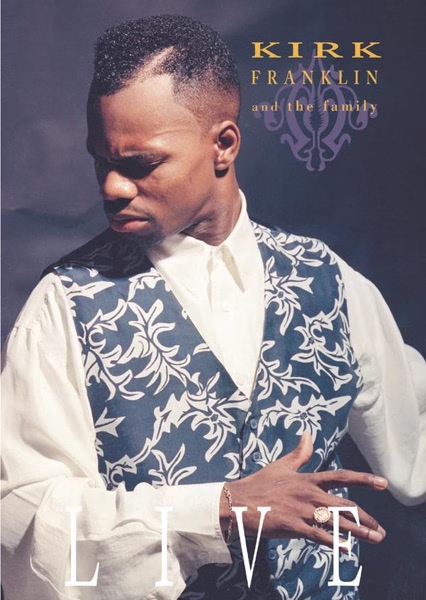
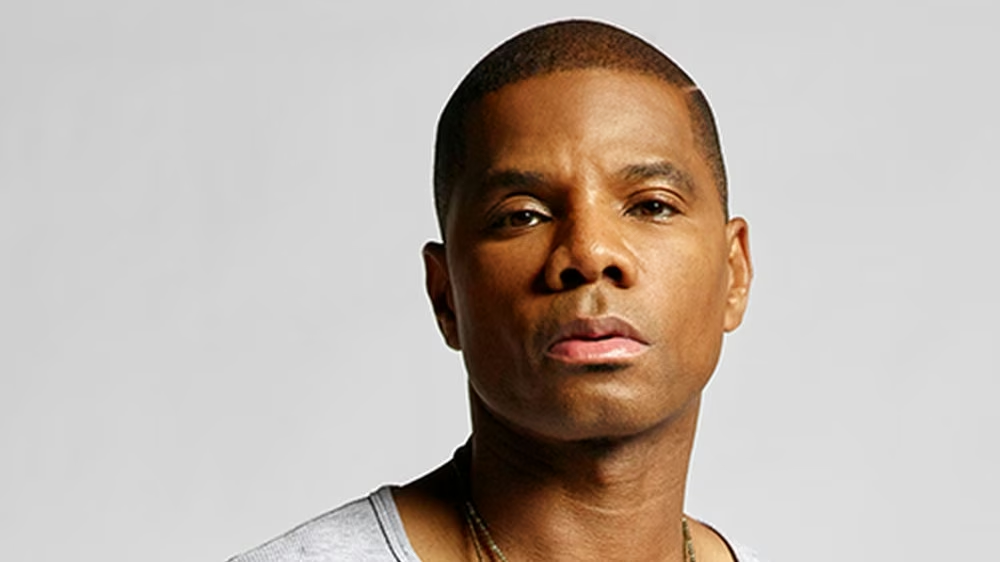
Let me tell you about the boy from Fort Worth who took the church outside the church and dared the world not to clap. Kirk Franklin was born January 26, 1970, raised by his aunt after his mother abandoned him, and found the piano before he found his father. He was playing by ear at four, directing the choir at eleven, and by the time he was old enough to drive he had already decided that gospel music was too small for the God he served.

0:30
0:30
0:30
0:30

That decision made him the most controversial figure in gospel since somebody first put a drum set in a sanctuary. I am not exaggerating. The old guard called him a heretic. The young people called him a savior. Both sides were right.

He walked into a gospel industry that was comfortable with its boundaries. Choirs sang in robes. Organs provided the only acceptable instrumentation. The word of God was delivered through song, but the song had to sound like 1955. Franklin looked at that and said no. He brought in hip-hop beats. He brought in R&B production. He brought in Mary J. Blige, Stevie Wonder, Kanye West. The traditionalists lost their minds. Record stores did not know where to file his albums. The cost was that he spent the first decade of his career defending his existence. But Franklin did not compromise. He just kept making music that made people move, and movement is hard to argue with when you are standing still.

Kirk Franklin interview 2019

"Stomp 0:30" is the sound of a revolution happening in real time. The drums hit like a club track, the choir sings like they are in church, and the message is pure gospel. It should not work. It works perfectly.

God's Property from Kirk Franklin's Nu Nation

"Imagine Me" is Franklin at his most vulnerable -- a song about self-forgiveness that reaches people who have never been inside a church but have definitely needed to forgive themselves. "I Smile" became an anthem for people going through hard times, played at funerals and graduations and weddings and anywhere else hope needed a soundtrack. Franklin's music did not just cross over. It colonized. He made gospel the sound of triumph in an era when triumph was in short supply. He worked with the biggest names in secular music and never changed his message to fit the format.

The verdict is already written. Kirk Franklin changed gospel music permanently and irrevocably. Before him, gospel was a genre. After him, gospel was a force. He won Grammys, he sold millions, he filled arenas that had never hosted a gospel act. But the real measurement is the artists he inspired -- every urban contemporary gospel singer working today is walking through a door that Kirk Franklin kicked open. He did not just modernize the music. He expanded the definition of what gospel could be. The boy from Fort Worth took the church to the world, and the world has not stopped singing since.
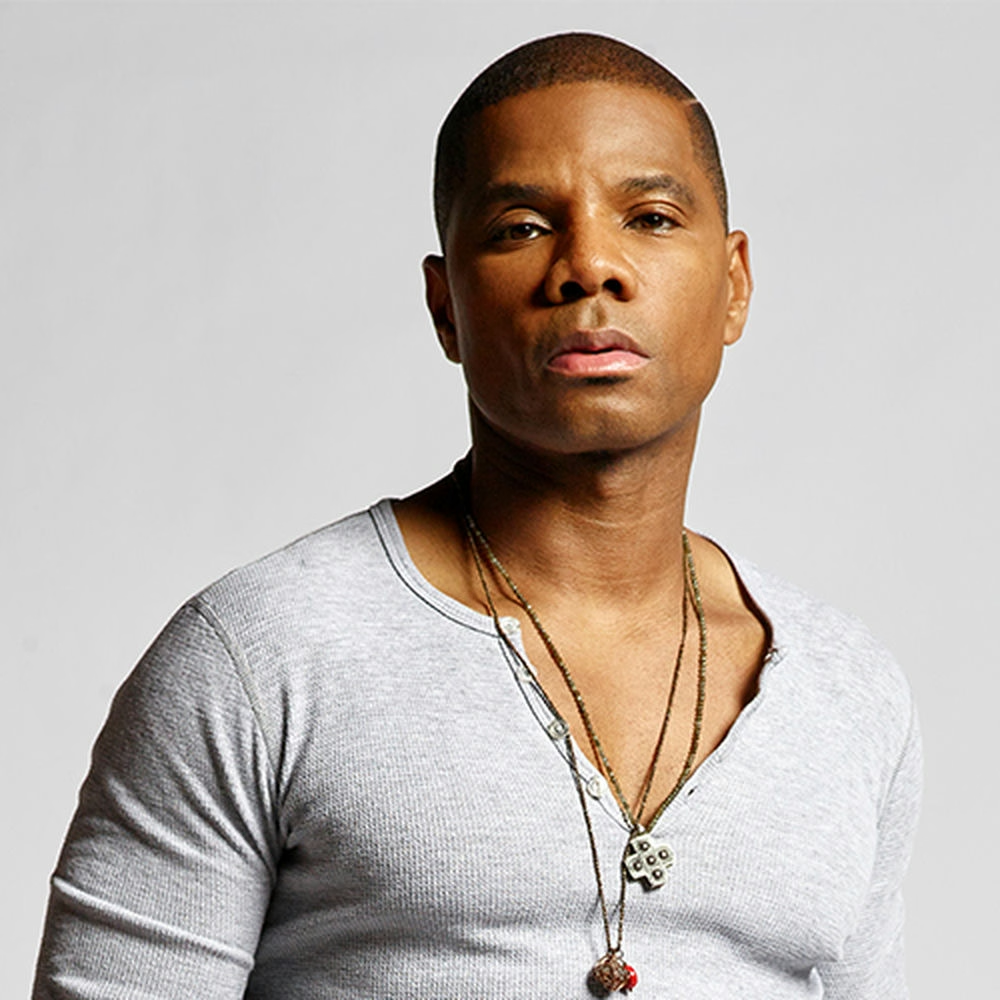
Image Credits

1,414 artist portraits across 5 genres (Rock, Jazz, Soul, Blues, Folk). 1,363 sourced from Wikipedia (Creative Commons / Public Domain), 50 from Deezer (promotional artwork).

Full attribution breakdown →

Kirk Franklin

1970 –

Let me tell you about the boy from Fort Worth who took the church outside the church and dared the world not to clap. Kirk Franklin was born January 26, 1970, raised by his aunt after his mother abandoned him, and found the piano before he found his father. He was playing by ear at four, directing the choir at eleven, and by the time he was old enough to drive he had already decided that gospel music was too small for the God he served.

0:30
0:30
0:30
0:30

That decision made him the most controversial figure in gospel since somebody first put a drum set in a sanctuary. I am not exaggerating. The old guard called him a heretic. The young people called him a savior. Both sides were right.

He walked into a gospel industry that was comfortable with its boundaries. Choirs sang in robes. Organs provided the only acceptable instrumentation. The word of God was delivered through song, but the song had to sound like 1955. Franklin looked at that and said no. He brought in hip-hop beats. He brought in R&B production. He brought in Mary J. Blige, Stevie Wonder, Kanye West. The traditionalists lost their minds. Record stores did not know where to file his albums. The cost was that he spent the first decade of his career defending his existence. But Franklin did not compromise. He just kept making music that made people move, and movement is hard to argue with when you are standing still.

Kirk Franklin interview 2019

"Stomp 0:30" is the sound of a revolution happening in real time. The drums hit like a club track, the choir sings like they are in church, and the message is pure gospel. It should not work. It works perfectly.

God's Property from Kirk Franklin's Nu Nation

"Imagine Me" is Franklin at his most vulnerable -- a song about self-forgiveness that reaches people who have never been inside a church but have definitely needed to forgive themselves. "I Smile" became an anthem for people going through hard times, played at funerals and graduations and weddings and anywhere else hope needed a soundtrack. Franklin's music did not just cross over. It colonized. He made gospel the sound of triumph in an era when triumph was in short supply. He worked with the biggest names in secular music and never changed his message to fit the format.

The verdict is already written. Kirk Franklin changed gospel music permanently and irrevocably. Before him, gospel was a genre. After him, gospel was a force. He won Grammys, he sold millions, he filled arenas that had never hosted a gospel act. But the real measurement is the artists he inspired -- every urban contemporary gospel singer working today is walking through a door that Kirk Franklin kicked open. He did not just modernize the music. He expanded the definition of what gospel could be. The boy from Fort Worth took the church to the world, and the world has not stopped singing since.
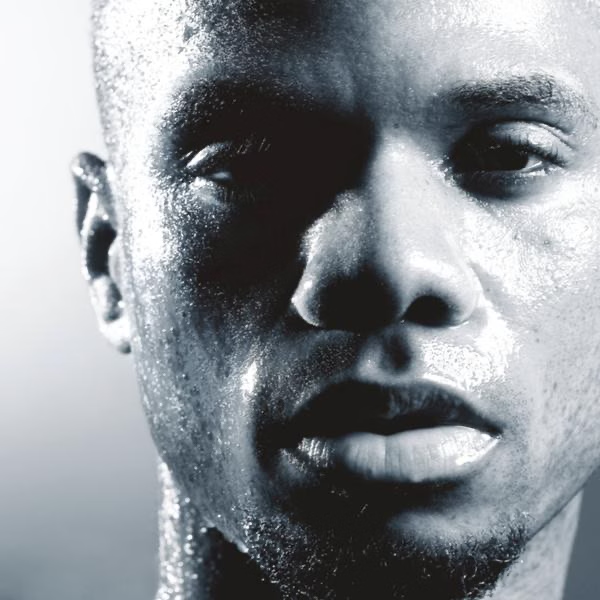
God's Property from Kirk Franklin's Nu Nation God's Property from Kirk Franklin's Nu Nation
The Nu Nation Project The Nu Nation Project
Kirk Franklin Presents 1NC Kirk Franklin Presents 1NC
God's Property from Kirk Franklin's Nu Nation
The Nu Nation Project
Kirk Franklin Presents 1NC
Hero
The Fight of My Life
Hello Fear
Losing My Religion
Long, Live, Love
Father's Day
gospelurban contemporary gospel
The Sunday Drop
One song. One story. Every Sunday.

No algorithms. No trending sections. Just a song someone loved and the story behind it. Delivered Sunday morning.

Free. No spam. Unsubscribe anytime.

Image Credits

1,414 artist portraits across 5 genres (Rock, Jazz, Soul, Blues, Folk). 1,363 sourced from Wikipedia (Creative Commons / Public Domain), 50 from Deezer (promotional artwork).

Full attribution breakdown →

0:00
0:00