Shirley Caesar
1938 –

Shirley Caesar sang her first solo at 12, in her father's church in Durham, North Carolina. By 14 she was touring with the Caravans, the legendary gospel group that Rev. James Cleveland built.

0:30
0:30
0:30
0:30

She was the youngest singer in a group of seasoned women who had been singing since before she was born, and she held her own. Her voice was not delicate. It was a weapon -- capable of a growl that could reach the back row of a convention center, and a tenderness that could bring that same room to tears. She was the baby of the Caravans, and she learned fast. When she went solo in the late 1960s, she didn't leave the church to enter the mainstream. She took the church with her.

"Hold My Mule" is the song that made her a legend -- a 23-minute workout recorded live, driven by a rhythm section that sounds like it's trying to catch fire. Caesar shouts, preaches, testifies, and sings, moving between speaking and singing so seamlessly that you stop noticing the border. The track became a gospel standard, not because of its craft but because of its stamina. Shirley Caesar sang like she had somewhere to be and God was waiting. Her catalog runs deep: "Satan, We're Gonna Have Church," "I'll Go," "No Charge." Eleven Grammys, multiple Stellar Awards, a Dove Award. She was the first gospel artist to win a Grammy for Best Gospel Performance -- for "Hold My Mule" in 1991.

Shirley Caesar interview 1990

She also served. She was elected to the Durham City Council in the 1970s, one of the first gospel singers to move into electoral politics. She founded the Shirley Caesar Outreach Ministries, ran a food bank, and never stopped pastoring. The church was not her day job and her music was not her career.

Get Up My Brother (1972)

They were the same thing. When she sang "Satan, We're Gonna Have Church," she was not performing. She was inviting you to something she already believed in. The separation between sacred and secular that defined so much of gospel's relationship with popular music -- Caesar never acknowledged it. All music was worship if you approached it right.

She is still alive at 87, still preaching, still singing. The First Lady of Gospel is a title she earned by outlasting, outworking, and out-believing everyone who came before her. Shirley Caesar never had a pop crossover moment. She never wanted one. She built a career inside the church, for the church, and the church has never stopped singing back.
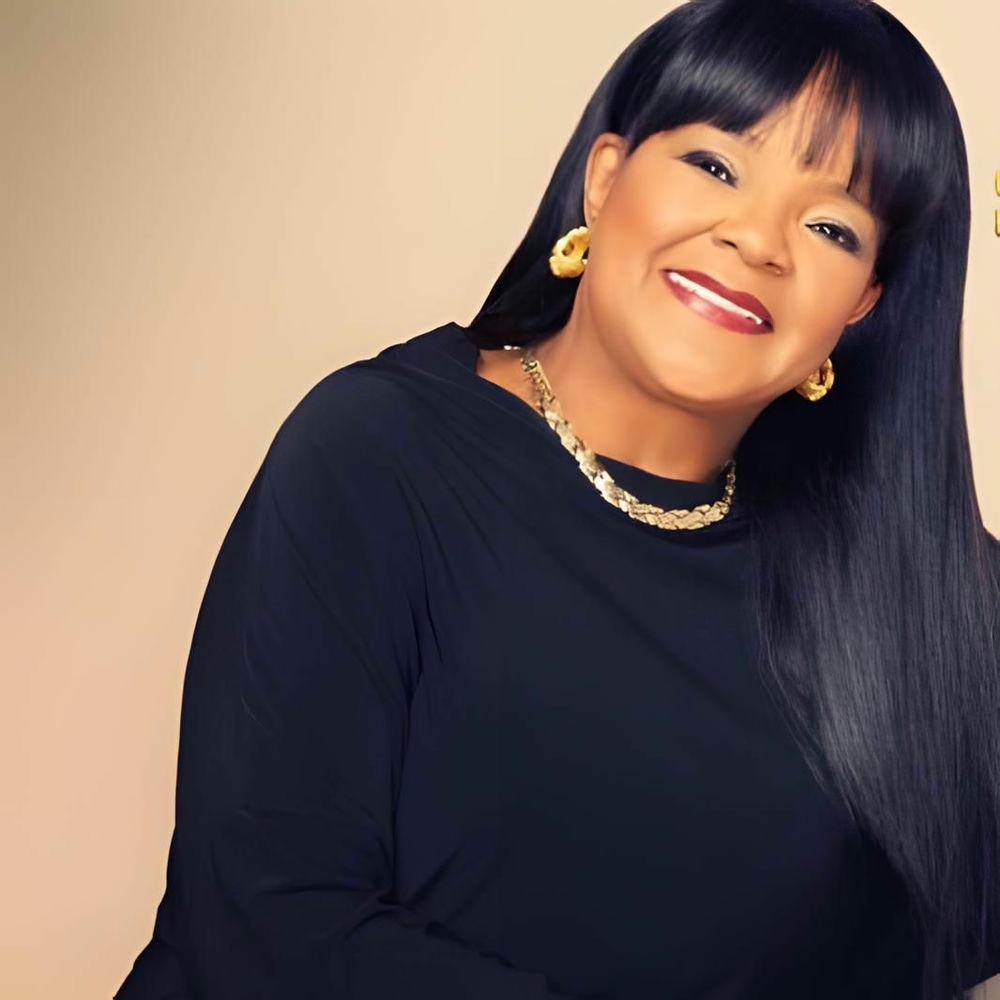
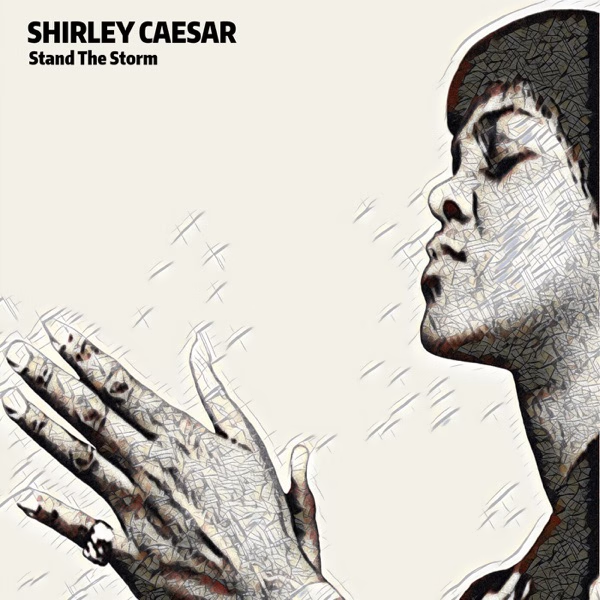
Image Credits

1,414 artist portraits across 5 genres (Rock, Jazz, Soul, Blues, Folk). 1,363 sourced from Wikipedia (Creative Commons / Public Domain), 50 from Deezer (promotional artwork).

Full attribution breakdown →

Shirley Caesar

1938 –

Shirley Caesar sang her first solo at 12, in her father's church in Durham, North Carolina. By 14 she was touring with the Caravans, the legendary gospel group that Rev. James Cleveland built.

0:30
0:30
0:30
0:30

She was the youngest singer in a group of seasoned women who had been singing since before she was born, and she held her own. Her voice was not delicate. It was a weapon -- capable of a growl that could reach the back row of a convention center, and a tenderness that could bring that same room to tears. She was the baby of the Caravans, and she learned fast. When she went solo in the late 1960s, she didn't leave the church to enter the mainstream. She took the church with her.

"Hold My Mule" is the song that made her a legend -- a 23-minute workout recorded live, driven by a rhythm section that sounds like it's trying to catch fire. Caesar shouts, preaches, testifies, and sings, moving between speaking and singing so seamlessly that you stop noticing the border. The track became a gospel standard, not because of its craft but because of its stamina. Shirley Caesar sang like she had somewhere to be and God was waiting. Her catalog runs deep: "Satan, We're Gonna Have Church," "I'll Go," "No Charge." Eleven Grammys, multiple Stellar Awards, a Dove Award. She was the first gospel artist to win a Grammy for Best Gospel Performance -- for "Hold My Mule" in 1991.

Shirley Caesar interview 1990

She also served. She was elected to the Durham City Council in the 1970s, one of the first gospel singers to move into electoral politics. She founded the Shirley Caesar Outreach Ministries, ran a food bank, and never stopped pastoring. The church was not her day job and her music was not her career.

Get Up My Brother (1972)

They were the same thing. When she sang "Satan, We're Gonna Have Church," she was not performing. She was inviting you to something she already believed in. The separation between sacred and secular that defined so much of gospel's relationship with popular music -- Caesar never acknowledged it. All music was worship if you approached it right.

She is still alive at 87, still preaching, still singing. The First Lady of Gospel is a title she earned by outlasting, outworking, and out-believing everyone who came before her. Shirley Caesar never had a pop crossover moment. She never wanted one. She built a career inside the church, for the church, and the church has never stopped singing back.

Get Up My Brother (1972) Get Up My Brother (1972)
Christmasing (1986) Christmasing (1986)
Christmas With Shirley Caesar (1998) Christmas With Shirley Caesar (1998)
Get Up My Brother (1972)
Christmasing (1986)
Christmas With Shirley Caesar (1998)
You Can Make It (2000)
Shirley Caesar Live...He Will Come (2006)
A City Called Heaven (2009)
The Ultimate Collection (2010)
Good God (2013)
Fill This House (2016)
Shirley Caesar and Friends
Old Apple Tree
gospeltraditional gospel
The Sunday Drop
One song. One story. Every Sunday.

No algorithms. No trending sections. Just a song someone loved and the story behind it. Delivered Sunday morning.

Free. No spam. Unsubscribe anytime.

Image Credits

1,414 artist portraits across 5 genres (Rock, Jazz, Soul, Blues, Folk). 1,363 sourced from Wikipedia (Creative Commons / Public Domain), 50 from Deezer (promotional artwork).

Full attribution breakdown →

0:00
0:00