Gladys Knight & The Pips
1952 – 1989 (37)
The Empress and Her Family

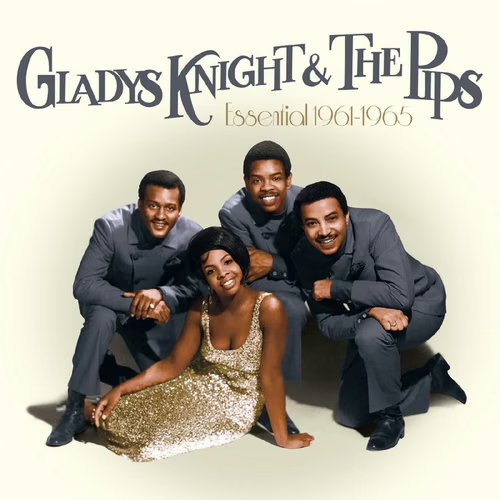
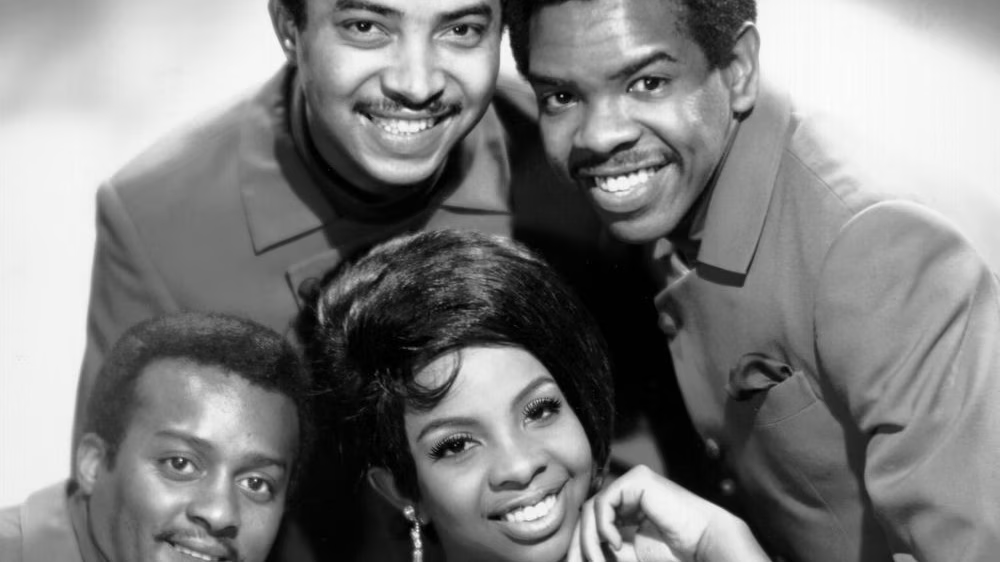
Atlanta, 1952. A seven-year-old girl named Gladys Knight won Ted Mack's Original Amateur Hour and set in motion something that would span nearly four decades. She sang with her older brother Merald 'Bubba' Knight, their cousin William Guest, and later Edward Patten, and they called themselves the Pips -- a nickname that had been in the family for generations.

0:30
0:30
0:30
0:30

They were not a lead singer with backup. They were a unit, a four-voice organism that moved as one, dressed as one, harmonized as one. Gladys Knight was the empress, but the Pips were the throne.

The world of 1950s and 60s R&B was built around solo stars with interchangeable backing groups. Gladys Knight & The Pips walked into that world and changed the math. They cut their teeth on the chitlin' circuit, touring the South in a car, playing one-nighters for crowds that wanted to dance and shout. They signed with Motown in 1966 and found themselves in a machine that understood how to polish but not always how to respect. The cost of the Motown years was real: they were treated as second-tier behind the Supremes and the Temptations, given good songs but not great ones, and forced to watch lesser acts get the push. They left Motown for Buddah Records in 1973, a gamble that looked like career suicide and turned into the best decision they ever made.

Gladys Knight & The Pips interview 1990

"Midnight Train to Georgia 0:30" from 1973 is the song that finally gave them the space they needed. The track is a slow burn built around Knight's voice -- that voice, so precise and so generous, capable of joy and grief in the same phrase. She sings about a man leaving Los Angeles to go back to Georgia, and the song becomes about something larger: the cost of dreams, the geography of love, the choice to follow someone even when it means giving up your own ambitions. "He's leaving on that midnight train to Georgia" -- the repetition, the way the Pips answer her, the way the arrangement builds without rushing.

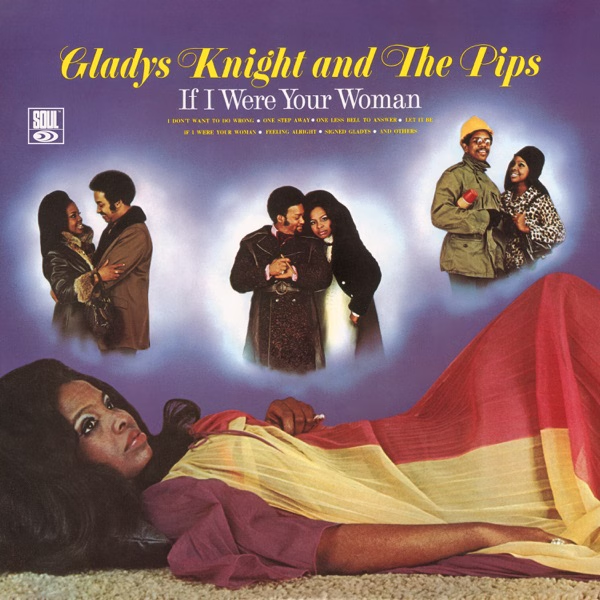
If I Were Your Woman (1971)

That climax, when she lets the full power of her voice open up, is one of the great moments in recorded soul. She had been waiting twenty years to sing a song that good.

Gladys Knight & The Pips continued into the 1980s before going their separate ways in 1989. Knight has had a solo career, acted, become a figure of lasting cultural respect. But the peak is still that stretch from 1973 to the early 80s when they were the best vocal group in the world. The Pips' choreography, those synchronized spins and points, the way they framed Knight without crowding her -- that was a disappearing art form, and they were its masters. The Midnight Train is still running. You can hear it whenever a great singer and a great group lock together like they share one nervous system. That was Gladys Knight & The Pips. That was the train.
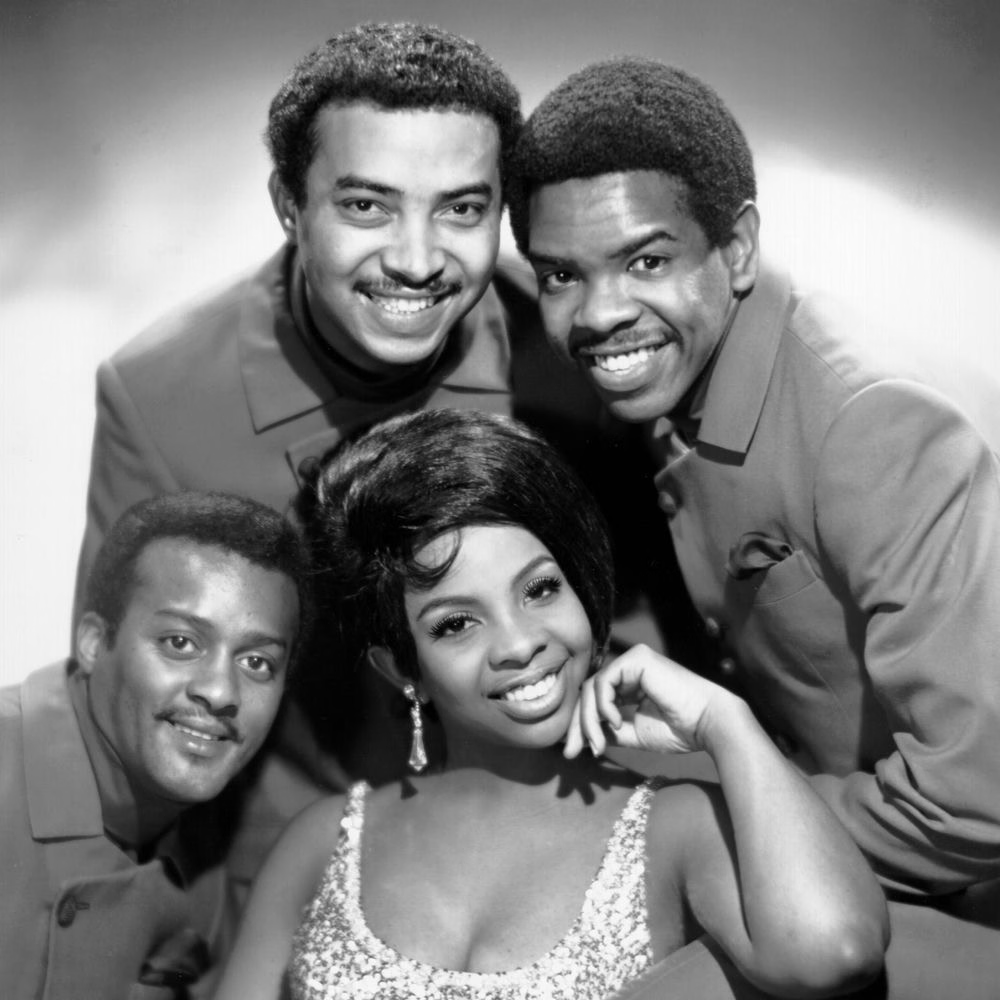
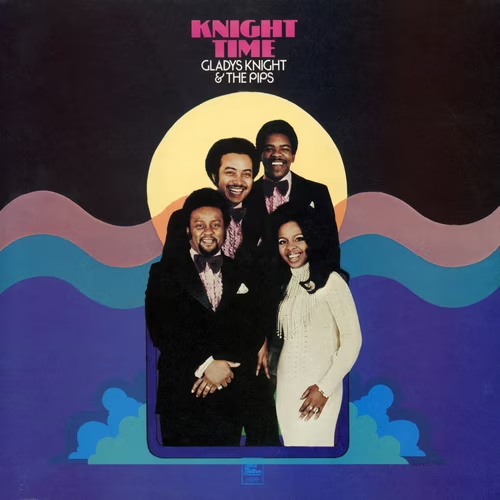
Image Credits

1,414 artist portraits across 5 genres (Rock, Jazz, Soul, Blues, Folk). 1,363 sourced from Wikipedia (Creative Commons / Public Domain), 50 from Deezer (promotional artwork).

Full attribution breakdown →

Gladys Knight & The Pips

1952 – 1989 (37)
The Empress and Her Family

Atlanta, 1952. A seven-year-old girl named Gladys Knight won Ted Mack's Original Amateur Hour and set in motion something that would span nearly four decades. She sang with her older brother Merald 'Bubba' Knight, their cousin William Guest, and later Edward Patten, and they called themselves the Pips -- a nickname that had been in the family for generations.

0:30
0:30
0:30
0:30

They were not a lead singer with backup. They were a unit, a four-voice organism that moved as one, dressed as one, harmonized as one. Gladys Knight was the empress, but the Pips were the throne.

The world of 1950s and 60s R&B was built around solo stars with interchangeable backing groups. Gladys Knight & The Pips walked into that world and changed the math. They cut their teeth on the chitlin' circuit, touring the South in a car, playing one-nighters for crowds that wanted to dance and shout. They signed with Motown in 1966 and found themselves in a machine that understood how to polish but not always how to respect. The cost of the Motown years was real: they were treated as second-tier behind the Supremes and the Temptations, given good songs but not great ones, and forced to watch lesser acts get the push. They left Motown for Buddah Records in 1973, a gamble that looked like career suicide and turned into the best decision they ever made.

Gladys Knight & The Pips interview 1990

"Midnight Train to Georgia 0:30" from 1973 is the song that finally gave them the space they needed. The track is a slow burn built around Knight's voice -- that voice, so precise and so generous, capable of joy and grief in the same phrase. She sings about a man leaving Los Angeles to go back to Georgia, and the song becomes about something larger: the cost of dreams, the geography of love, the choice to follow someone even when it means giving up your own ambitions. "He's leaving on that midnight train to Georgia" -- the repetition, the way the Pips answer her, the way the arrangement builds without rushing.

If I Were Your Woman (1971)

That climax, when she lets the full power of her voice open up, is one of the great moments in recorded soul. She had been waiting twenty years to sing a song that good.

Gladys Knight & The Pips continued into the 1980s before going their separate ways in 1989. Knight has had a solo career, acted, become a figure of lasting cultural respect. But the peak is still that stretch from 1973 to the early 80s when they were the best vocal group in the world. The Pips' choreography, those synchronized spins and points, the way they framed Knight without crowding her -- that was a disappearing art form, and they were its masters. The Midnight Train is still running. You can hear it whenever a great singer and a great group lock together like they share one nervous system. That was Gladys Knight & The Pips. That was the train.
If I Were Your Woman (1971) If I Were Your Woman (1971)
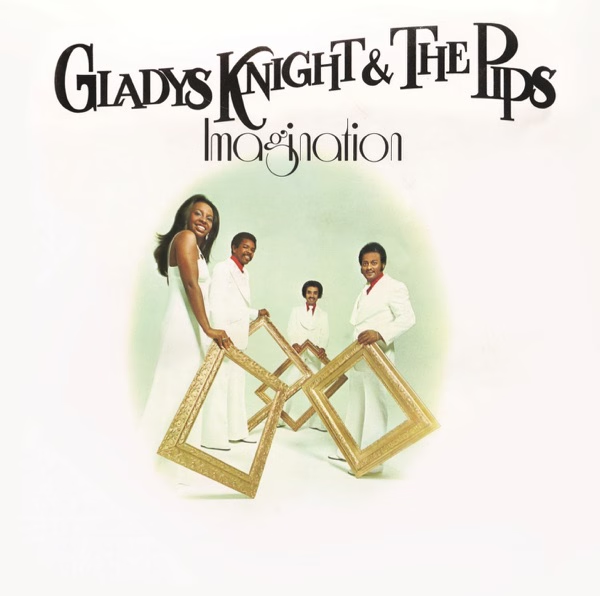
Imagination (1973) Imagination (1973)
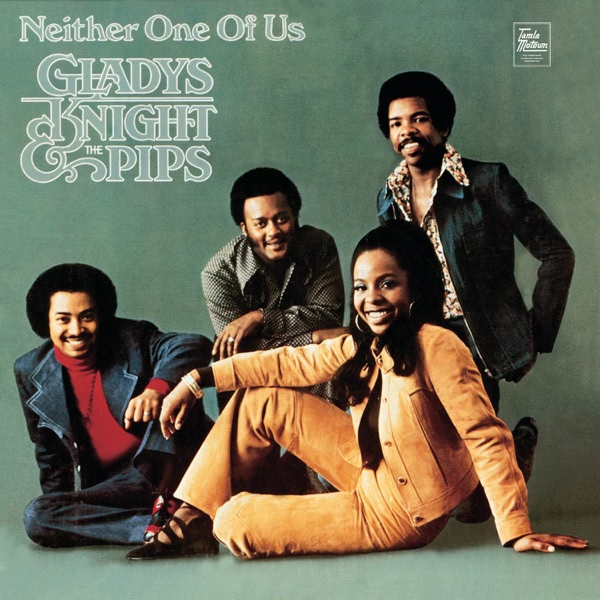
Neither One of Us (1973) Neither One of Us (1973)
Letter Full of Tears (1962)
Gladys Knight and the Pips (1965)
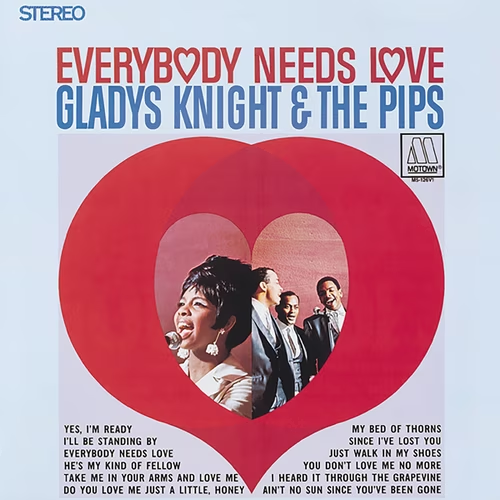
Everybody Needs Love (1967)
Urgent (1967)
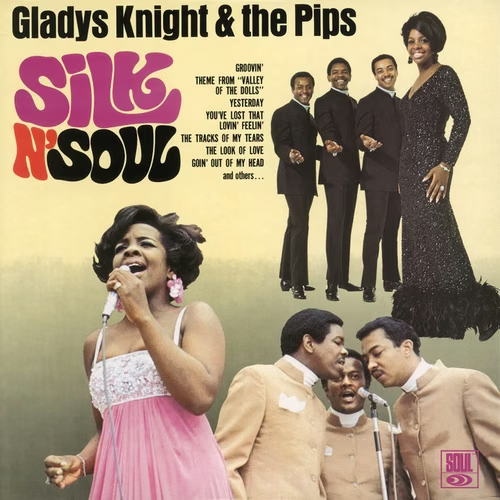
Silk n’ Soul (1968)
Feelin’ Bluesy (1968)
Nitty Gritty (1969)
Standing Ovation (1971)
If I Were Your Woman (1971)
Imagination (1973)
Neither One of Us (1973)
It Hurt Me So Bad (1973)
Every Beat of My Heart (1973)
All I Need Is Time (1973)
Knight Time (1974)
r&bsoulmotown
The Sunday Drop
One song. One story. Every Sunday.

No algorithms. No trending sections. Just a song someone loved and the story behind it. Delivered Sunday morning.

Free. No spam. Unsubscribe anytime.

Image Credits

1,414 artist portraits across 5 genres (Rock, Jazz, Soul, Blues, Folk). 1,363 sourced from Wikipedia (Creative Commons / Public Domain), 50 from Deezer (promotional artwork).

Full attribution breakdown →

0:00
0:00