Rev. James Cleveland
1932 – 1991 (59)

The voice was gravel. It was not pretty. Rev.

0:30
0:30
0:30
0:30

James Cleveland sang like a man who had spent a lifetime in the pulpit, which he had. His voice had no polish, no sheen, no desire to be anything except exactly what it was -- rough, insistent, the sound of faith that came from somewhere deeper than the throat. He was born in Chicago in 1932, sang in the choir at the Greater Institutional AME Church, and by the time he was a teenager he was already arranging music for Mahalia Jackson. He was not quite 20 and he was telling the greatest gospel singer in the world where to place a note. She listened.

What Cleveland understood, earlier than almost anyone, was that gospel was not a solo art. It was a choir art. He built arrangements that turned a group of voices into a single breathing organism. The call and response, the staggered entrances, the way a choir could rise and fall like a wave breaking -- he codified it. He founded the Gospel Music Workshop of America in 1968, and through that organization he taught thousands of choir directors how to do what he did. Aretha Franklin came to him to learn. So did Shirley Caesar, who sang in his Caravans. The Caravans were Cleveland's training ground for a generation of gospel's greatest female voices -- Albertina Walker, Bessie Griffin, Inez Andrews. He paid them poorly and drilled them hard, and they came out of the Caravans as headliners.

Rev. James Cleveland interview 1990

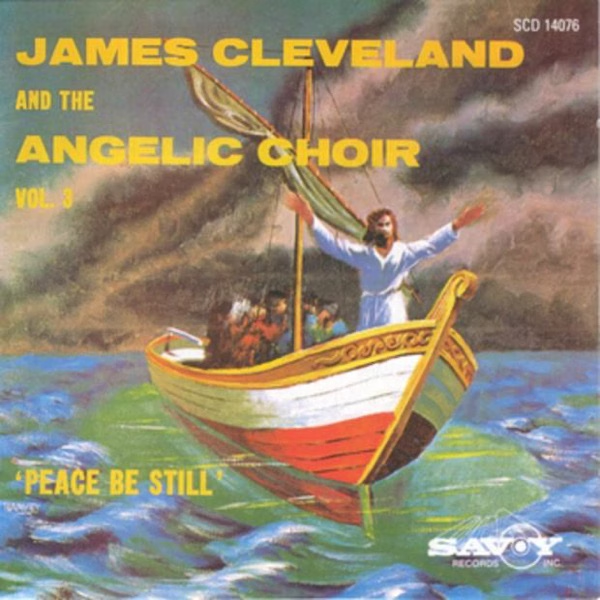
"Peace Be Still 0:30," recorded live in 1963, was his signature. The song starts quiet, almost murmured, and then the choir comes in like a tide that will not stop rising. Cleveland's piano drives it, his voice cracks on the high notes, and the congregation responds like they're in a revival -- because they are. The line between performance and worship disappears in Cleveland's music.

Jesus Is The Best Thing That Ever Happened To Me (1975)

You cannot listen to "Peace Be Still" from a critical distance. It pulls you in or leaves you standing outside. That was the point. He composed and arranged for decades, won four Grammys, and recorded over 100 albums, but the work that mattered was the infrastructure he built -- the choirs he trained, the directors he turned into leaders, the young singers he sent out into the world.

He died in 1991 at 58, from heart failure. The King of Gospel, they called him, but the crown was never the point. Rev. James Cleveland took the raw material of the Black church -- the moan, the shout, the sway, the sweat -- and gave it form without taking the spirit out. Every mega-choir you have ever seen, every gospel group that hits a downbeat and makes the room disappear, is a footnote to what Cleveland built.
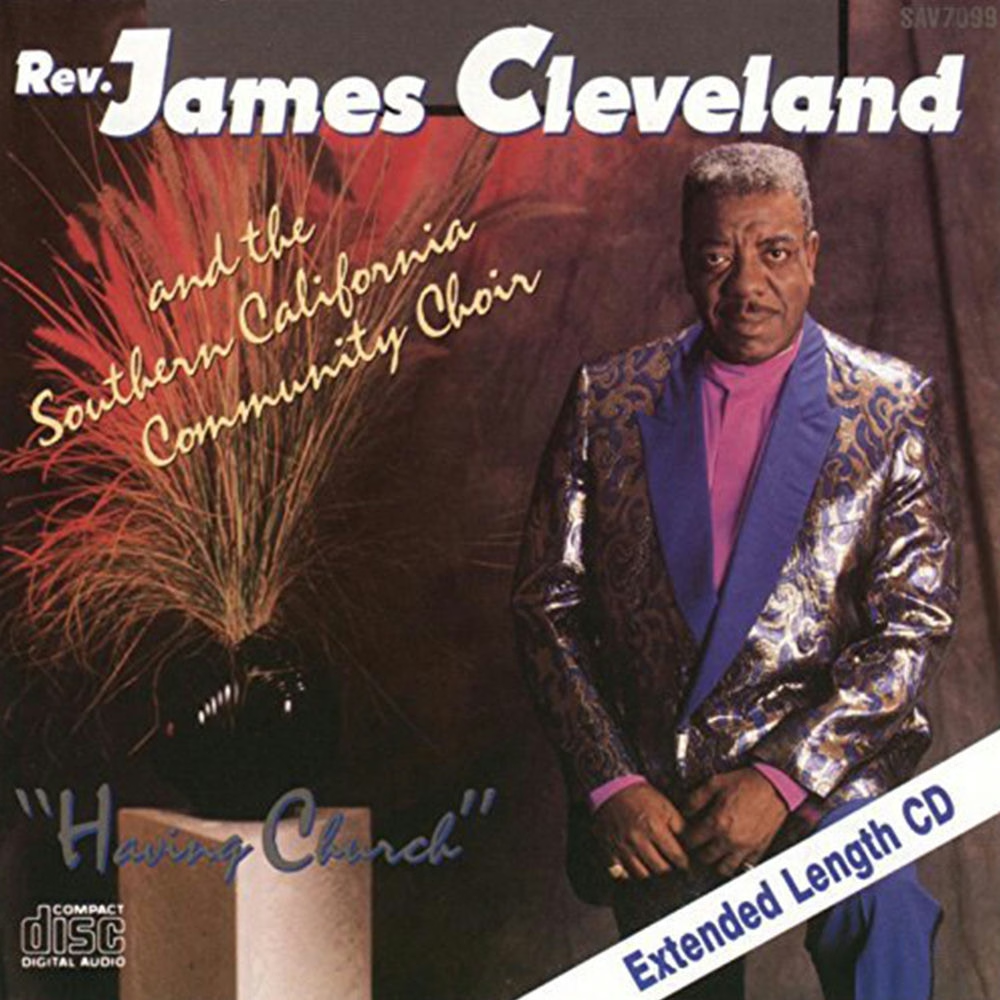
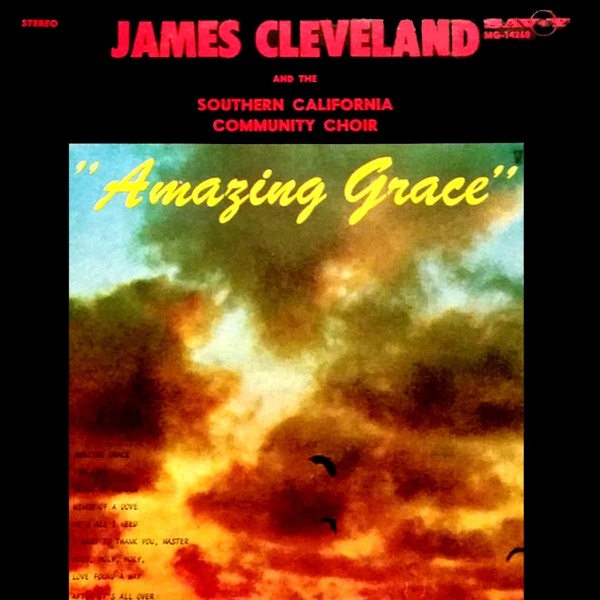
Image Credits

1,414 artist portraits across 5 genres (Rock, Jazz, Soul, Blues, Folk). 1,363 sourced from Wikipedia (Creative Commons / Public Domain), 50 from Deezer (promotional artwork).

Full attribution breakdown →

Rev. James Cleveland

1932 – 1991 (59)

The voice was gravel. It was not pretty. Rev.

0:30
0:30
0:30
0:30

James Cleveland sang like a man who had spent a lifetime in the pulpit, which he had. His voice had no polish, no sheen, no desire to be anything except exactly what it was -- rough, insistent, the sound of faith that came from somewhere deeper than the throat. He was born in Chicago in 1932, sang in the choir at the Greater Institutional AME Church, and by the time he was a teenager he was already arranging music for Mahalia Jackson. He was not quite 20 and he was telling the greatest gospel singer in the world where to place a note. She listened.

What Cleveland understood, earlier than almost anyone, was that gospel was not a solo art. It was a choir art. He built arrangements that turned a group of voices into a single breathing organism. The call and response, the staggered entrances, the way a choir could rise and fall like a wave breaking -- he codified it. He founded the Gospel Music Workshop of America in 1968, and through that organization he taught thousands of choir directors how to do what he did. Aretha Franklin came to him to learn. So did Shirley Caesar, who sang in his Caravans. The Caravans were Cleveland's training ground for a generation of gospel's greatest female voices -- Albertina Walker, Bessie Griffin, Inez Andrews. He paid them poorly and drilled them hard, and they came out of the Caravans as headliners.

Rev. James Cleveland interview 1990

"Peace Be Still 0:30," recorded live in 1963, was his signature. The song starts quiet, almost murmured, and then the choir comes in like a tide that will not stop rising. Cleveland's piano drives it, his voice cracks on the high notes, and the congregation responds like they're in a revival -- because they are. The line between performance and worship disappears in Cleveland's music.

Jesus Is The Best Thing That Ever Happened To Me (1975)

You cannot listen to "Peace Be Still" from a critical distance. It pulls you in or leaves you standing outside. That was the point. He composed and arranged for decades, won four Grammys, and recorded over 100 albums, but the work that mattered was the infrastructure he built -- the choirs he trained, the directors he turned into leaders, the young singers he sent out into the world.

He died in 1991 at 58, from heart failure. The King of Gospel, they called him, but the crown was never the point. Rev. James Cleveland took the raw material of the Black church -- the moan, the shout, the sway, the sweat -- and gave it form without taking the spirit out. Every mega-choir you have ever seen, every gospel group that hits a downbeat and makes the room disappear, is a footnote to what Cleveland built.
Jesus Is The Best Thing That Ever Happened To Me (1975) Jesus Is The Best Thing That Ever Happened To Me (1975)
Amazing Grace (1970) Amazing Grace (1970)
Peace Be Still Live (1962) Peace Be Still Live (1962)
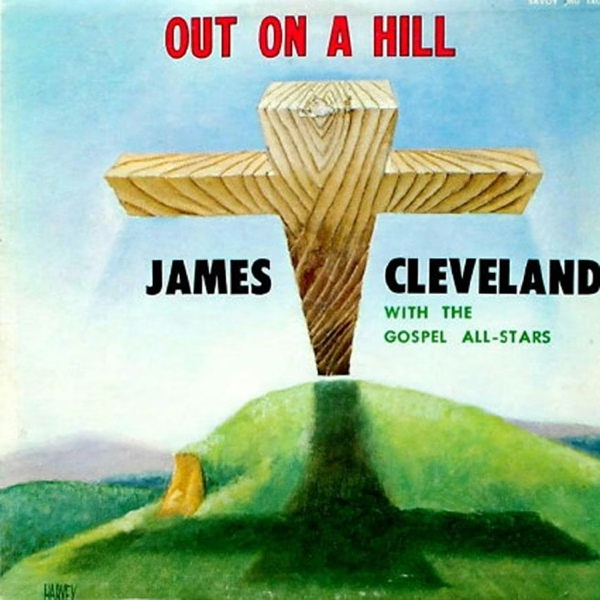
Out On A Hill (1961)
This Sunday-In Person (1962)
I Stood On The Banks Of The Jordan (1964)
Down Memory Lane (1973)
Jesus Is The Best Thing That Ever Happened To Me (1975)
Everything Will Be Alright (1978)
It's a New Day (1979)
Having Church (1990)
A Tribute to the King (1991)
I Don't Feel Noway Tired (1997)
Vintage Gospel (2019)
Jame Cleveland’s Greatest
In Times Like These
The Lord Is My Light
Amazing Grace (1970)
Peace Be Still Live (1962)
gospeltraditional gospel
The Sunday Drop
One song. One story. Every Sunday.

No algorithms. No trending sections. Just a song someone loved and the story behind it. Delivered Sunday morning.

Free. No spam. Unsubscribe anytime.

Image Credits

1,414 artist portraits across 5 genres (Rock, Jazz, Soul, Blues, Folk). 1,363 sourced from Wikipedia (Creative Commons / Public Domain), 50 from Deezer (promotional artwork).

Full attribution breakdown →

0:00
0:00