The Isley Brothers tracklist updated 08/2026
Formed in Cincinnati in 1954, the Isley Brothers were Ronald, O'Kelly, and Rudolph, three siblings who had been singing gospel in church since childhood. Their early records for RCA were raw R&B, and they scored a major hit in 1959 with "Shout," a song that became a wedding reception staple for generations. But the group was ambitious beyond the reach of a novelty hit. They moved to Motown in the mid-1960s, recorded the classic "This Old Heart of Mine," and then walked away when they realized the Motown machine couldn't contain the direction they wanted to go. The cost was the security of the label, but the payout was total creative freedom and a sound all their own. They bet on themselves and the bet paid off in ways no one could have predicted.
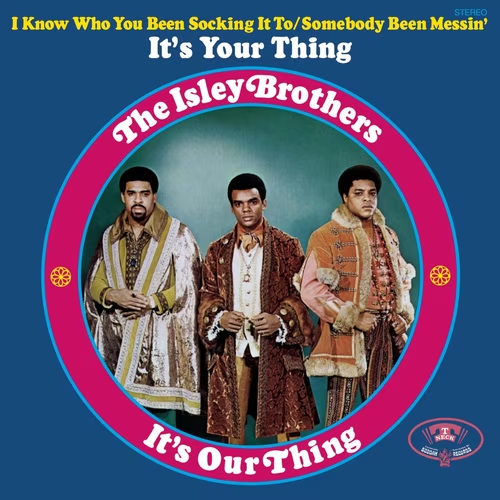
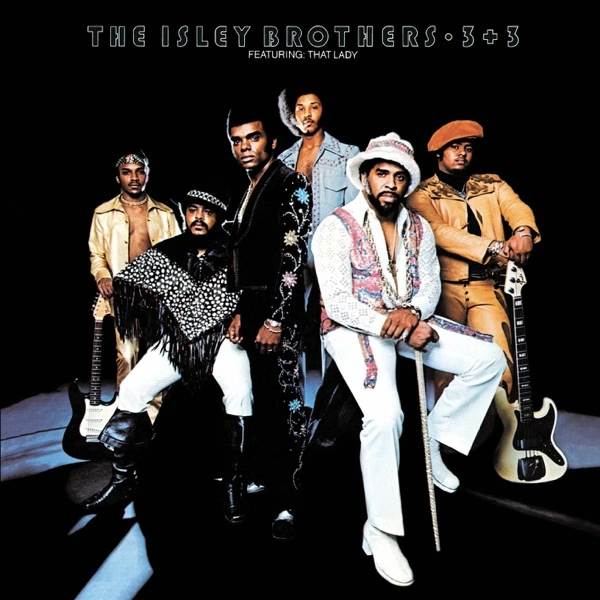
"It's Your Thing" was the declaration of independence. Released in 1969 on the group's own T-Neck label, the track was a sideways funk groove built around a bassline that refused to stay in one place, horns that jabbed like a prize fighter, and Ronald Isley's vocal, which shifted from a purr to a growl in the same phrase. The song won a Grammy, went to number two on the pop charts, and told the world that the Isley Brothers were not just singers anymore -- they were a band. Ernie Isley had joined on guitar, bringing a rock virtuosity that allowed the group to cover "Summer Breeze" and "Ohio/Machine Gun" in the same career, proving that funk, soul, rock, and balladry could all live under one roof.
Still alive and still recording, with Ronald Isley carrying the group's name into the twenty-first century, the Isley Brothers built a catalog that spans more styles than any three groups could manage. Every band that has dared to change their sound mid-career, every artist who has managed to stay relevant across decades, every musician who understands that versatility is not a weakness but the highest form of strength -- they're all working in the house that the brothers from Cincinnati built. The Isleys didn't have a sound. They had a family.
Still alive and still recording, with Ronald Isley carrying the group's name into the twenty-first century, the Isley Brothers built a catalog that spans more styles than any three groups could manage. Every band that has dared to change their sound mid-career, every artist who has managed to stay relevant across decades, every musician who understands that versatility is not a weakness but the highest form of strength -- they're all working in the house that the brothers from Cincinnati built. The Isleys didn't have a sound. They had a family.