The Staple Singers
1948 – 2000 (52)
Gospel Turned Protest Music

Gospel walked out of church one day and decided to stay in the street. The Staple Singers were a family choir that became a political instrument, carrying the sound of Sunday morning into the middle of the civil rights struggle. Roebuck "Pops" Staples started the group in Chicago in 1948 with his children -- Mavis, Cleotha, and Pervis -- and built a sound that could hold both a hymn and a protest.

0:30
0:30
0:30
0:30

Mavis's voice was the engine, a contralto that sounded like it had already lived three lifetimes before she turned twenty. The mix of gospel roots and secular ambition created a tension that drove everything they did. They were a family first and a group second, which gave them a cohesion no hired band could match.

The cost was the church's disapproval. When Pops decided to move the group from gospel to secular soul, the congregation didn't follow -- the message stayed the same, justice, freedom, dignity, but the venue changed, and that cost them their original audience. They kept going anyway, because the message was bigger than the building. Pops's guitar, that spare Delta-influenced picking style, grounded everything in the earth while Mavis's voice reached for the sky. They found their home at Stax Records in the late sixties, where the Memphis sound gave the gospel urgency a new rhythm section. The move was risky, and for a while it looked like the bet wouldn't pay off, but the faith behind the music was bigger than any doubt.

The Staple Singers interview 1990

"I'll Take You There 0:30" is the one. That bass line is a walk into another dimension, the guitar riff a promise, and Mavis's vocal an invitation you can't decline. The hit came in 1972 and it wasn't just a song -- it was a landing zone for every exhausted freedom fighter who needed to hear that somewhere better existed. "Respect Yourself 0:30" and "I'll Take You There" became anthems because the Staple Singers understood that uplift without a groove is just a lecture.

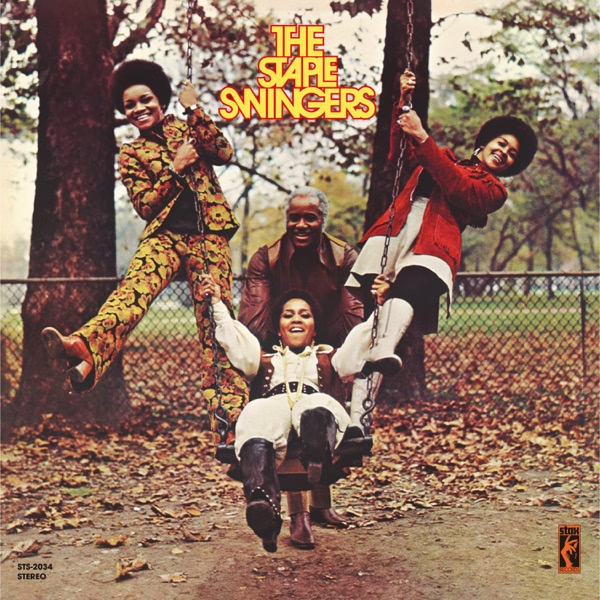
The Staple Swingers (1971)

They gave the movement a soundtrack that made you want to march, a pocket so deep you could live in it. The message and the music were inseparable, welded together by Pops's production and Mavis's unshakeable delivery. Every note carried a purpose beyond entertainment.

The group ended around 2000, but the sound didn't disappear. Mavis carried it forward as a solo artist, Pops's guitar style got absorbed into the DNA of roots music, and the idea that a family could be a political force through song became part of American vernacular. The Staple Singers took gospel where it needed to go -- out of the pews and into the streets, into the crates, into the mothership. They didn't just sing -- they testified with a backbeat and changed what soul music could say out loud. The church moved, and the street answered.

The Staple Singers was profiled in the documentary, Mavis!, in 2015.
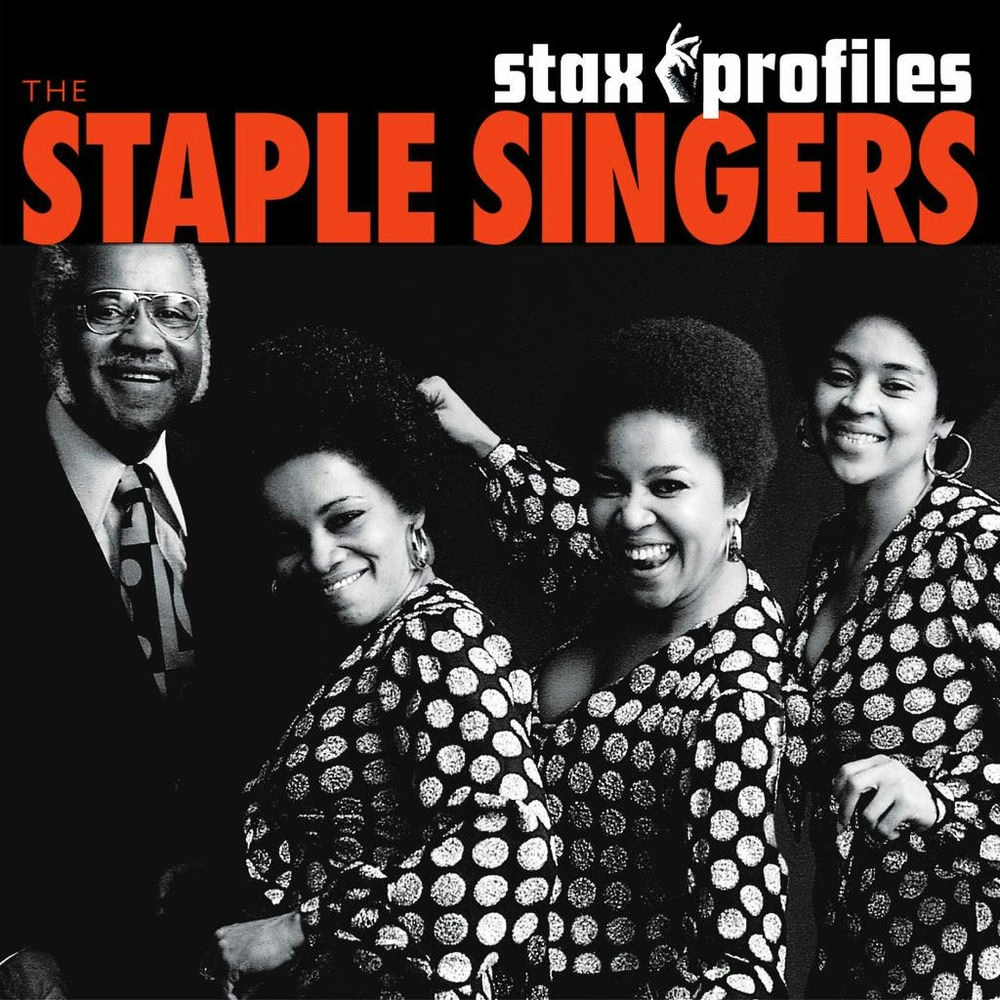
Image Credits

1,414 artist portraits across 5 genres (Rock, Jazz, Soul, Blues, Folk). 1,363 sourced from Wikipedia (Creative Commons / Public Domain), 50 from Deezer (promotional artwork).

Full attribution breakdown →

The Staple Singers

1948 – 2000 (52)
Gospel Turned Protest Music

Gospel walked out of church one day and decided to stay in the street. The Staple Singers were a family choir that became a political instrument, carrying the sound of Sunday morning into the middle of the civil rights struggle. Roebuck "Pops" Staples started the group in Chicago in 1948 with his children -- Mavis, Cleotha, and Pervis -- and built a sound that could hold both a hymn and a protest.

0:30
0:30
0:30
0:30

Mavis's voice was the engine, a contralto that sounded like it had already lived three lifetimes before she turned twenty. The mix of gospel roots and secular ambition created a tension that drove everything they did. They were a family first and a group second, which gave them a cohesion no hired band could match.

The cost was the church's disapproval. When Pops decided to move the group from gospel to secular soul, the congregation didn't follow -- the message stayed the same, justice, freedom, dignity, but the venue changed, and that cost them their original audience. They kept going anyway, because the message was bigger than the building. Pops's guitar, that spare Delta-influenced picking style, grounded everything in the earth while Mavis's voice reached for the sky. They found their home at Stax Records in the late sixties, where the Memphis sound gave the gospel urgency a new rhythm section. The move was risky, and for a while it looked like the bet wouldn't pay off, but the faith behind the music was bigger than any doubt.

The Staple Singers interview 1990

"I'll Take You There 0:30" is the one. That bass line is a walk into another dimension, the guitar riff a promise, and Mavis's vocal an invitation you can't decline. The hit came in 1972 and it wasn't just a song -- it was a landing zone for every exhausted freedom fighter who needed to hear that somewhere better existed. "Respect Yourself 0:30" and "I'll Take You There" became anthems because the Staple Singers understood that uplift without a groove is just a lecture.

The Staple Swingers (1971)

They gave the movement a soundtrack that made you want to march, a pocket so deep you could live in it. The message and the music were inseparable, welded together by Pops's production and Mavis's unshakeable delivery. Every note carried a purpose beyond entertainment.

The group ended around 2000, but the sound didn't disappear. Mavis carried it forward as a solo artist, Pops's guitar style got absorbed into the DNA of roots music, and the idea that a family could be a political force through song became part of American vernacular. The Staple Singers took gospel where it needed to go -- out of the pews and into the streets, into the crates, into the mothership. They didn't just sing -- they testified with a backbeat and changed what soul music could say out loud. The church moved, and the street answered.

The Staple Singers was profiled in the documentary, Mavis!, in 2015.
The Staple Swingers (1971) The Staple Swingers (1971)
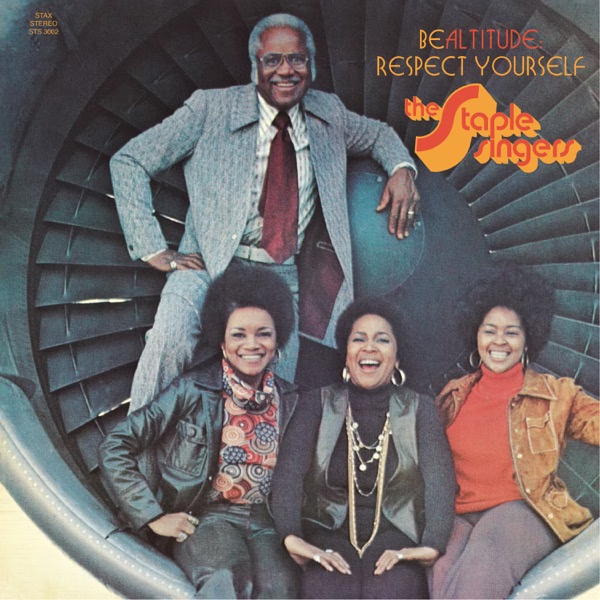
Be Altitude: Respect Yourself (1972) Be Altitude: Respect Yourself (1972)
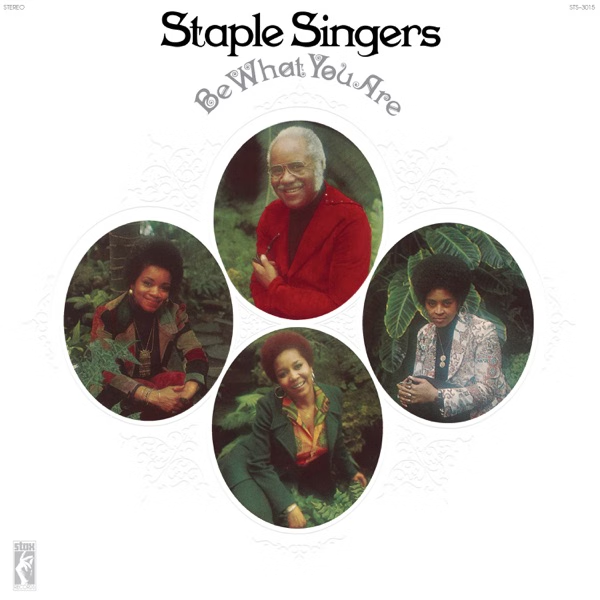
Be What You Are (1973) Be What You Are (1973)
Uncloudy Day (1959)
Swing Low (1961)
Hammer and Nails (1962)
The 25th Day of December (1962)
This Land (1963)
This Little Light (1965)
Amen! (1965)
Why (1966)
For What It’s Worth (1967)
Pray On (1967)
Soul Folk in Action (1968)
What the World Needs Now Is Love (1968)
We’ll Get Over (1969)
The Staple Swingers (1971)
Be Altitude: Respect Yourself (1972)
Be What You Are (1973)
soulgospelr&b
The Sunday Drop
One song. One story. Every Sunday.

No algorithms. No trending sections. Just a song someone loved and the story behind it. Delivered Sunday morning.

Free. No spam. Unsubscribe anytime.

Image Credits

1,414 artist portraits across 5 genres (Rock, Jazz, Soul, Blues, Folk). 1,363 sourced from Wikipedia (Creative Commons / Public Domain), 50 from Deezer (promotional artwork).

Full attribution breakdown →

0:00
0:00