Smokey Robinson
1940 –
The Man Who Taught Motown That Soul Was a Sentence

The voice could melt glass at fifty paces. High, sweet, impossibly controlled, it delivered heartbreak in the register of a choirboy who had seen too much of the world. Smokey Robinson sang about love like it was the only subject worth discussing -- which, for him, it was.

0:30
0:30
0:30
0:30

He didn't just sing the songs; he wrote them, produced them, arranged them, and handed them to the world with a smile that suggested he knew something the rest of us were still trying to figure out. The voice was a weapon disguised as a caress, and the weapon never missed its target. The target was always the heart.

Born in Detroit, Michigan in 1940, Robinson formed The Miracles in high school and took the group to Berry Gordy's new label, Tamla Records, which would become Motown. Gordy initially hired Robinson as a songwriter and producer for other acts, and the arrangement proved inspired -- Smokey could write a three-minute pop song that contained more emotional information than most novels. "The Tracks of My Tears 0:30," which he composed with Pete Moore and Marv Tarplin, became a standard almost immediately, its melancholy wrapped in an arrangement so elegant it nearly disguised the ache at its center. The craft was invisible because it was so complete, and the songs felt as natural as breathing. He made the hardest work in pop music look effortless, and the easy grace of his delivery fooled everyone into thinking it was simple.

Smokey Robinson interview 1990

"The Tears of a Clown," which Robinson co-wrote with Stevie Wonder, became The Miracles' only number one on the Billboard Hot 100 in 1970. Built around a circus calliope melody and a rhythm track that bounced like a parade, the song concealed a devastating lyric about a man who makes people laugh while his own heart is breaking. The contrast between the jaunty arrangement and the dark interior was pure Smokey -- the smile that hides the sorrow, the falsetto that floats above the pain. He understood that pop music's job was to make the unbearable beautiful, and he did it better than anyone else in the Motown stable.

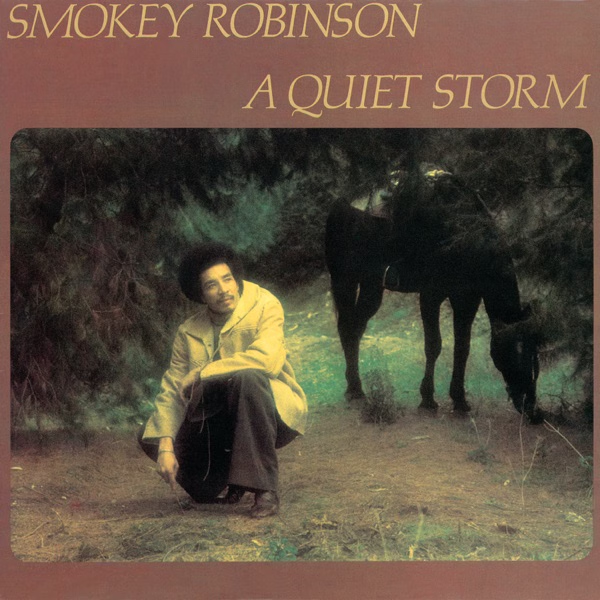
A Quiet Storm (1975)

The sadness hit harder because the melody was so sweet, and the sweetness never felt cheap.

Still alive and still the poet laureate of Motown, Smokey Robinson set the standard for what a singer-songwriter could be in the Black pop tradition. Every writer who wraps hard truths in sweet melodies, every vocalist who understands that restraint hits harder than shouting, every soul artist who treats a three-minute single as a complete emotional universe -- they're all heirs to the craft that Smokey perfected on the assembly line in Detroit. He made heartbreak sound like the best reason to keep living.
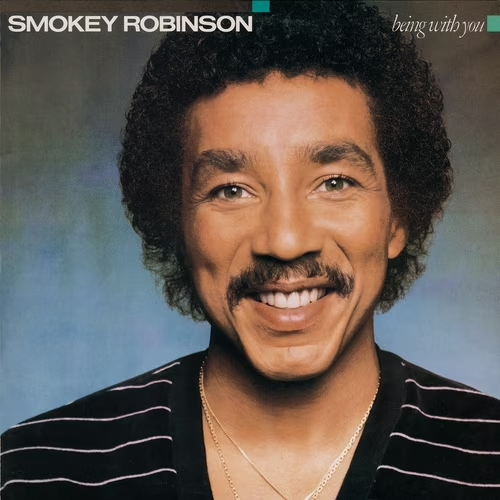
Image Credits

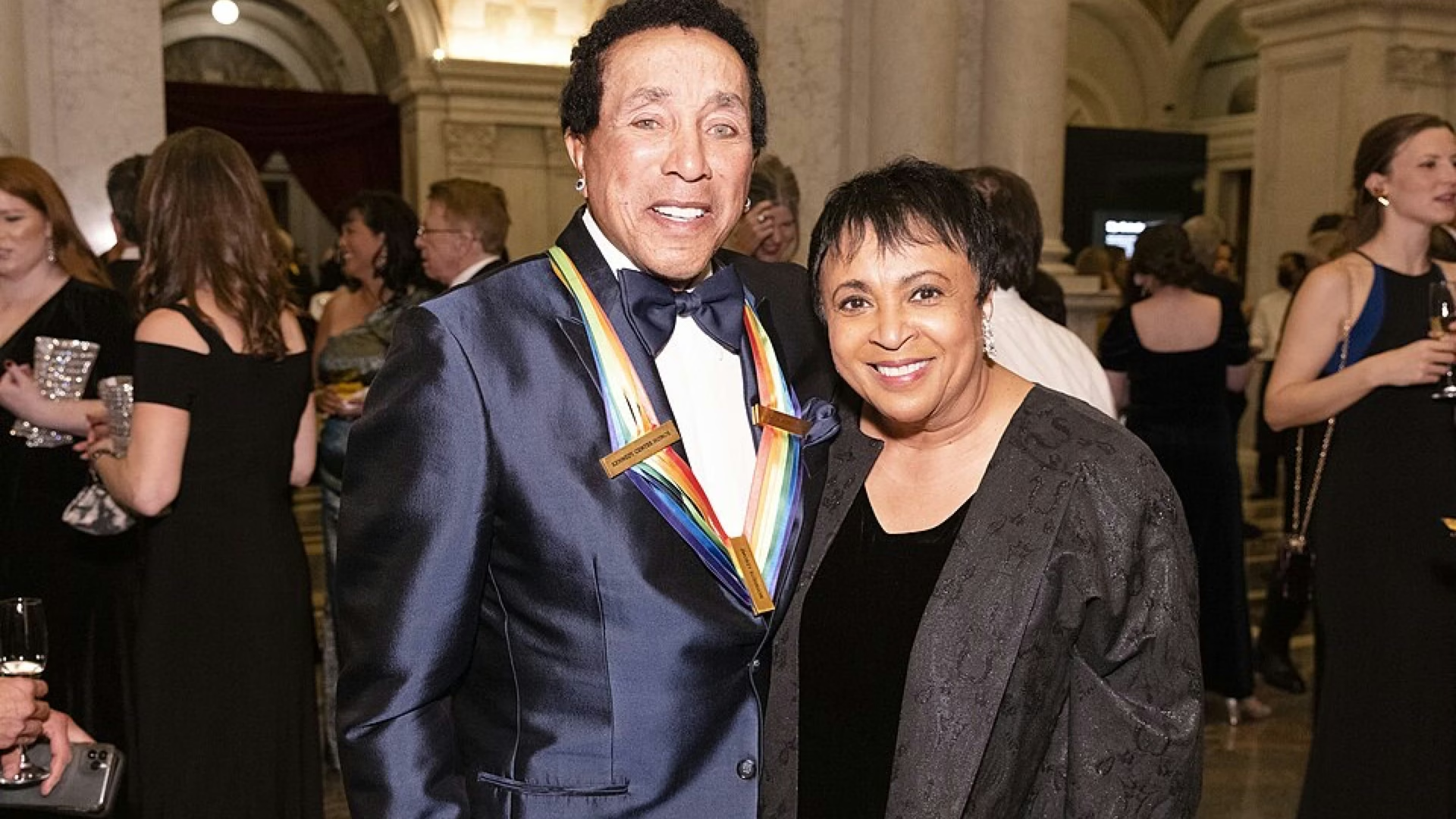
1,414 artist portraits across 5 genres (Rock, Jazz, Soul, Blues, Folk). 1,363 sourced from Wikipedia (Creative Commons / Public Domain), 50 from Deezer (promotional artwork).

Full attribution breakdown →

Smokey Robinson

1940 –
The Man Who Taught Motown That Soul Was a Sentence

The voice could melt glass at fifty paces. High, sweet, impossibly controlled, it delivered heartbreak in the register of a choirboy who had seen too much of the world. Smokey Robinson sang about love like it was the only subject worth discussing -- which, for him, it was.

0:30
0:30
0:30
0:30

He didn't just sing the songs; he wrote them, produced them, arranged them, and handed them to the world with a smile that suggested he knew something the rest of us were still trying to figure out. The voice was a weapon disguised as a caress, and the weapon never missed its target. The target was always the heart.

Born in Detroit, Michigan in 1940, Robinson formed The Miracles in high school and took the group to Berry Gordy's new label, Tamla Records, which would become Motown. Gordy initially hired Robinson as a songwriter and producer for other acts, and the arrangement proved inspired -- Smokey could write a three-minute pop song that contained more emotional information than most novels. "The Tracks of My Tears 0:30," which he composed with Pete Moore and Marv Tarplin, became a standard almost immediately, its melancholy wrapped in an arrangement so elegant it nearly disguised the ache at its center. The craft was invisible because it was so complete, and the songs felt as natural as breathing. He made the hardest work in pop music look effortless, and the easy grace of his delivery fooled everyone into thinking it was simple.

Smokey Robinson interview 1990

"The Tears of a Clown," which Robinson co-wrote with Stevie Wonder, became The Miracles' only number one on the Billboard Hot 100 in 1970. Built around a circus calliope melody and a rhythm track that bounced like a parade, the song concealed a devastating lyric about a man who makes people laugh while his own heart is breaking. The contrast between the jaunty arrangement and the dark interior was pure Smokey -- the smile that hides the sorrow, the falsetto that floats above the pain. He understood that pop music's job was to make the unbearable beautiful, and he did it better than anyone else in the Motown stable.

A Quiet Storm (1975)

The sadness hit harder because the melody was so sweet, and the sweetness never felt cheap.

Still alive and still the poet laureate of Motown, Smokey Robinson set the standard for what a singer-songwriter could be in the Black pop tradition. Every writer who wraps hard truths in sweet melodies, every vocalist who understands that restraint hits harder than shouting, every soul artist who treats a three-minute single as a complete emotional universe -- they're all heirs to the craft that Smokey perfected on the assembly line in Detroit. He made heartbreak sound like the best reason to keep living.
A Quiet Storm (1975) A Quiet Storm (1975)
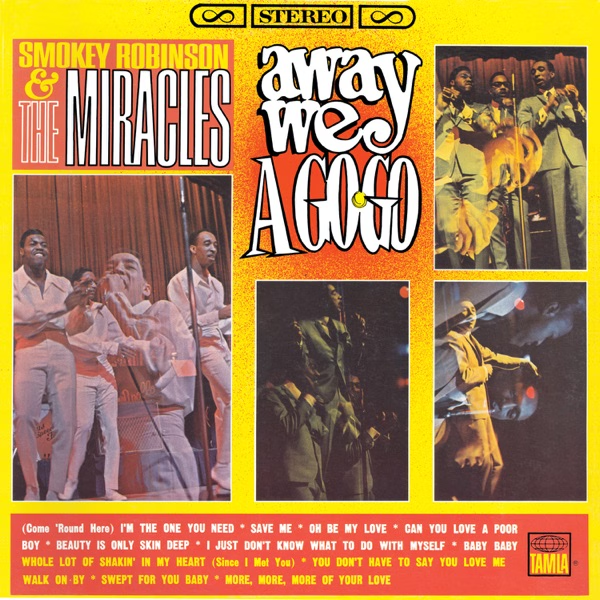
Away We A Go Go (1966) Away We A Go Go (1966)
Going To A Go Go (1965) Going To A Go Go (1965)
Smokey (1973)
Pure Smokey (1974)
A Quiet Storm (1975)
Smokey's Family Robinson (1976)
Deep in My Soul (1977)
Big Time - Original Music Score From The Motion Picture (1977)
Love Breeze (1978)
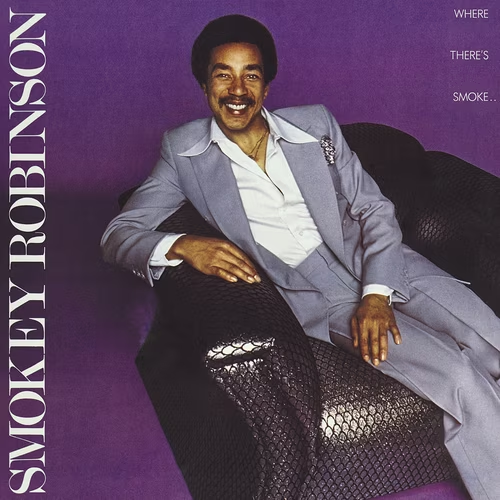
Where There's Smoke... (1979)
Warm Thoughts (1980)
Being With You (1981)
Yes It's You Lady (1982)
Touch the Sky (1983)
Essar (1984)
Smoke Signals (1986)
One Heartbeat (1987)
Away We A Go Go (1966)
Going To A Go Go (1965)
r&bsoulmotown
The Sunday Drop
One song. One story. Every Sunday.

No algorithms. No trending sections. Just a song someone loved and the story behind it. Delivered Sunday morning.

Free. No spam. Unsubscribe anytime.

Image Credits

1,414 artist portraits across 5 genres (Rock, Jazz, Soul, Blues, Folk). 1,363 sourced from Wikipedia (Creative Commons / Public Domain), 50 from Deezer (promotional artwork).

Full attribution breakdown →

0:00
0:00