Rufus & Chaka Khan
1970 –

The first time she opened her mouth, the band knew they had been playing in the wrong key their whole lives. Chaka Khan didn't just sing -- she detonated, a vocal explosion that turned every microphone into a liability and every song into a contest she had already won. Rufus was a decent funk band before she arrived.

0:30
0:30
0:30
0:30

After her, they were a delivery system for one of the most ferocious voices American music has ever produced, and they knew their job was to stay out of her way. The voice was not something you accompanied. It was something you survived, and the survival rate was zero.

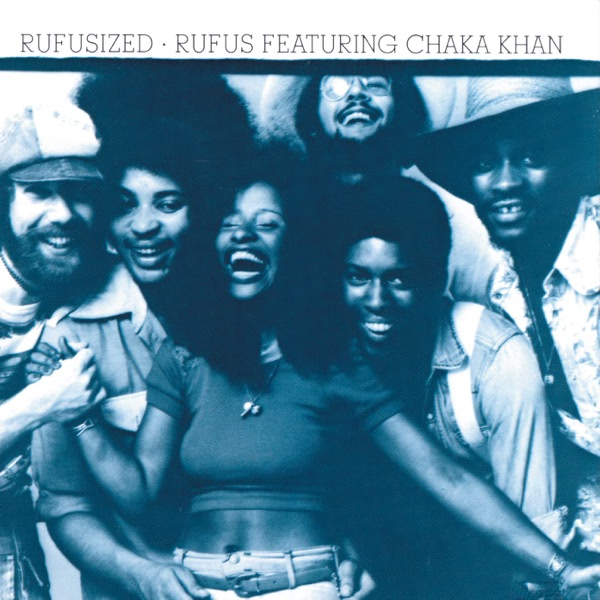
Rufus formed in Chicago in 1970, a multiracial funk-rock outfit with chops to spare and a sound that split the difference between Sly Stone's polyrhythms and the hard rock guitar of the era. The original singer didn't work out, so the band found Chaka Khan and everything shifted. She was twenty years old, untrained, and incapable of singing a single line without investing it with gospel fury and street wisdom. The band's first album with her went gold, and the follow-up, "Rufusized," proved they had stumbled into a chemistry that couldn't be manufactured. The cost was that she was always bigger than the band, a tension that would eventually pull them apart, but while it lasted the combination was explosive and undeniable.

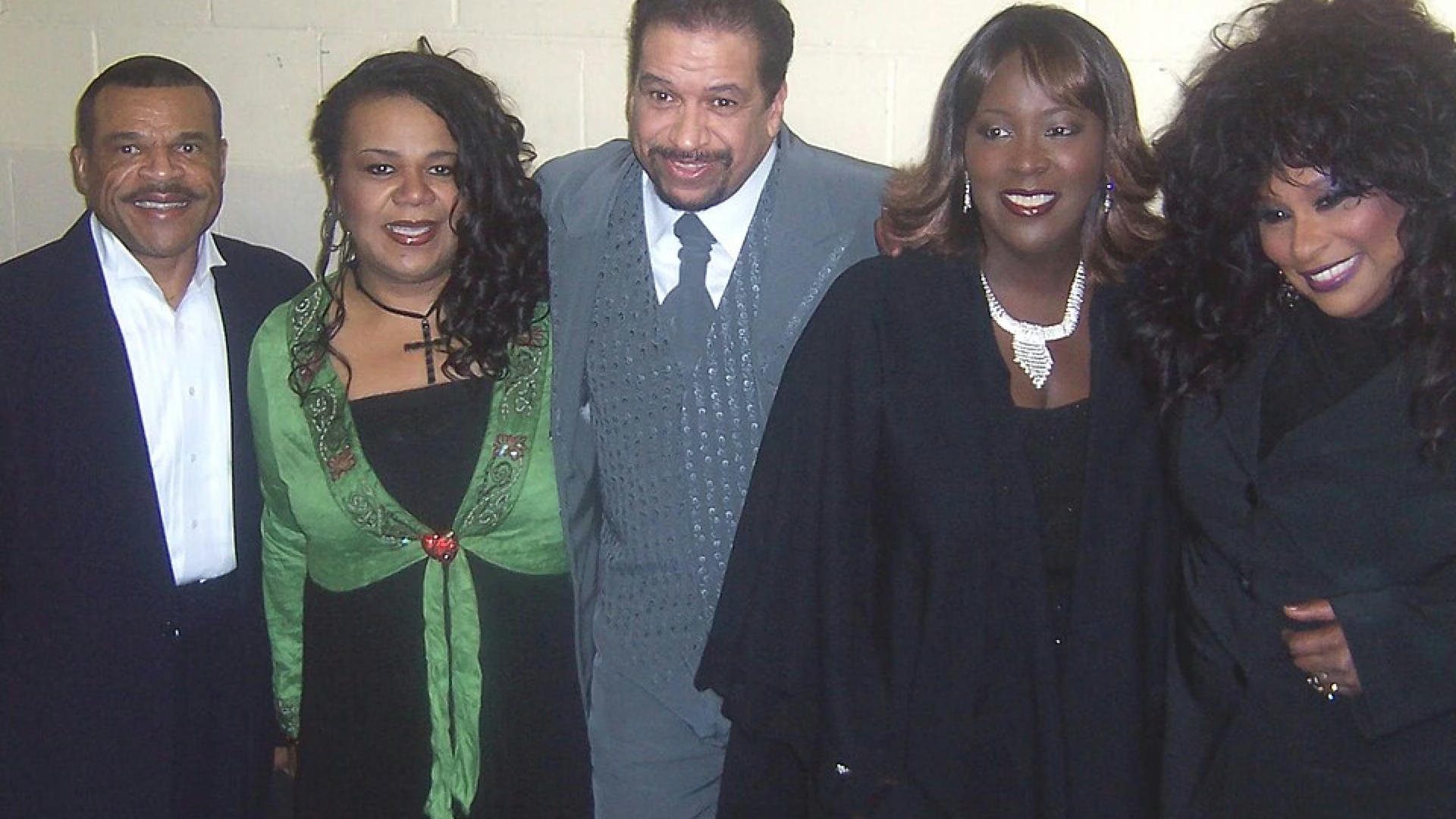
Rufus & Chaka Khan interview 1990

"Tell Me Something Good" was the track that drew the line. Written by Stevie Wonder and delivered by Chaka with the authority of someone who had seen everything and forgiven nothing, the song hit number three on the Billboard Hot 100 and won a Grammy. The groove locked into a pocket so deep you could lose a week in it, and Chaka's vocal rode the rhythm like a surfer on a wave that never broke. She could scream and whisper in the same breath, turn a come-on into a demand and a demand into an incantation.

Rags to Rufus (1974)

The track became the template for every female-fronted funk band that followed, a masterclass in how to make power feel effortless and how to make a band sound like they were following orders from a higher authority.

Chaka Khan is still alive, and Rufus's catalog has only grown in stature. Every R&B singer who reaches for the high note and the growl in the same phrase, every funk band that understands the voice can be an instrument as powerful as any guitar, every woman in popular music who refuses to be sweet when she could be volcanic -- they're all descendants of that moment in Chicago when a girl who couldn't read music taught the whole room how to play. The voice is still detonating.
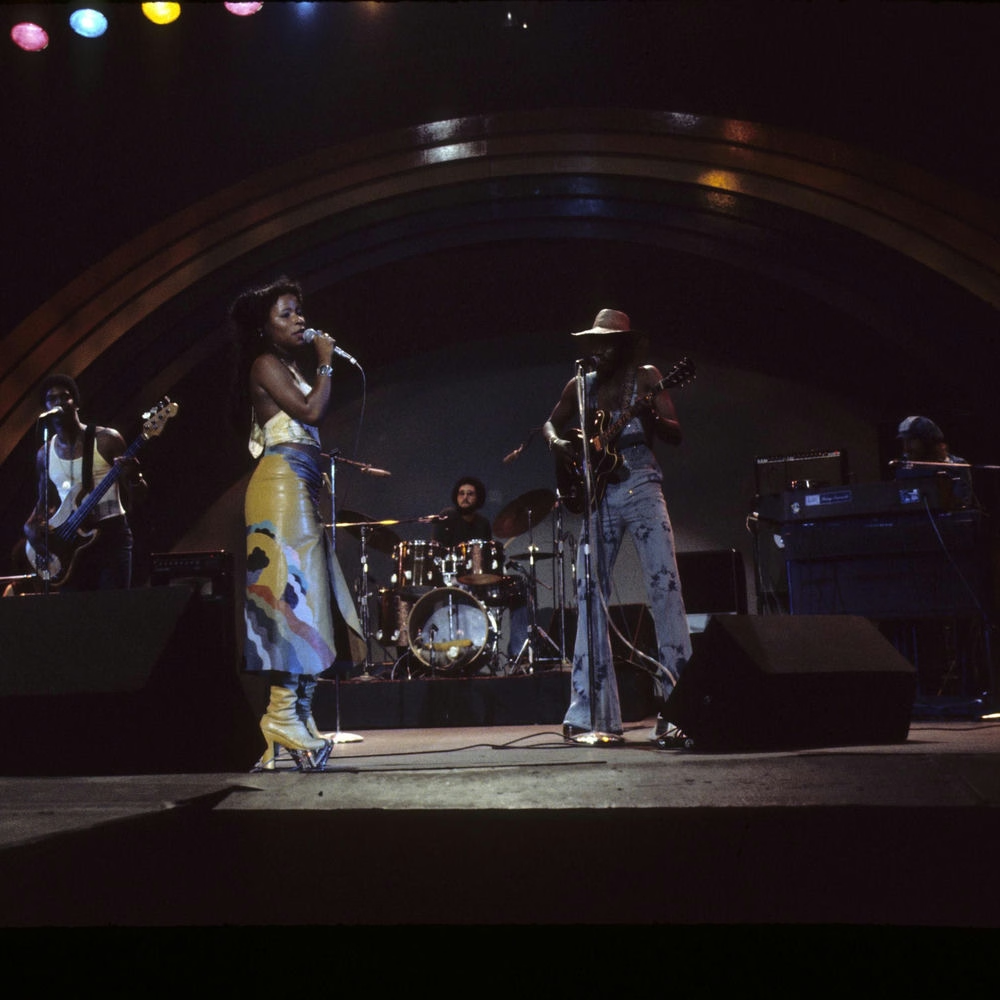
Image Credits

1,414 artist portraits across 5 genres (Rock, Jazz, Soul, Blues, Folk). 1,363 sourced from Wikipedia (Creative Commons / Public Domain), 50 from Deezer (promotional artwork).

Full attribution breakdown →

Rufus & Chaka Khan

1970 –

The first time she opened her mouth, the band knew they had been playing in the wrong key their whole lives. Chaka Khan didn't just sing -- she detonated, a vocal explosion that turned every microphone into a liability and every song into a contest she had already won. Rufus was a decent funk band before she arrived.

0:30
0:30
0:30
0:30

After her, they were a delivery system for one of the most ferocious voices American music has ever produced, and they knew their job was to stay out of her way. The voice was not something you accompanied. It was something you survived, and the survival rate was zero.

Rufus formed in Chicago in 1970, a multiracial funk-rock outfit with chops to spare and a sound that split the difference between Sly Stone's polyrhythms and the hard rock guitar of the era. The original singer didn't work out, so the band found Chaka Khan and everything shifted. She was twenty years old, untrained, and incapable of singing a single line without investing it with gospel fury and street wisdom. The band's first album with her went gold, and the follow-up, "Rufusized," proved they had stumbled into a chemistry that couldn't be manufactured. The cost was that she was always bigger than the band, a tension that would eventually pull them apart, but while it lasted the combination was explosive and undeniable.

Rufus & Chaka Khan interview 1990

"Tell Me Something Good" was the track that drew the line. Written by Stevie Wonder and delivered by Chaka with the authority of someone who had seen everything and forgiven nothing, the song hit number three on the Billboard Hot 100 and won a Grammy. The groove locked into a pocket so deep you could lose a week in it, and Chaka's vocal rode the rhythm like a surfer on a wave that never broke. She could scream and whisper in the same breath, turn a come-on into a demand and a demand into an incantation.

Rags to Rufus (1974)

The track became the template for every female-fronted funk band that followed, a masterclass in how to make power feel effortless and how to make a band sound like they were following orders from a higher authority.

Chaka Khan is still alive, and Rufus's catalog has only grown in stature. Every R&B singer who reaches for the high note and the growl in the same phrase, every funk band that understands the voice can be an instrument as powerful as any guitar, every woman in popular music who refuses to be sweet when she could be volcanic -- they're all descendants of that moment in Chicago when a girl who couldn't read music taught the whole room how to play. The voice is still detonating.

Rags to Rufus (1974) Rags to Rufus (1974)
Rufusized (1974) Rufusized (1974)
Ask Rufus (1977) Ask Rufus (1977)
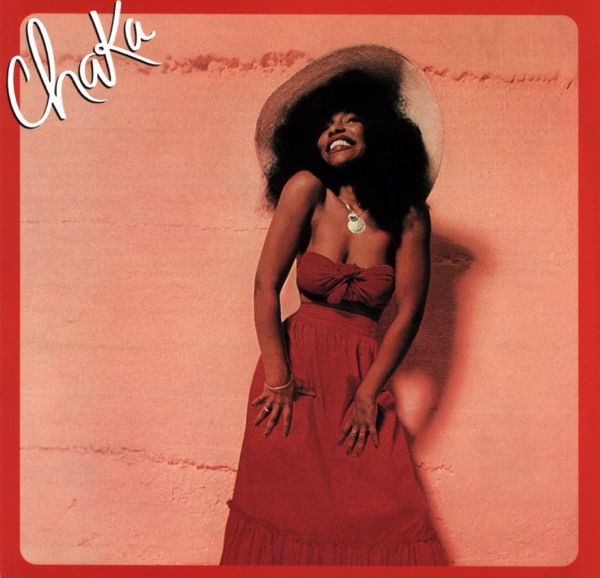
Chaka (1978) Chaka (1978)
Naughty (1980) Naughty (1980)
I Feel for You (1984) I Feel for You (1984)
Rags to Rufus (1974)
Rufusized (1974)
Rufus featuring Chaka Khan (1975)
Ask Rufus (1977)
Chaka (1978)
Street Player (1978)
Masterjam (1979)
Naughty (1980)
Camouflage (1981)
What Cha’ Gonna Do for Me (1981)
Chaka Khan (1982)
I Feel for You (1984)
Destiny (1986)
C.K. (1988)
Life Is a Dance: The Remix Project (1989)
funksoulrockr&b
The Sunday Drop
One song. One story. Every Sunday.

No algorithms. No trending sections. Just a song someone loved and the story behind it. Delivered Sunday morning.

Free. No spam. Unsubscribe anytime.

Image Credits

1,414 artist portraits across 5 genres (Rock, Jazz, Soul, Blues, Folk). 1,363 sourced from Wikipedia (Creative Commons / Public Domain), 50 from Deezer (promotional artwork).

Full attribution breakdown →

0:00
0:00