Louis Jordan
1908 – 1975 (67)
The Father of r&b

The man who taught rhythm and blues how to swing. Louis Jordan -- took the saxophone, the jump blues, and a small combo called His Tympany Five and built the bridge between big band swing and the R&B that would become rock and roll. He was the missing link with a great sense of humor.

0:30
0:30
0:30
0:30

When he played, people laughed and danced at the same time. That combination was his secret weapon. It made the music impossible to resist.

The cost of that bridge was invisibility in the history books. Jordan grew up in Arkansas playing alto sax. He moved to New York and played in Chick Webb's orchestra alongside Ella Fitzgerald, learning how to hold a room from two masters of swing. He went solo in 1938 and formed the Tympany Five -- a small, tight unit that could swing like a big band on a fraction of the payroll. The hits started in 1942 and did not stop for a decade. "Caldonia," "Let the Good Times Roll," "Choo Choo Ch'Boogie," "Ain't Nobody Here but Us Chickens." The songs were funny, fast, and built for dancing. They sold millions of copies across race lines, making Jordan a star in both Black and white markets. But the crossover audience remembered the sound while forgetting the name. He was a star but history treated him like a footnote, a warm-up act for what came later.

Louis Jordan interview 1990

"Caldonia" is the peak -- a song built on a single riff and a punchline. "Caldonia! Caldonia! What makes your big head so hard?" The band hits the riff. Jordan plays the sax break. The crowd laughs and dances at the same time.

Five Guys Named Moe (1992)

He recorded for Decca and by the late 1940s he was the most popular R&B artist in America, outselling everyone in the genre including the bigger names who would eclipse him. He made cameos in Hollywood films, bringing his energy to the big screen and proving that R&B could cross over. But when rock and roll arrived in the mid-1950s, the younger generation took his jump blues sound and made it louder, faster, and whiter. Jordan watched the charts shift. His records stopped selling. He kept playing small clubs until the end.

Louis Jordan cost himself the crown by arriving too early. He created the template that Chuck Berry and Ray Charles and James Brown each refined into something the world called new. The small combo. The saxophone lead. The ability to make people laugh and dance simultaneously. Every time a band plays a jump blues tune, every time a singer tells a joke between verses, they are working in Jordan's shadow whether they know it or not. Dig through the crate. His records still sound like the future. They just had to wait for the rest of the world to catch up.
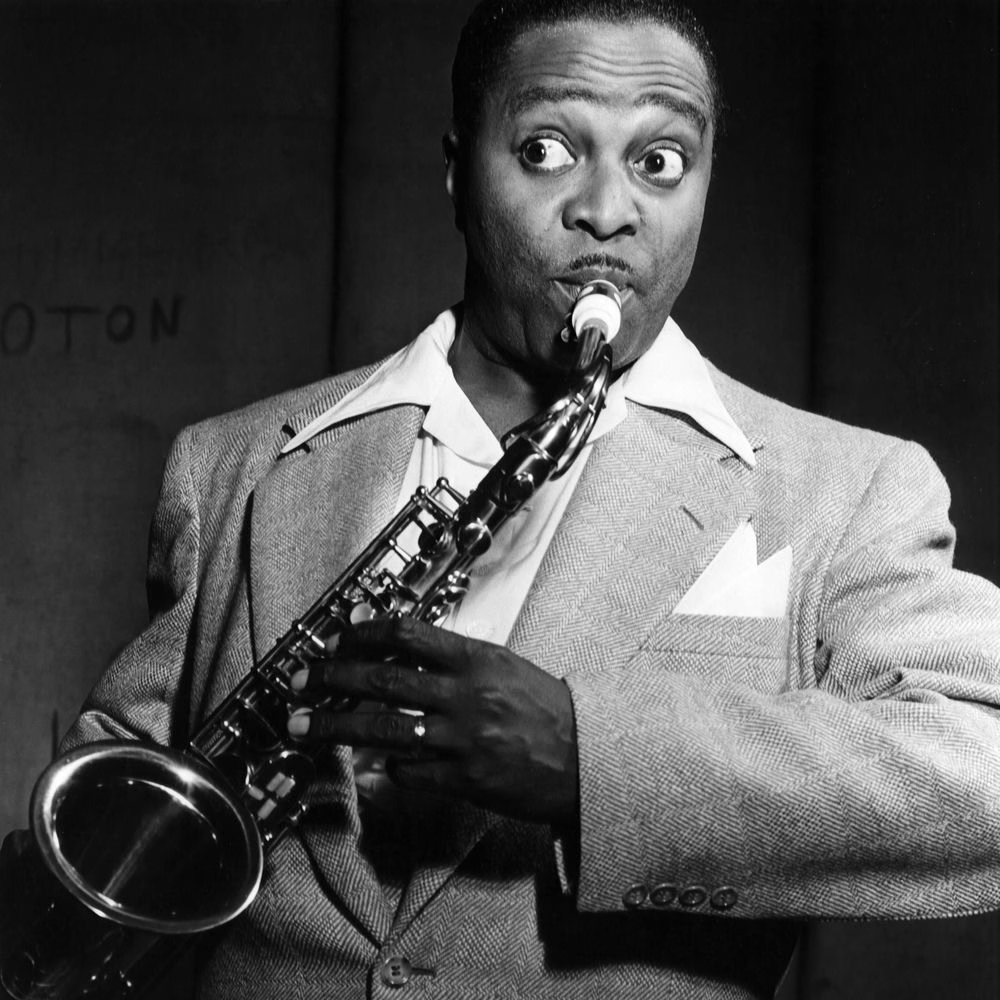
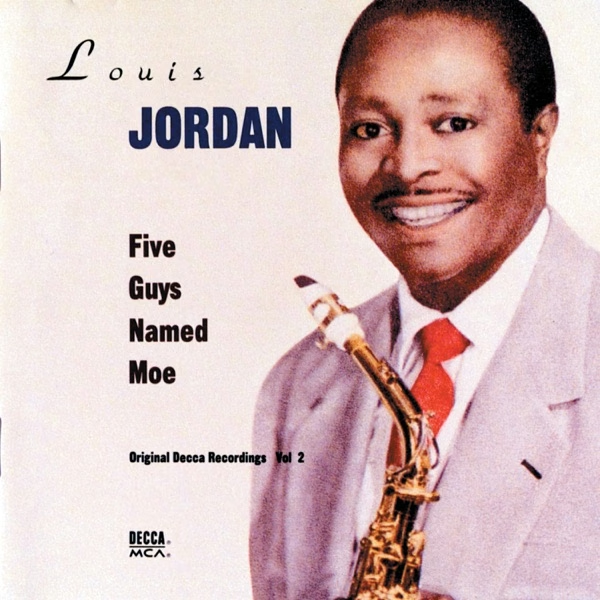
Image Credits

1,414 artist portraits across 5 genres (Rock, Jazz, Soul, Blues, Folk). 1,363 sourced from Wikipedia (Creative Commons / Public Domain), 50 from Deezer (promotional artwork).

Full attribution breakdown →

Louis Jordan

1908 – 1975 (67)
The Father of r&b

The man who taught rhythm and blues how to swing. Louis Jordan -- took the saxophone, the jump blues, and a small combo called His Tympany Five and built the bridge between big band swing and the R&B that would become rock and roll. He was the missing link with a great sense of humor.

0:30
0:30
0:30
0:30

When he played, people laughed and danced at the same time. That combination was his secret weapon. It made the music impossible to resist.

The cost of that bridge was invisibility in the history books. Jordan grew up in Arkansas playing alto sax. He moved to New York and played in Chick Webb's orchestra alongside Ella Fitzgerald, learning how to hold a room from two masters of swing. He went solo in 1938 and formed the Tympany Five -- a small, tight unit that could swing like a big band on a fraction of the payroll. The hits started in 1942 and did not stop for a decade. "Caldonia," "Let the Good Times Roll," "Choo Choo Ch'Boogie," "Ain't Nobody Here but Us Chickens." The songs were funny, fast, and built for dancing. They sold millions of copies across race lines, making Jordan a star in both Black and white markets. But the crossover audience remembered the sound while forgetting the name. He was a star but history treated him like a footnote, a warm-up act for what came later.

Louis Jordan interview 1990

"Caldonia" is the peak -- a song built on a single riff and a punchline. "Caldonia! Caldonia! What makes your big head so hard?" The band hits the riff. Jordan plays the sax break. The crowd laughs and dances at the same time.

Five Guys Named Moe (1992)

He recorded for Decca and by the late 1940s he was the most popular R&B artist in America, outselling everyone in the genre including the bigger names who would eclipse him. He made cameos in Hollywood films, bringing his energy to the big screen and proving that R&B could cross over. But when rock and roll arrived in the mid-1950s, the younger generation took his jump blues sound and made it louder, faster, and whiter. Jordan watched the charts shift. His records stopped selling. He kept playing small clubs until the end.

Louis Jordan cost himself the crown by arriving too early. He created the template that Chuck Berry and Ray Charles and James Brown each refined into something the world called new. The small combo. The saxophone lead. The ability to make people laugh and dance simultaneously. Every time a band plays a jump blues tune, every time a singer tells a joke between verses, they are working in Jordan's shadow whether they know it or not. Dig through the crate. His records still sound like the future. They just had to wait for the rest of the world to catch up.
Five Guys Named Moe (1992) Five Guys Named Moe (1992)
Let The Good Times Roll The Anthology 1938 (1999) Let The Good Times Roll The Anthology 1938 (1999)
The Best Of Louis Jordan (1975) The Best Of Louis Jordan (1975)
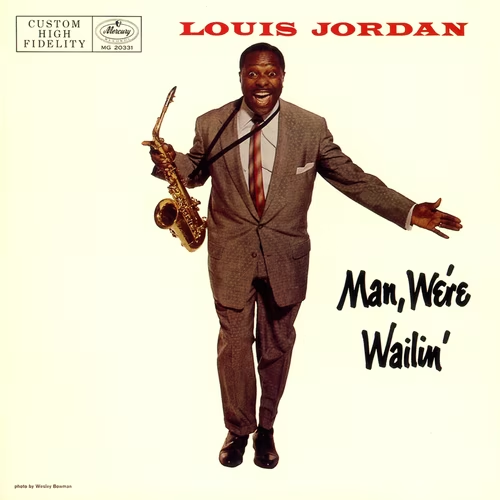
Man
We're Wailin' (1958)
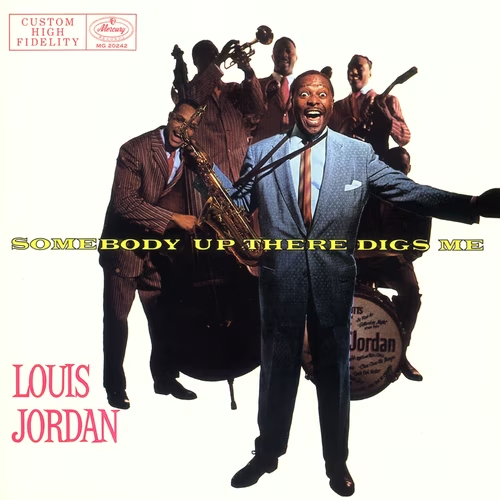
Somebody Up There Digs Me (1962)
Hallelujah... Louis Jordan Is Back! (1964)
Louis Jordan & Chris Barber (1977)
I Believe in Music: The Blues Singer & Players Collection
Volume 20 (1980)
Rock 'n Roll Call (1985)
Is You Or Is You Ain't (1999)
Five Guys Named Moe (The V Discs)
Five Guys Named Moe (1992)
Let The Good Times Roll The Anthology 1938 (1999)
The Best Of Louis Jordan (1975)
jump bluesr&bswing
The Sunday Drop
One song. One story. Every Sunday.

No algorithms. No trending sections. Just a song someone loved and the story behind it. Delivered Sunday morning.

Free. No spam. Unsubscribe anytime.

Image Credits

1,414 artist portraits across 5 genres (Rock, Jazz, Soul, Blues, Folk). 1,363 sourced from Wikipedia (Creative Commons / Public Domain), 50 from Deezer (promotional artwork).

Full attribution breakdown →

0:00
0:00