Who Did It Better
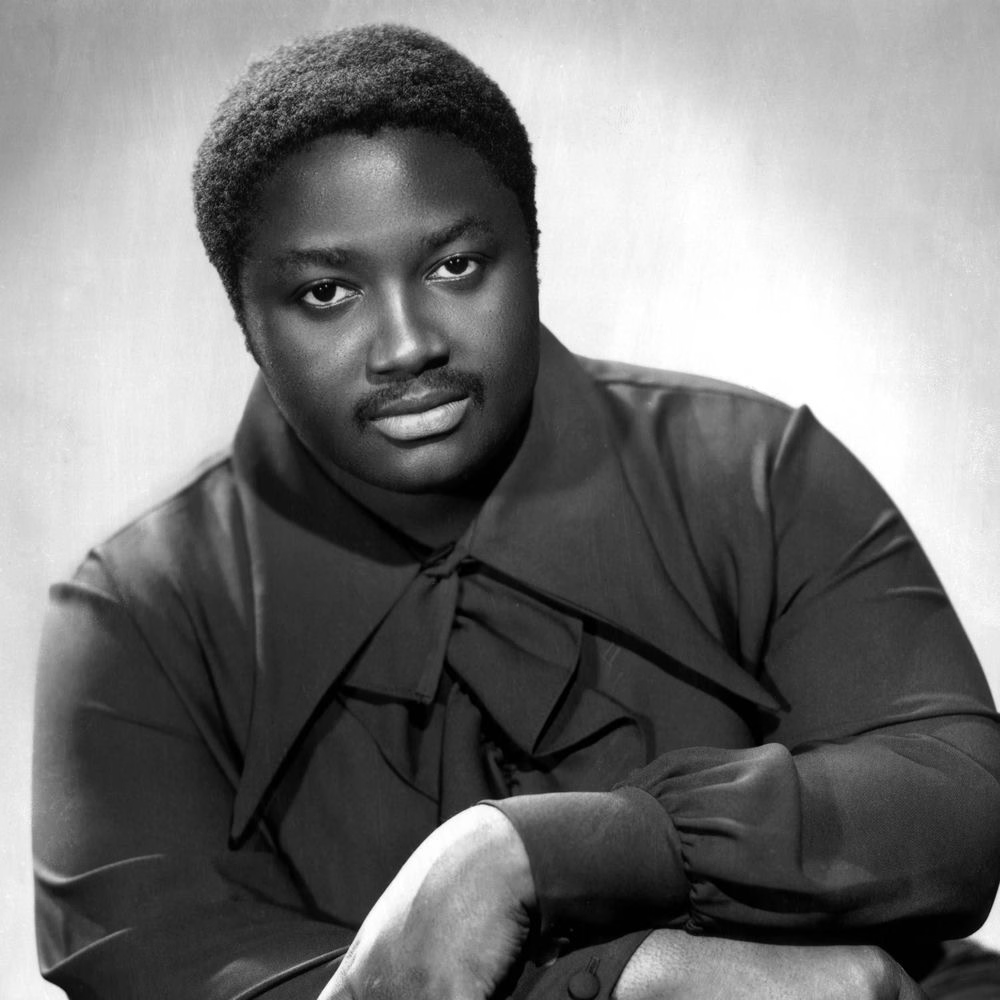
He played piano with a touch that made every note feel like a conversation between old friends, and his voice carried a vulnerability that made studio recordings feel like late-night confessions shared in the dark.
"A Song for You" and "The Ghetto" showed a songwriter moving between intimate balladry and social commentary without breaking stride or losing his center. His duets with Roberta Flack remain the benchmark for soul collaborations.
About this song
The Ghetto
No you ain't doin' what you're suppose to
You doin' what you wanna do
A portrait of poverty drawn from the inside. Donny Hathaway wrote it as a compassionate look at life in the ghetto, refusing to romanticize or condemn. The ghetto is not a place, the song argues. It is a condition, a state of being that follows people no matter where they go. Hathaway's vocal is one of his greatest, carrying the specific gravity of someone who has seen the ghetto from both sides and is not interested in easy judgments. The arrangement is built around a gentle piano figure and a rhythm section that moves like a walk through streets that have seen better days.
That same portrait gets a smooth-jazz makeover from George Benson on his 2000 album *Absolute Benson*. Where Donny's original is raw and intimate ... his voice and piano carrying the weight of the subject matter ... Benson approaches the song with the virtuosity that made him a legend. His guitar takes the melody, playing it with the kind of precision and feeling that only someone who has spent decades mastering his instrument can achieve. The arrangement is polished, the production clean, the emotion controlled. Where Donny was inside the ghetto, Benson is looking at it from a remove, playing the story rather than living it. Both perspectives are valid. They are the same song heard from different distances.
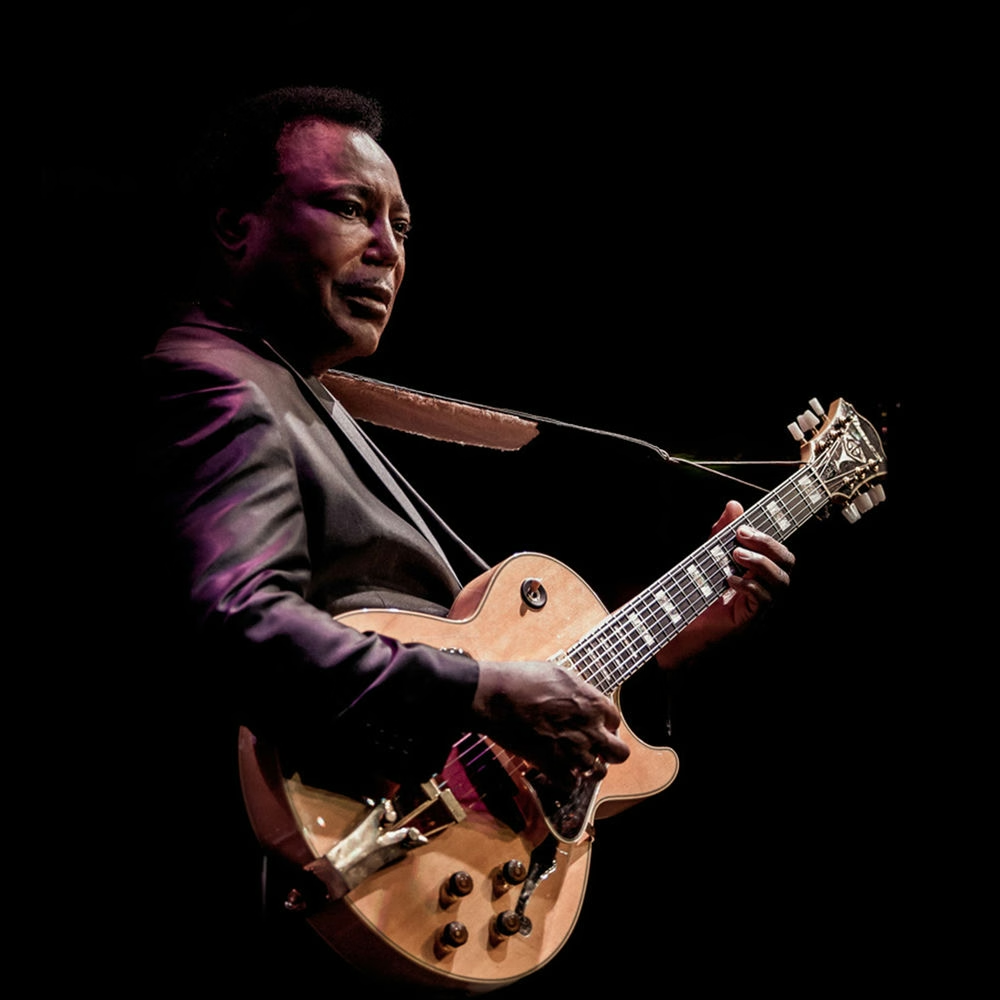
He started as a jazz guitarist playing with Miles Davis and Herbie Hancock before he stepped behind the microphone and discovered a voice that could sell millions of records around the world.
"This Masquerade" (1976) and "Give Me the Night" showed a musician who could scat, sing, and play guitar with equal virtuosity and effortless command of his craft. Ten Grammys across jazz, R&B, and pop categories.
Cover preference
Donny OR George?
No wrong answer. Just yours.

Song Results
The Ghetto

Image Credits
1,449 artist portraits across 5 genres (Rock, Jazz, Soul, Blues, Folk). 1,363 sourced from Wikipedia (Creative Commons / Public Domain), 50 from Deezer (promotional artwork).