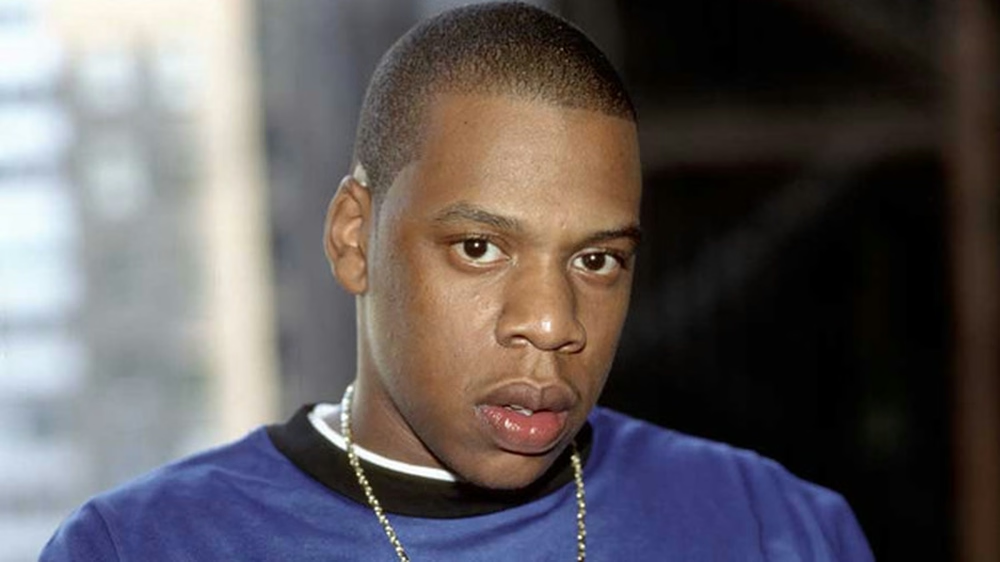
Jay-Z
1969 –
The most important instrument in hip-hop in the nineties was not the sampler. It was the quiet voice of a kid from the Marcy Houses who understood that the streets and the stock market ran on the same rules: know your worth, control your product, never show your hand. Jay-Z rapped with a stillness that made every other rapper sound like they were shouting, and that stillness was the sound of a man calculating.
01 Kill Jay Z
02 4:44
03 Empire State of Mind
04 Family Feud
05 99 Problems
B1 Heart of the City (Ain't No Love)
B2 Never Change

Jay-Z tracklist updated 08/2026

He did not make music and then figure out the business. The business was the music, the music was the business, and the two grew together into something the culture had never seen.

"These streets will make you feel brand new Big lights will inspire you"

-- from Empire State of Mind

He was born Shawn Carter in 1969 and raised in Brooklyn's Marcy Houses with his mother and siblings, learning early that nothing was given. He spent his teens moving between the street economy and the rap game, cutting his teeth on local freestyle battles and studio sessions with neighborhood artists. Major labels kept passing, so in 1996 he and his partners founded Roc-A-Fella Records and released Reasonable Doubt, a debut that documented the corner with the detail of a journalist and the smoothness of a jazz singer. It sold modestly at first and grew into one of the most studied albums in hip-hop, the sound of a man who had nothing to lose and everything to say.

Every album after that was a chapter in a larger empire. Vol. 2... Hard Knock Life made him a crossover star, The Blueprint made him the best rapper alive, The Black Album was his public farewell, and the farewell lasted until he decided otherwise.
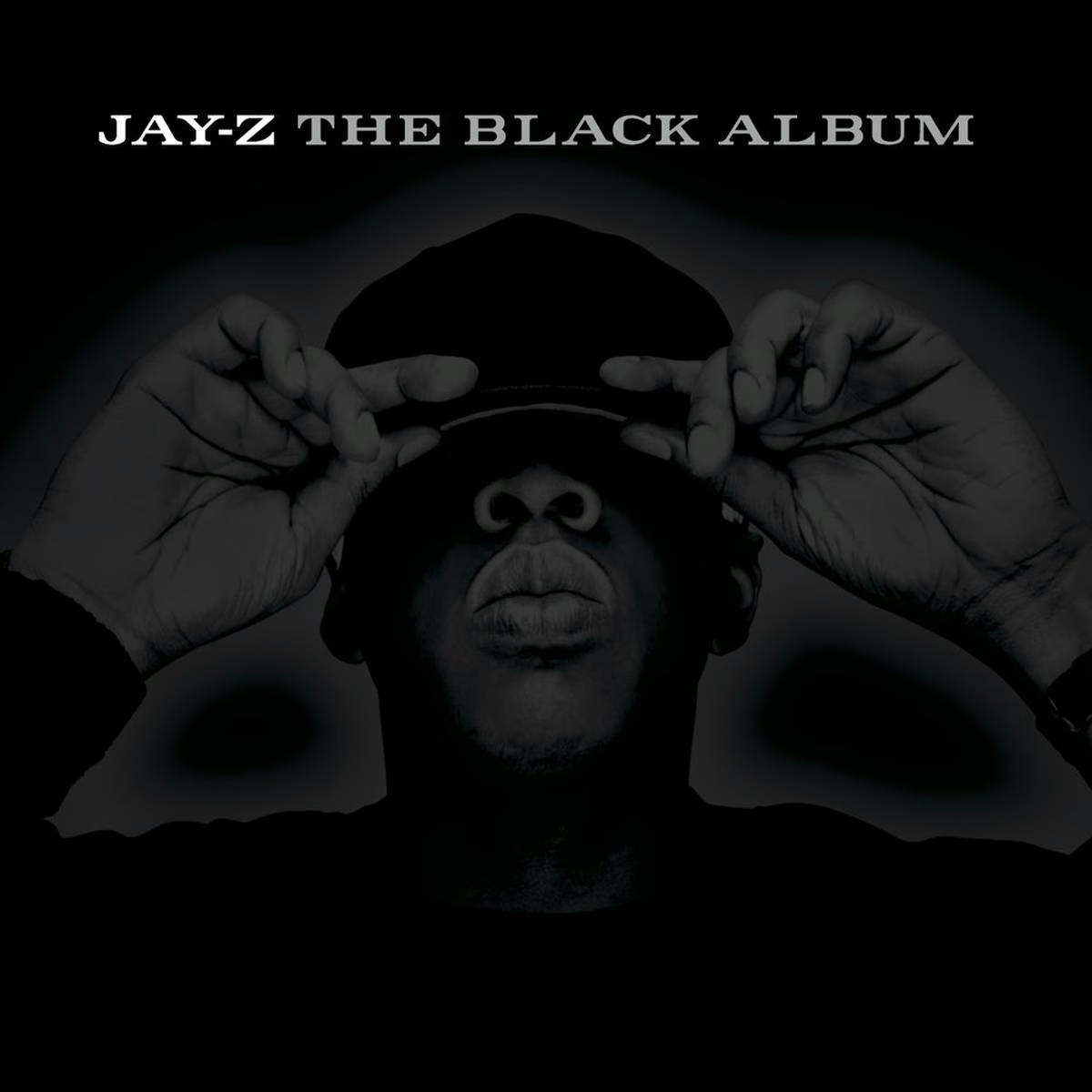
The Black Album (2003)

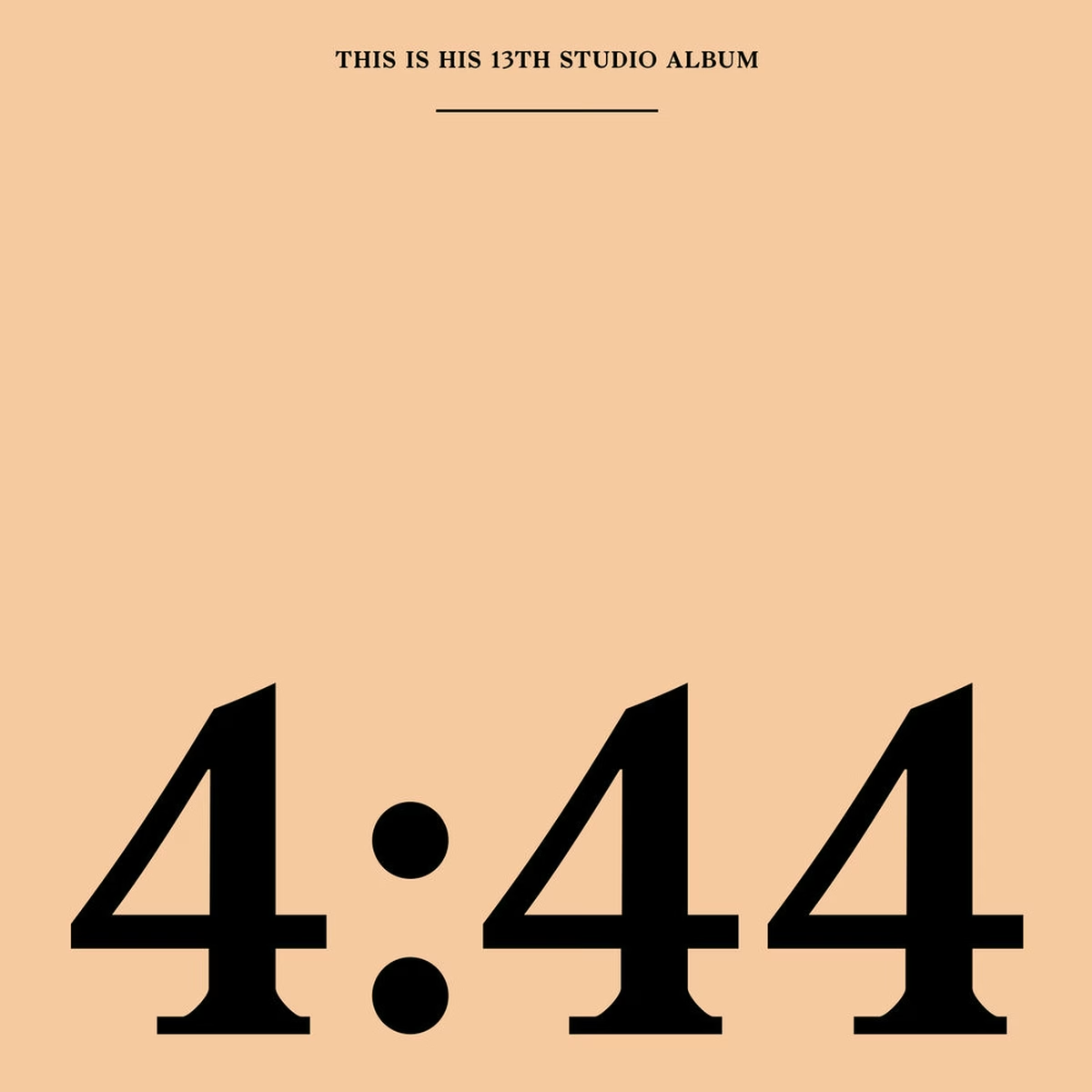
Off the records, he built Rocawear into a clothing giant, opened the 40/40 Club, invested in the Brooklyn Nets and later in Roc Nation, an entertainment company that manages athletes and musicians at the highest level. He married Beyonce and the two became the most powerful couple in global entertainment. When critics wondered whether the businessman had swallowed the artist, he released 4:44 in 2017, an album about apology and accountability that many called the most personal of his career.

He was born Shawn Carter in 1969 and raised in Brooklyn's Marcy Houses with his mother and siblings, learning early that nothing was given. He spent his teens moving between the street economy and the rap game, cutting his teeth on local freestyle battles and studio sessions with neighborhood artists. Major labels kept passing, so in 1996 he and his partners founded Roc-A-Fella Records and released Reasonable Doubt, a debut that documented the corner with the detail of a journalist and the smoothness of a jazz singer. It sold modestly at first and grew into one of the most studied albums in hip-hop, the sound of a man who had nothing to lose and everything to say.

Every album after that was a chapter in a larger empire. Vol. 2... Hard Knock Life made him a crossover star, The Blueprint made him the best rapper alive, The Black Album was his public farewell, and the farewell lasted until he decided otherwise. Off the records, he built Rocawear into a clothing giant, opened the 40/40 Club, invested in the Brooklyn Nets and later in Roc Nation, an entertainment company that manages athletes and musicians at the highest level. He married Beyonce and the two became the most powerful couple in global entertainment. When critics wondered whether the businessman had swallowed the artist, he released 4:44 in 2017, an album about apology and accountability that many called the most personal of his career.

He has collected more number-one albums than any solo artist in history, a record that spans three decades and shows no sign of stopping. He was the first rapper to become a billionaire, and he did it without leaving the culture that raised him, without pretending the corner and the boardroom were different worlds. He took the hustler's logic and scaled it, proved that ownership was the ultimate flex, and taught a generation of artists that the most powerful position in the room is the one behind the desk. The quiet kid from Marcy became the loudest argument that hip-hop could own everything.

Sources: Hotsupper research, Wikipedia, The Conversation (30 years after Reasonable Doubt), AllMusic, Wikidata

Image Credits

1,449 artist portraits across 5 genres (Rock, Jazz, Soul, Blues, Folk). 1,363 sourced from Wikipedia (Creative Commons / Public Domain), 50 from Deezer (promotional artwork).

Full attribution breakdown →

Jay-Z

1969 –
The most important instrument in hip-hop in the nineties was not the sampler. It was the quiet voice of a kid from the Marcy Houses who understood that the streets and the stock market ran on the same rules: know your worth, control your product, never show your hand. Jay-Z rapped with a stillness that made every other rapper sound like they were shouting, and that stillness was the sound of a man calculating.
01 Kill Jay Z
02 4:44
03 Empire State of Mind
04 Family Feud
05 99 Problems
B1 Heart of the City (Ain't No Love)
B2 Never Change

Jay-Z tracklist updated 08/2026

He did not make music and then figure out the business. The business was the music, the music was the business, and the two grew together into something the culture had never seen.

"These streets will make you feel brand new Big lights will inspire you"

-- from Empire State of Mind

He was born Shawn Carter in 1969 and raised in Brooklyn's Marcy Houses with his mother and siblings, learning early that nothing was given. He spent his teens moving between the street economy and the rap game, cutting his teeth on local freestyle battles and studio sessions with neighborhood artists. Major labels kept passing, so in 1996 he and his partners founded Roc-A-Fella Records and released Reasonable Doubt, a debut that documented the corner with the detail of a journalist and the smoothness of a jazz singer. It sold modestly at first and grew into one of the most studied albums in hip-hop, the sound of a man who had nothing to lose and everything to say.

Every album after that was a chapter in a larger empire. Vol. 2... Hard Knock Life made him a crossover star, The Blueprint made him the best rapper alive, The Black Album was his public farewell, and the farewell lasted until he decided otherwise. Off the records, he built Rocawear into a clothing giant, opened the 40/40 Club, invested in the Brooklyn Nets and later in Roc Nation, an entertainment company that manages athletes and musicians at the highest level. He married Beyonce and the two became the most powerful couple in global entertainment. When critics wondered whether the businessman had swallowed the artist, he released 4:44 in 2017, an album about apology and accountability that many called the most personal of his career.

He has collected more number-one albums than any solo artist in history, a record that spans three decades and shows no sign of stopping. He was the first rapper to become a billionaire, and he did it without leaving the culture that raised him, without pretending the corner and the boardroom were different worlds. He took the hustler's logic and scaled it, proved that ownership was the ultimate flex, and taught a generation of artists that the most powerful position in the room is the one behind the desk. The quiet kid from Marcy became the loudest argument that hip-hop could own everything.

Sources: Hotsupper research, Wikipedia, The Conversation (30 years after Reasonable Doubt), AllMusic, Wikidata
popraphip hop
The Sunday Drop
One song. One story. Every Sunday.

No algorithms. No trending sections. Just a song someone loved and the story behind it. Delivered Sunday morning.

Free. No spam. Unsubscribe anytime.

Image Credits

1,449 artist portraits across 5 genres (Rock, Jazz, Soul, Blues, Folk). 1,363 sourced from Wikipedia (Creative Commons / Public Domain), 50 from Deezer (promotional artwork).

Full attribution breakdown →

0:00
0:00
The Sunday Drop Song. Story. Sundays.
Click any song to hear it in full or in part.