Janet Jackson
1966 –
Rhythm Nation

Gary, Indiana, 1966. The youngest of the Jackson family, born into a musical dynasty so famous that her last name was a genre. Janet Jackson spent her childhood watching her brothers become the biggest act in the world while she was shuffled into television acting gigs -- "Good Times," "Diff'rent Strokes," "Fame." She was the cute one, the little sister, the tagalong.

0:30
0:30
0:30
0:30

Then she decided that being the tagalong was not a life sentence. She walked into a Minneapolis recording studio in 1985 and met Jimmy Jam and Terry Lewis, and together they built a sound that would define the next decade of popular music.

The 1980s pop landscape was dominated by her brother Michael, by Prince, by Madonna. Janet Jackson walked into that room and had to claim space that nobody was offering. Her first two albums had been polite pop-soul records that went nowhere. The cost of being a Jackson was that nobody expected her to be an artist -- they expected her to be a celebrity. She was written off as a product of the family machine, and the critics were ready to ignore her. Then "Control 0:30" dropped in 1986 and the conversation changed. The album was a declaration of independence disguised as a dance record. "Nasty 0:30" announced that she was not a little girl anymore. "What Have You Done for Me Lately" turned romantic negotiation into a funk exercise. She was writing the rules now.

Janet Jackson interview 1990

"Rhythm Nation 0:30" from 1989 is the peak of her social consciousness phase, and it is a staggering achievement. The track opens with a drum machine pattern that sounds like a factory, a clanking industrial groove that no pop song had ever used. The video featured military choreography, a monochromatic palette, and a vision of youth culture as a force for social change. The lyrics name racism, poverty, illiteracy -- issues that pop songs in 1989 did not touch.

Control (1986)

Janet Jackson made them danceable. The album "Janet Jackson's Rhythm Nation 1814" produced seven top-five singles, a record that still stands. She had moved from the little sister to the architect, from soft pop to hard-edged, socially aware funk that did not sacrifice the groove for the message.

Janet Jackson is still alive, still performing, still recovering from the Super Bowl incident in 2004 that derailed her career for nearly a decade -- a punishment that was never applied equally. The legacy is complicated by that moment, but it is also clarified by it. She was the most technically accomplished pop performer of her generation, a dancer who understood rhythm as a language, a vocalist who knew how to whisper and roar in the same song, a cultural figure who shaped the 1990s as much as any artist alive. She made the rhythm nation. The nation is still dancing.

Janet Jackson was profiled in the documentary, Janet Jackson, in 2022.
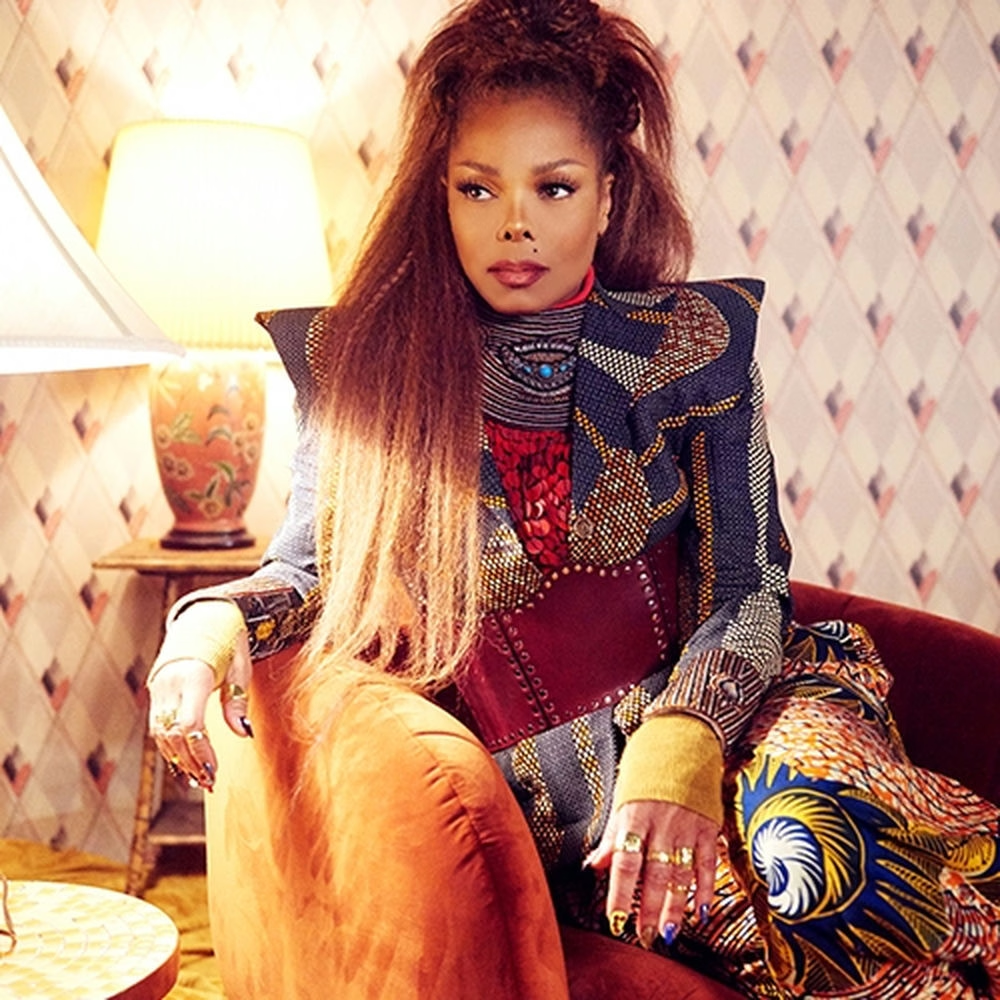
Image Credits

1,414 artist portraits across 5 genres (Rock, Jazz, Soul, Blues, Folk). 1,363 sourced from Wikipedia (Creative Commons / Public Domain), 50 from Deezer (promotional artwork).

Full attribution breakdown →

Janet Jackson

1966 –
Rhythm Nation

Gary, Indiana, 1966. The youngest of the Jackson family, born into a musical dynasty so famous that her last name was a genre. Janet Jackson spent her childhood watching her brothers become the biggest act in the world while she was shuffled into television acting gigs -- "Good Times," "Diff'rent Strokes," "Fame." She was the cute one, the little sister, the tagalong.

0:30
0:30
0:30
0:30

Then she decided that being the tagalong was not a life sentence. She walked into a Minneapolis recording studio in 1985 and met Jimmy Jam and Terry Lewis, and together they built a sound that would define the next decade of popular music.

The 1980s pop landscape was dominated by her brother Michael, by Prince, by Madonna. Janet Jackson walked into that room and had to claim space that nobody was offering. Her first two albums had been polite pop-soul records that went nowhere. The cost of being a Jackson was that nobody expected her to be an artist -- they expected her to be a celebrity. She was written off as a product of the family machine, and the critics were ready to ignore her. Then "Control 0:30" dropped in 1986 and the conversation changed. The album was a declaration of independence disguised as a dance record. "Nasty 0:30" announced that she was not a little girl anymore. "What Have You Done for Me Lately" turned romantic negotiation into a funk exercise. She was writing the rules now.

Janet Jackson interview 1990

"Rhythm Nation 0:30" from 1989 is the peak of her social consciousness phase, and it is a staggering achievement. The track opens with a drum machine pattern that sounds like a factory, a clanking industrial groove that no pop song had ever used. The video featured military choreography, a monochromatic palette, and a vision of youth culture as a force for social change. The lyrics name racism, poverty, illiteracy -- issues that pop songs in 1989 did not touch.

Control (1986)

Janet Jackson made them danceable. The album "Janet Jackson's Rhythm Nation 1814" produced seven top-five singles, a record that still stands. She had moved from the little sister to the architect, from soft pop to hard-edged, socially aware funk that did not sacrifice the groove for the message.

Janet Jackson is still alive, still performing, still recovering from the Super Bowl incident in 2004 that derailed her career for nearly a decade -- a punishment that was never applied equally. The legacy is complicated by that moment, but it is also clarified by it. She was the most technically accomplished pop performer of her generation, a dancer who understood rhythm as a language, a vocalist who knew how to whisper and roar in the same song, a cultural figure who shaped the 1990s as much as any artist alive. She made the rhythm nation. The nation is still dancing.

Janet Jackson was profiled in the documentary, Janet Jackson, in 2022.
Control (1986) Control (1986)
Rhythm Nation 1814 (1989) Rhythm Nation 1814 (1989)
janet. (1993) janet. (1993)
Janet Jackson (1982)
Dream Street (1984)
Control (1986)
Control: The Remixes (1987)
Rhythm Nation 1814 (1989)
janet. (1993)
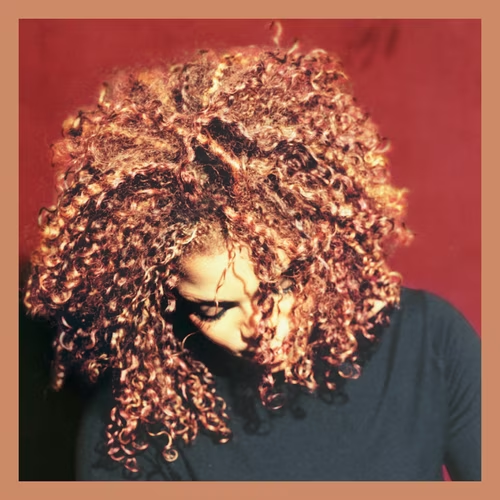
The Velvet Rope (1997)
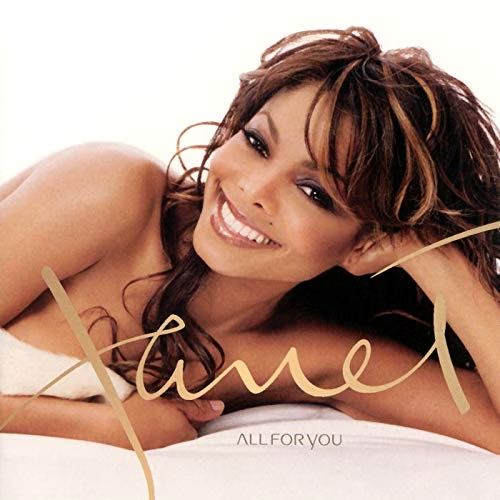
All for You (2001)
Damita Jo (2004)
20 Y.O. (2006)
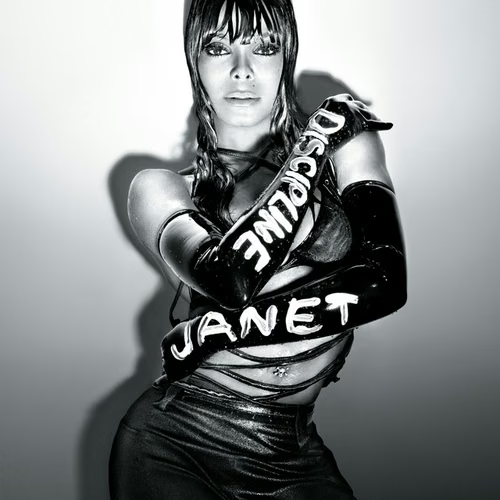
Discipline (2008)
Unbreakable (2015)
r&bpopfunk
The Sunday Drop
One song. One story. Every Sunday.

No algorithms. No trending sections. Just a song someone loved and the story behind it. Delivered Sunday morning.

Free. No spam. Unsubscribe anytime.

Image Credits

1,414 artist portraits across 5 genres (Rock, Jazz, Soul, Blues, Folk). 1,363 sourced from Wikipedia (Creative Commons / Public Domain), 50 from Deezer (promotional artwork).

Full attribution breakdown →

0:00
0:00