Dionne Warwick
1940 –
Pop Royalty and the Voice of Bacharach
The voice was so distinctive that when she disguised herself on a televised singing competition at eighty, the panel knew her instantly, and she was not surprised. Dionne Warwick had spent six decades proving the same thing: there was only one sound like hers in American pop, and no amount of costume could hide it. The critics reached for strange language to describe it -- opaque, elusive, elegant, a contralto that could touch low husk and high air in the same phrase.
01 Walk On By
02 The Look of Love
03 Alfie
04 That's What Friends Are For
05 Don't Make Me Over
B1 Trains and Boats and Planes

Dionne Warwick tracklist updated 08/2026

Hilton Als heard existentialism in it, the philosophy of a Cheever story scored for horns and strings, a twilight world of cocktails and confidences where the smoothness never meant simple.

"Foolish pride That's all that I have left, so let me hide"

-- from Walk On By

She came out of a gospel family in East Orange, New Jersey, singing in the New Hope Baptist choir by six, touring with her mother and aunts as the Drinkard Singers, riding buses into Manhattan as a teenager to back the Drifters and Dinah Washington and Ben E. King in the studios, then riding home to do homework like nothing unusual had happened. When Burt Bacharach heard her on a session and had her cut demos of his songs with lyricist Hal David, the label president who heard the tape did not want the song; she wanted the voice, and that was Dionne. Her first hit was built from her own temper: told that a song she had recorded was going to another artist, she snapped a phrase at her producers, and Bacharach and David built Don't Make Me Over around it.

The partnership that followed was the strangest and most fruitful in pop. Bacharach wrote melodies with shifting time signatures and odd intervals, David wrote words about ordinary heartbreak, and Warwick made both feel inevitable. Walk On By, I Say a Little Prayer, Do You Know the Way to San Jose -- the records were metropolitan in a way no American pop had been: not quite soul, not quite standards, smooth on the surface and unresolved underneath. She weathered the British Invasion, took the Paris stage introduced by Marlene Dietrich, and in 1971 signed the biggest contract any female vocalist had been offered.
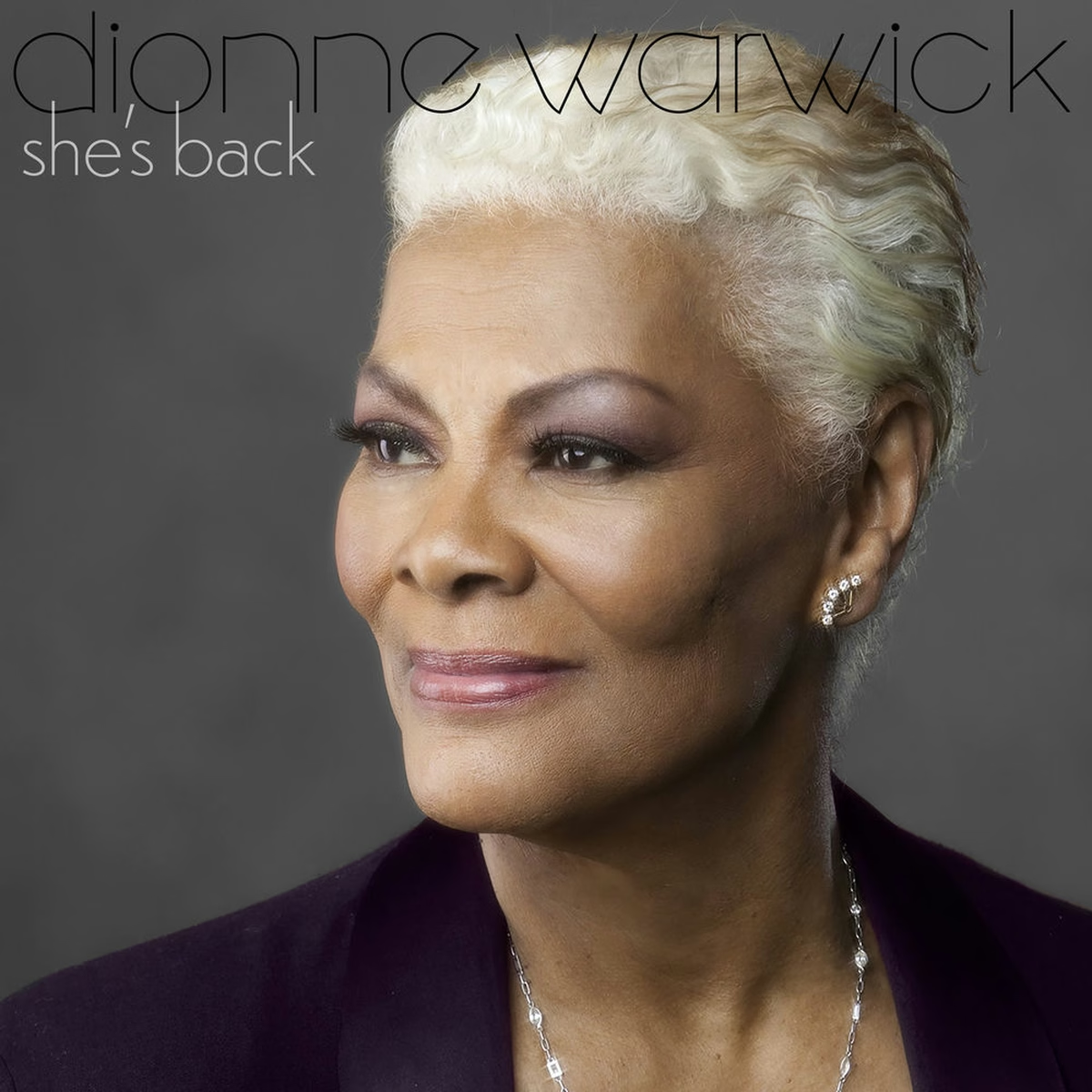
She's Back (2019)

When Bacharach and David split mid-contract in 1972, she sued them and won, and the friendship survived, which told you something about all three of them.

She came out of a gospel family in East Orange, New Jersey, singing in the New Hope Baptist choir by six, touring with her mother and aunts as the Drinkard Singers, riding buses into Manhattan as a teenager to back the Drifters and Dinah Washington and Ben E. King in the studios, then riding home to do homework like nothing unusual had happened. When Burt Bacharach heard her on a session and had her cut demos of his songs with lyricist Hal David, the label president who heard the tape did not want the song; she wanted the voice, and that was Dionne. Her first hit was built from her own temper: told that a song she had recorded was going to another artist, she snapped a phrase at her producers, and Bacharach and David built Don't Make Me Over around it.

The partnership that followed was the strangest and most fruitful in pop. Bacharach wrote melodies with shifting time signatures and odd intervals, David wrote words about ordinary heartbreak, and Warwick made both feel inevitable. Walk On By, I Say a Little Prayer, Do You Know the Way to San Jose -- the records were metropolitan in a way no American pop had been: not quite soul, not quite standards, smooth on the surface and unresolved underneath. She weathered the British Invasion, took the Paris stage introduced by Marlene Dietrich, and in 1971 signed the biggest contract any female vocalist had been offered. When Bacharach and David split mid-contract in 1972, she sued them and won, and the friendship survived, which told you something about all three of them.

The later decades proved the voice was the point, not the era. That's What Friends Are For, cut with three other stars in 1985, became an AIDS benefit that raised millions. She toured the segregated South in the sixties and called it like a bad movie; she told the world we all bleed red blood. She kept recording into her eighties, sharp and unimpressed, winning a Lifetime Achievement Grammy, entering the Rock and Roll Hall of Fame in 2024, still able to mock the industry that once tried to type her. She had turned a limited instrument into the most expressive voice of her generation, and she knew it, and she never once pretended otherwise.

Sources: Hotsupper research, Wikipedia, The Guardian (March 2020 interview), The New Yorker (Hilton Als, 2013, 2023), Wikidata


Image Credits

1,449 artist portraits across 5 genres (Rock, Jazz, Soul, Blues, Folk). 1,363 sourced from Wikipedia (Creative Commons / Public Domain), 50 from Deezer (promotional artwork).

Full attribution breakdown →

Dionne Warwick

1940 –
Pop Royalty and the Voice of Bacharach
The voice was so distinctive that when she disguised herself on a televised singing competition at eighty, the panel knew her instantly, and she was not surprised. Dionne Warwick had spent six decades proving the same thing: there was only one sound like hers in American pop, and no amount of costume could hide it. The critics reached for strange language to describe it -- opaque, elusive, elegant, a contralto that could touch low husk and high air in the same phrase.
01 Walk On By
02 The Look of Love
03 Alfie
04 That's What Friends Are For
05 Don't Make Me Over
B1 Trains and Boats and Planes

Dionne Warwick tracklist updated 08/2026

Hilton Als heard existentialism in it, the philosophy of a Cheever story scored for horns and strings, a twilight world of cocktails and confidences where the smoothness never meant simple.

"Foolish pride That's all that I have left, so let me hide"

-- from Walk On By

She came out of a gospel family in East Orange, New Jersey, singing in the New Hope Baptist choir by six, touring with her mother and aunts as the Drinkard Singers, riding buses into Manhattan as a teenager to back the Drifters and Dinah Washington and Ben E. King in the studios, then riding home to do homework like nothing unusual had happened. When Burt Bacharach heard her on a session and had her cut demos of his songs with lyricist Hal David, the label president who heard the tape did not want the song; she wanted the voice, and that was Dionne. Her first hit was built from her own temper: told that a song she had recorded was going to another artist, she snapped a phrase at her producers, and Bacharach and David built Don't Make Me Over around it.

The partnership that followed was the strangest and most fruitful in pop. Bacharach wrote melodies with shifting time signatures and odd intervals, David wrote words about ordinary heartbreak, and Warwick made both feel inevitable. Walk On By, I Say a Little Prayer, Do You Know the Way to San Jose -- the records were metropolitan in a way no American pop had been: not quite soul, not quite standards, smooth on the surface and unresolved underneath. She weathered the British Invasion, took the Paris stage introduced by Marlene Dietrich, and in 1971 signed the biggest contract any female vocalist had been offered. When Bacharach and David split mid-contract in 1972, she sued them and won, and the friendship survived, which told you something about all three of them.

The later decades proved the voice was the point, not the era. That's What Friends Are For, cut with three other stars in 1985, became an AIDS benefit that raised millions. She toured the segregated South in the sixties and called it like a bad movie; she told the world we all bleed red blood. She kept recording into her eighties, sharp and unimpressed, winning a Lifetime Achievement Grammy, entering the Rock and Roll Hall of Fame in 2024, still able to mock the industry that once tried to type her. She had turned a limited instrument into the most expressive voice of her generation, and she knew it, and she never once pretended otherwise.

Sources: Hotsupper research, Wikipedia, The Guardian (March 2020 interview), The New Yorker (Hilton Als, 2013, 2023), Wikidata

popsoul
The Sunday Drop
One song. One story. Every Sunday.

No algorithms. No trending sections. Just a song someone loved and the story behind it. Delivered Sunday morning.

Free. No spam. Unsubscribe anytime.

Image Credits

1,449 artist portraits across 5 genres (Rock, Jazz, Soul, Blues, Folk). 1,363 sourced from Wikipedia (Creative Commons / Public Domain), 50 from Deezer (promotional artwork).

Full attribution breakdown →

0:00
0:00
The Sunday Drop Song. Story. Sundays.
Click any song to hear it in full or in part.