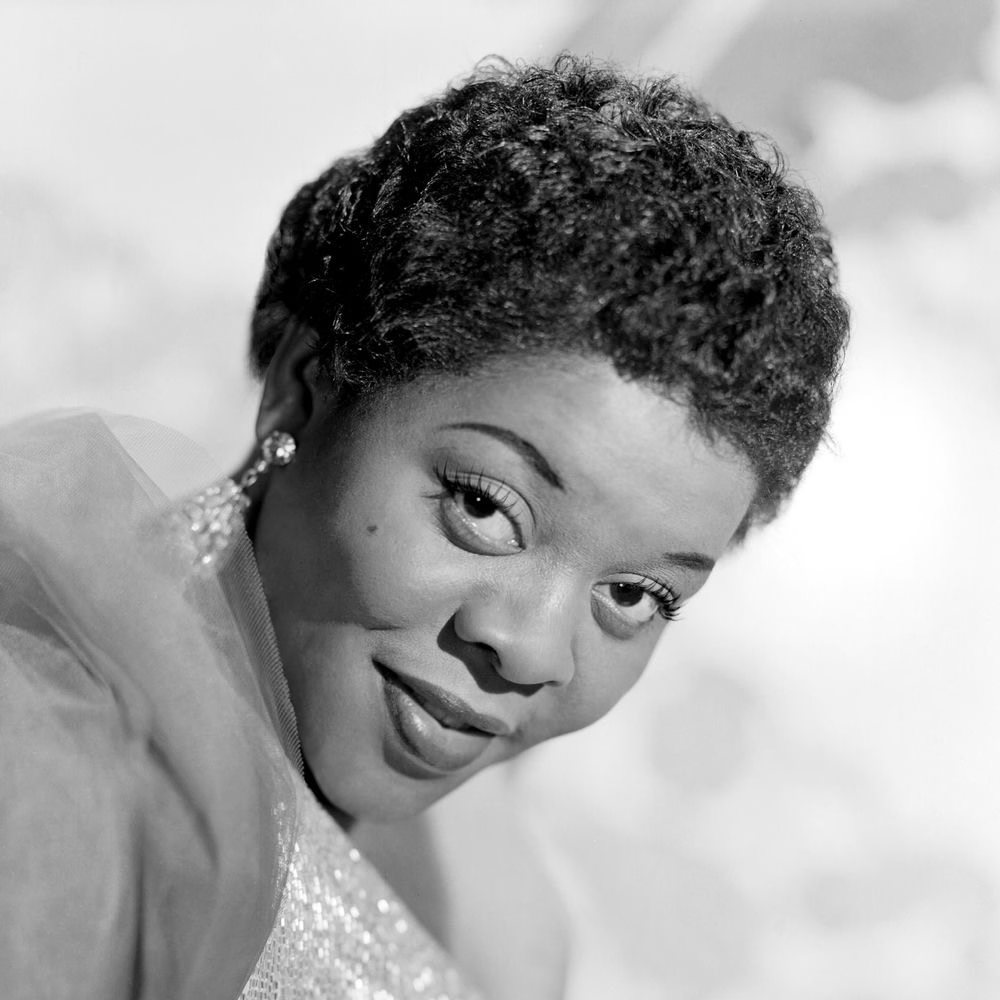
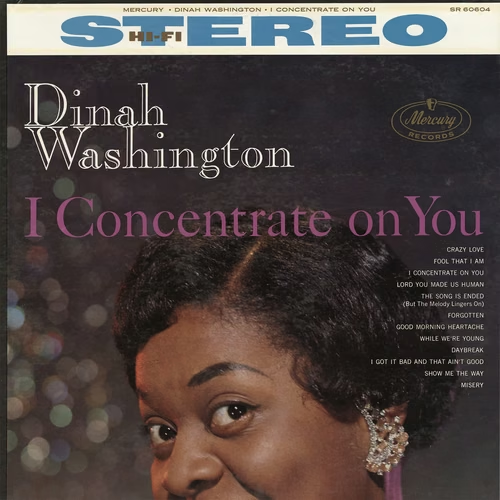
Dinah Washington tracklist updated 08/2026
The music industry in the 1940s and 50s did not know what to do with a woman who could sing the phone book in any style and make you cry. Dinah Washington was too blues for jazz purists, too jazz for the blues crowd, too pop for the church folk who remembered her gospel roots. She walked into a system that wanted singers to stay in one lane and she refused the premise. The cost was constant: she was called difficult by men who could not control her, temperamental by critics who could not categorize her, tragic by those who saw her five husbands and her drinking and missed the full picture. She made enemies by being right. She made records anyway. She made "What a Diff'rence a Day Makes" in 1959 and it was not a departure -- it was a landing, the place she had been aiming at all along.
Listen to what "What a Diff'rence a Day Makes" actually does. It takes a standard from 1934 and re-wires it through Dinah Washington's nervous system. The song moves at a tempo that seems wrong for romance -- too fast, too bright -- and she somehow makes that speed feel like vulnerability. She is not swooning. She is reporting. The voice stays just behind the beat, then catches up, then pulls ahead, teaching the listener something about time itself. That arrangement, that brass, those strings -- Quincy Jones was involved in her later work, and you can hear the cross-pollination everywhere. But the center is always the voice. It is horn-like when she needs power, gossamer when she needs intimacy, and always in complete control of what the song means. She did not sing songs. She performed verdicts on them.
Dinah Washington died at thirty-nine in 1963, the same year her friend Sam Cooke was killed, the same year the civil rights movement was catching fire. She left behind a catalog that sounds like a blueprint for every soul singer who came after -- Aretha, who called her an influence, and everyone who inherited her refusal to be small. The Queen is a title that gets handed around. Dinah Washington earned it the hard way: by being the best, the most stubborn, and the least interested in your opinion. The voice still knows things. We are still catching up.
Dinah Washington died at thirty-nine in 1963, the same year her friend Sam Cooke was killed, the same year the civil rights movement was catching fire. She left behind a catalog that sounds like a blueprint for every soul singer who came after -- Aretha, who called her an influence, and everyone who inherited her refusal to be small. The Queen is a title that gets handed around. Dinah Washington earned it the hard way: by being the best, the most stubborn, and the least interested in your opinion. The voice still knows things. We are still catching up.