In the Garden, I see West purple shower, bells and tea Orange birds and river cousins dressed in green
A seventeen-year-old wrote this song alone, in a basement, with a girl's letters in a drawer and a tape machine running. He'd already logged studio hours most adults never get. At fifteen Shuggie Otis played bass on a Zappa record. By the time he cut this one, he was a veteran playing at being a teenager.
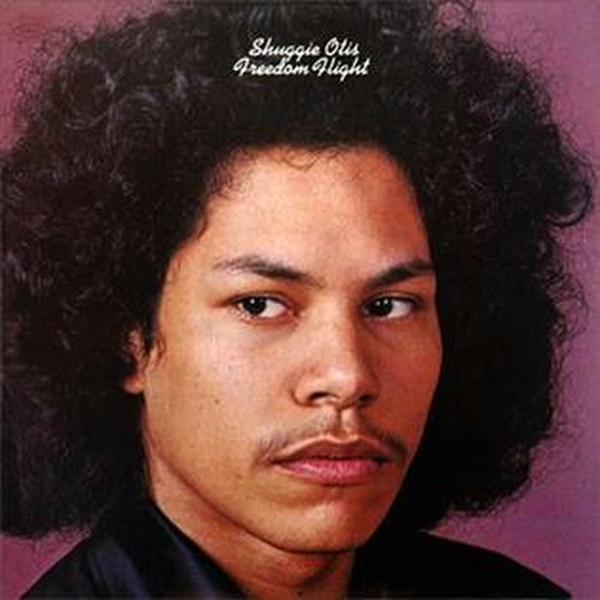
Strawberry Letter 23 landed in September 1971 on Freedom Flight, his second album for Epic. It didn't sound like the soul music around it. Chimes ring like a music box left out in a garden. The vocal floats. The guitar solo takes almost a minute to arrive, then unspools like a vine finding a trellis. It doesn't feel performed. It feels overheard.
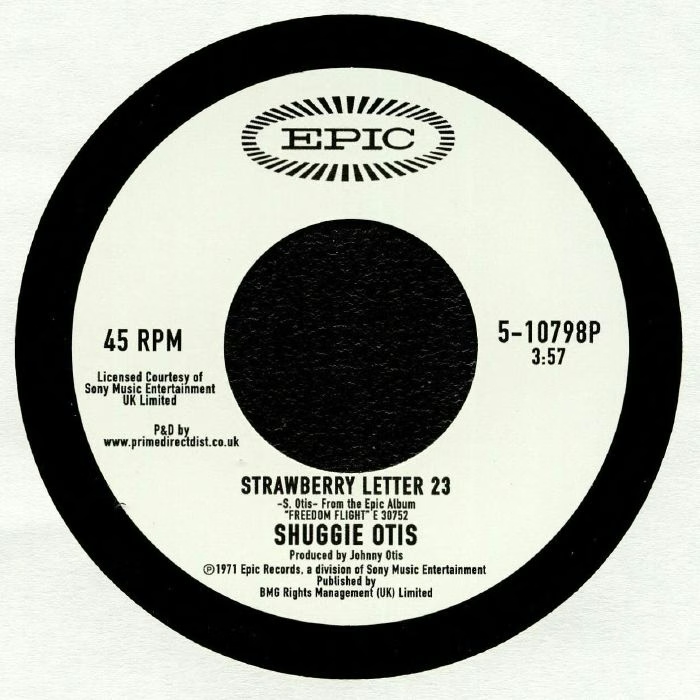
Strawberry Letter 23
Listen while you read: Strawberry Letter 23 | Freedom Flight | 1971
Years later the Brothers Johnson turned it into a hit nobody could ignore. That's the version most people know. But the record a teenager made alone, with help from his father's musical family, is the stranger one. The better one. That's the one this is about.
A Love Letter in a Strawberry-Colored Envelope
The premise is correspondence. The oldest trick in the book. Otis imagined a boy and girl who'd already written each other twenty-two letters. The twenty-third was his reply, set to music. The chorus names the message that came before: “A present from you / Strawberry letter 22 / The music plays / I sit in for a few.” He told an interviewer in 2013 he pictured a girl handing a guy a pink envelope. No scent, he said flatly. The strawberry-scented-stationery myth was never true. It just wouldn't die.
Freedom Flight (1971)
What the song smells like is the inside of a teenager's head in 1971. Gardens, showers, tea, birds, color bleeding into color. Nonsense in the dictionary sense. Total sense in the emotional one. He was writing about freedom, flight, and a girl, roughly in that order.
The credits read like a summit of L.A. session royalty. Wilton Felder of the the Crusaders on bass. George Duke on keys. Aynsley Dunbar on drums. Clydie King, Venetta Fields, and Sherlie Matthews stacked on backing vocals like a gospel choir on retainer. But the architecture is the kid's. He plays guitar, bass, organ, piano, drums, and bells across the album. The celesta ticks like water in a stone basin. Oboe and flute pull the frame toward chamber music. A seventeen-year-old was directing a faculty of grown men.
Strawberry Letter 23 (1971)
Arthur Lee wandered into the control room one day while Otis listened back to the tape alone. Lee's band Love had already bent psychedelia toward soul. He nodded, introduced himself, and left. Otis has told that story for fifty years. A coronation nobody scheduled: one L.A. psychedelic king anointing a prince, in an empty room, no crowd, no ceremony.
The single got decent radio play in 1971, then quiet. It took a wedding, years later, to bring it back.
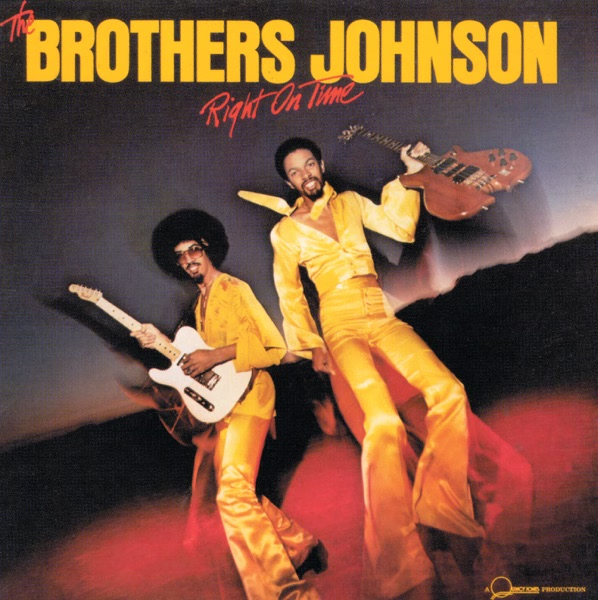
George Johnson of the Brothers Johnson was dating one of Otis's cousins in the mid-'70s. She pressed a copy of Freedom Flight into his hands. He loved the song enough to play it at his brother Louis's wedding. Years later, in the studio with Quincy Jones cutting Right on Time, Louis remembered it and pushed for it. The song survived obscurity the way love letters survive house moves: folded up, kept, still legible.
The Brothers Johnson version is a machine. Quincy Jones is the foreman. He polished the arrangement until it gleamed: bass locked down, horns punching, groove built for the floor. Session guitarist Lee Ritenour recreated Otis's solo, a fancy way of saying he transcribed a teenager's private language into a professional one. Released summer 1977, it hit number one R&B, number five pop, gold by October. Right on Time went platinum. The twelve-inch pressed on red, strawberry-scented vinyl, a joke the song's own history had already made.
The cover kept traveling. Tarantino dropped it into Jackie Brown in 1997. Pitchfork later ranked it 134th among the best songs of the '70s. Producers mined it the way miners mine: J Dilla, De La Soul, reportedly Beyoncé's “Be With You”. The letter kept getting forwarded.
None of that makes the cover better. AllMusic's Matthew Greenwald said it plainly: excellent, but the self-produced original is superior. The cover is built for impact, for the dance floor. The original sounds like someone discovering a new language alone in a room. Stadium versus garden. Mass versus intimacy. The hit versus the letter.
The Kid Who Turned Down the Rolling Stones
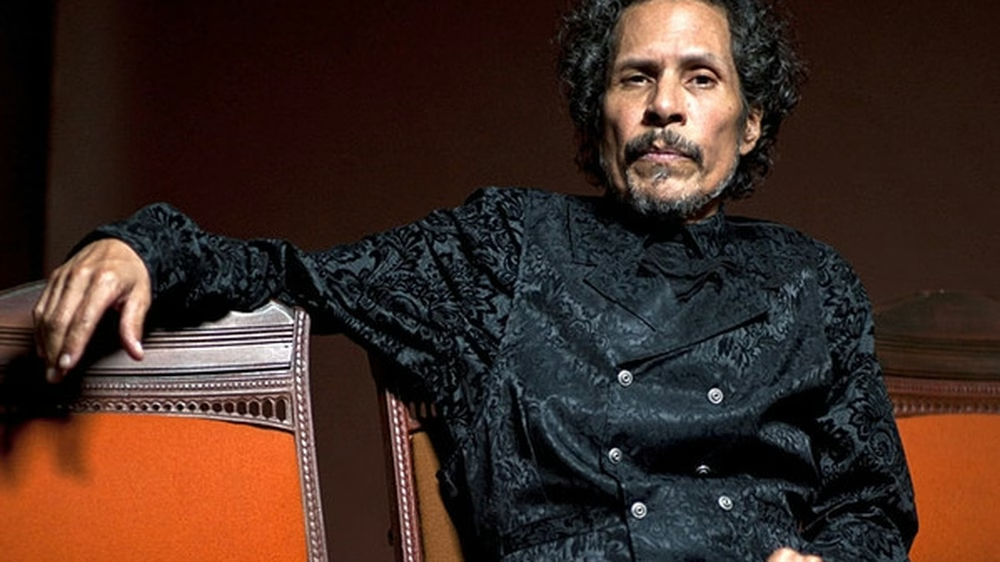
Shuggie Otis.
He was born Johnny Alexander Veliotes Jr. on November 30, 1953, son of Johnny Otis, the bandleader who carried R&B through the postwar years, and Phyllis Walker, who nicknamed the baby Shuggie before he could walk. He picked up a guitar at two. By eleven he was playing his father's after-hours clubs in dark glasses and a painted-on mustache, a costume so the room would let a child onstage. The disguise never really came off. He spent his career performing as someone older and stranger than he was.
His teens read like a prospect sheet no scout would believe. At fifteen he recorded with Al Kooper and played bass on Zappa's “Peaches en Regalia”. B.B. King called him his favorite new guitarist. He signed to Epic as a teenager, released two albums by twenty, and the magazines settled on the only comparison that mattered: heir to Hendrix.
Then he started saying no, and the no's became the legend. the Rolling Stones wanted him for a world tour. He passed. Quincy Jones offered to produce his next record. He passed on that too. Add David Bowie and Blood, Sweat & Tears to the pile. His label, worn down by the three years it took him to finish a third album, dropped him when Inspiration Information showed up in 1974. He'd played nearly the whole thing himself, built it on analog drum machines. It sold badly and became a cult object instead. He built the machine, then refused to be its product.
For decades he mostly vanished. A rumor with a guitar. The cult grew without him anyway. Rare-groove and acid-jazz heads rediscovered Inspiration Information in the '90s. Prince and Lenny Kravitz sang its praises. David Byrne's label reissued it in 2001 and tacked on four Freedom Flight tracks, this one included. A whole generation grew up thinking the song belonged to the wrong album. Discography says Freedom Flight. Streaming shelves still say otherwise. The letter got mailed from the wrong post office for twenty years.
He came back for good eventually. Sony released Wings of Love in 2013, and he toured the world with his band, the Shuggie Otis Rite. Live in Williamsburg followed in 2014. In 2018 he put out Inter-Fusion, his first studio album in over forty years, mostly instrumental, anchored by drummer Carmine Appice and bassist Tony Franklin. His sons Lucky and Eric both played in his band. Eric still does. He turned seventy in 2023 and kept going. The boy who refused the world now tours it on his own terms, with his bloodline behind him.
He told the Guardian the song kept him alive all these years. He wasn't being sentimental. It paid him, and it gave him a reason to keep touring past seventy, past the refusals, past the decades nobody was calling. The letter he wrote in a basement at seventeen is still being opened by strangers. Most of them think it arrived in 1977, addressed from someone else. It didn't. Check the return address.
One song delivered to your inbox every Sunday morning.
Join the readers who start their Sunday with a story they didn't know they needed.
The Sunday Drop
One song. One story. Every Sunday.
No algorithms. No trending sections. Just a song someone loved and the story behind it. Delivered Sunday morning.
✓Check your email to confirm.
Free. No spam. Unsubscribe anytime.
Image Credits
1,449 artist portraits across 5 genres (Rock, Jazz, Soul, Blues, Folk).
1,363 sourced from Wikipedia (Creative Commons / Public Domain), 50 from
Deezer (promotional artwork).
In the Garden, I see West purple shower, bells and tea Orange birds and river cousins dressed in green
A seventeen-year-old wrote this song alone, in a basement, with a girl's letters in a drawer and a tape machine running. He'd already logged studio hours most adults never get. At fifteen Shuggie Otis played bass on a Zappa record. By the time he cut this one, he was a veteran playing at being a teenager.
Strawberry Letter 23 landed in September 1971 on Freedom Flight, his second album for Epic. It didn't sound like the soul music around it. Chimes ring like a music box left out in a garden. The vocal floats. The guitar solo takes almost a minute to arrive, then unspools like a vine finding a trellis. It doesn't feel performed. It feels overheard.
Strawberry Letter 23
Listen while you read: Strawberry Letter 23 | Freedom Flight | 1971
Years later the Brothers Johnson turned it into a hit nobody could ignore. That's the version most people know. But the record a teenager made alone, with help from his father's musical family, is the stranger one. The better one. That's the one this is about.
A Love Letter in a Strawberry-Colored Envelope
The premise is correspondence. The oldest trick in the book. Otis imagined a boy and girl who'd already written each other twenty-two letters. The twenty-third was his reply, set to music. The chorus names the message that came before: “A present from you / Strawberry letter 22 / The music plays / I sit in for a few.” He told an interviewer in 2013 he pictured a girl handing a guy a pink envelope. No scent, he said flatly. The strawberry-scented-stationery myth was never true. It just wouldn't die.
Freedom Flight (1971)
What the song smells like is the inside of a teenager's head in 1971. Gardens, showers, tea, birds, color bleeding into color. Nonsense in the dictionary sense. Total sense in the emotional one. He was writing about freedom, flight, and a girl, roughly in that order.
The credits read like a summit of L.A. session royalty. Wilton Felder of the the Crusaders on bass. George Duke on keys. Aynsley Dunbar on drums. Clydie King, Venetta Fields, and Sherlie Matthews stacked on backing vocals like a gospel choir on retainer. But the architecture is the kid's. He plays guitar, bass, organ, piano, drums, and bells across the album. The celesta ticks like water in a stone basin. Oboe and flute pull the frame toward chamber music. A seventeen-year-old was directing a faculty of grown men.
Strawberry Letter 23 (1971)
Arthur Lee wandered into the control room one day while Otis listened back to the tape alone. Lee's band Love had already bent psychedelia toward soul. He nodded, introduced himself, and left. Otis has told that story for fifty years. A coronation nobody scheduled: one L.A. psychedelic king anointing a prince, in an empty room, no crowd, no ceremony.
The single got decent radio play in 1971, then quiet. It took a wedding, years later, to bring it back.
George Johnson of the Brothers Johnson was dating one of Otis's cousins in the mid-'70s. She pressed a copy of Freedom Flight into his hands. He loved the song enough to play it at his brother Louis's wedding. Years later, in the studio with Quincy Jones cutting Right on Time, Louis remembered it and pushed for it. The song survived obscurity the way love letters survive house moves: folded up, kept, still legible.
The Brothers Johnson version is a machine. Quincy Jones is the foreman. He polished the arrangement until it gleamed: bass locked down, horns punching, groove built for the floor. Session guitarist Lee Ritenour recreated Otis's solo, a fancy way of saying he transcribed a teenager's private language into a professional one. Released summer 1977, it hit number one R&B, number five pop, gold by October. Right on Time went platinum. The twelve-inch pressed on red, strawberry-scented vinyl, a joke the song's own history had already made.
The cover kept traveling. Tarantino dropped it into Jackie Brown in 1997. Pitchfork later ranked it 134th among the best songs of the '70s. Producers mined it the way miners mine: J Dilla, De La Soul, reportedly Beyoncé's “Be With You”. The letter kept getting forwarded.
None of that makes the cover better. AllMusic's Matthew Greenwald said it plainly: excellent, but the self-produced original is superior. The cover is built for impact, for the dance floor. The original sounds like someone discovering a new language alone in a room. Stadium versus garden. Mass versus intimacy. The hit versus the letter.
The Kid Who Turned Down the Rolling Stones
Shuggie Otis.
He was born Johnny Alexander Veliotes Jr. on November 30, 1953, son of Johnny Otis, the bandleader who carried R&B through the postwar years, and Phyllis Walker, who nicknamed the baby Shuggie before he could walk. He picked up a guitar at two. By eleven he was playing his father's after-hours clubs in dark glasses and a painted-on mustache, a costume so the room would let a child onstage. The disguise never really came off. He spent his career performing as someone older and stranger than he was.
His teens read like a prospect sheet no scout would believe. At fifteen he recorded with Al Kooper and played bass on Zappa's “Peaches en Regalia”. B.B. King called him his favorite new guitarist. He signed to Epic as a teenager, released two albums by twenty, and the magazines settled on the only comparison that mattered: heir to Hendrix.
Then he started saying no, and the no's became the legend. the Rolling Stones wanted him for a world tour. He passed. Quincy Jones offered to produce his next record. He passed on that too. Add David Bowie and Blood, Sweat & Tears to the pile. His label, worn down by the three years it took him to finish a third album, dropped him when Inspiration Information showed up in 1974. He'd played nearly the whole thing himself, built it on analog drum machines. It sold badly and became a cult object instead. He built the machine, then refused to be its product.
For decades he mostly vanished. A rumor with a guitar. The cult grew without him anyway. Rare-groove and acid-jazz heads rediscovered Inspiration Information in the '90s. Prince and Lenny Kravitz sang its praises. David Byrne's label reissued it in 2001 and tacked on four Freedom Flight tracks, this one included. A whole generation grew up thinking the song belonged to the wrong album. Discography says Freedom Flight. Streaming shelves still say otherwise. The letter got mailed from the wrong post office for twenty years.
He came back for good eventually. Sony released Wings of Love in 2013, and he toured the world with his band, the Shuggie Otis Rite. Live in Williamsburg followed in 2014. In 2018 he put out Inter-Fusion, his first studio album in over forty years, mostly instrumental, anchored by drummer Carmine Appice and bassist Tony Franklin. His sons Lucky and Eric both played in his band. Eric still does. He turned seventy in 2023 and kept going. The boy who refused the world now tours it on his own terms, with his bloodline behind him.
He told the Guardian the song kept him alive all these years. He wasn't being sentimental. It paid him, and it gave him a reason to keep touring past seventy, past the refusals, past the decades nobody was calling. The letter he wrote in a basement at seventeen is still being opened by strangers. Most of them think it arrived in 1977, addressed from someone else. It didn't. Check the return address.