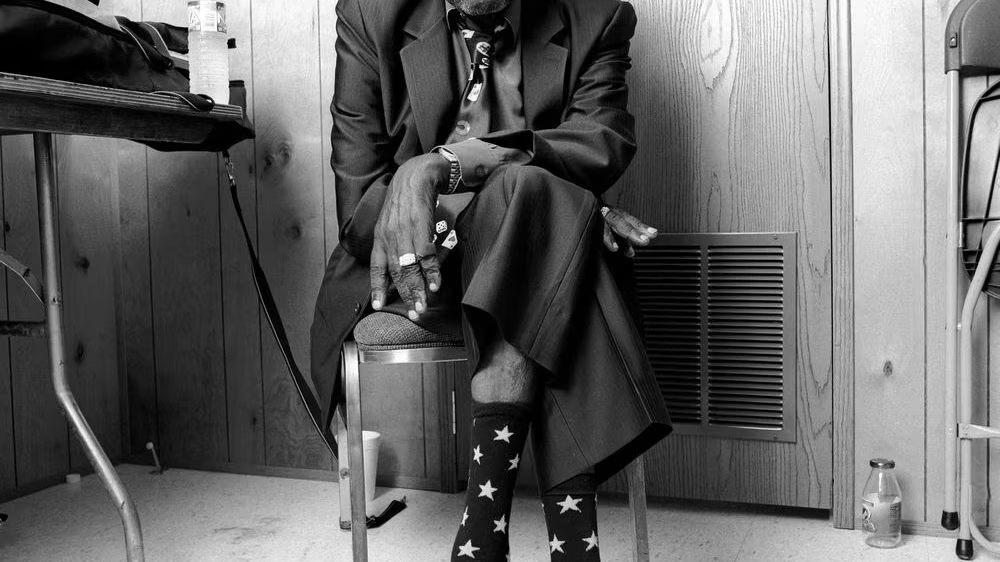
John Lee Hooker
1912 – 2001 (89)
The Boogie Man

Your feet start tapping before your brain catches up. That one-chord drone, that stomping boot-heel, that voice like gravel wrapped in midnight -- John Lee Hooker didn't play blues so much as he summoned it from the dirt. The man born August 22, 1912 in Coahoma County, Mississippi and died June 21, 2001, but between those two dates he rewired what a guitar could do with one string and a whole lot of sweat.

0:30
0:30
0:30
0:30

He took the minimal and made it sound like everything you ever needed to hear. Nobody needed more notes. Nobody wanted them.

The cost of freedom was isolation. Hooker left the Delta as a teenager and landed in Memphis, then Cincinnati, then Detroit. He worked factory floors by day and played juke joints by night. The money was thin. The whiskey was thick. He learned fast that a solo artist who could hold a room needed no band, no rehearsals, no permission from anyone. He cut his first record in 1948 -- "Boogie Chillen'" -- and it sold a million copies. The label paid him a flat fee. No royalties. No name on the contract. That was the game then. You took what they gave or you went back to the assembly line. Hooker took it and kept playing. He recorded on borrowed equipment, in cheap studios, for whatever the man with the checkbook offered. The music was rich. The musician was broke. That was the Delta deal from cradle to grave.

John Lee Hooker interview 1990

But what Hooker gave back was bottomless. "Boogie Chillen'" was one riff, one rhythm, one voice calling up the Delta from a Detroit basement. He never needed more than one chord. His guitar hummed like a generator.

The Healer (1989)

His voice told stories about women, whiskey, the devil, and the long road between them. He kept recording for five decades, through the folk revival, the blues boom, the MTV era. He played with Carlos Santana and Van Morrison. He never learned to read music. Never needed to. The groove lived in his blood, not on a page. His 1989 album "The Healer" brought him a late-career Grammy and a whole new audience. But the sound never changed. That one-chord stomp was the same in 1989 as it was in 1948. It had always been enough.

John Lee Hooker cost himself his health, his privacy, and decades of fair pay. He left behind a sound so pure that every blues guitarist since has had to reckon with it. That one-chord stomp still echoes in every bar band that ever locked into a trance. Put on "Boogie Chillen'" and try not to move. You can't. That's the church. That's the testimony. That's his alone. He traded money for freedom. He would do it again.

John Lee Hooker was profiled in the documentary, John Lee Hooker: The Boogie Man.
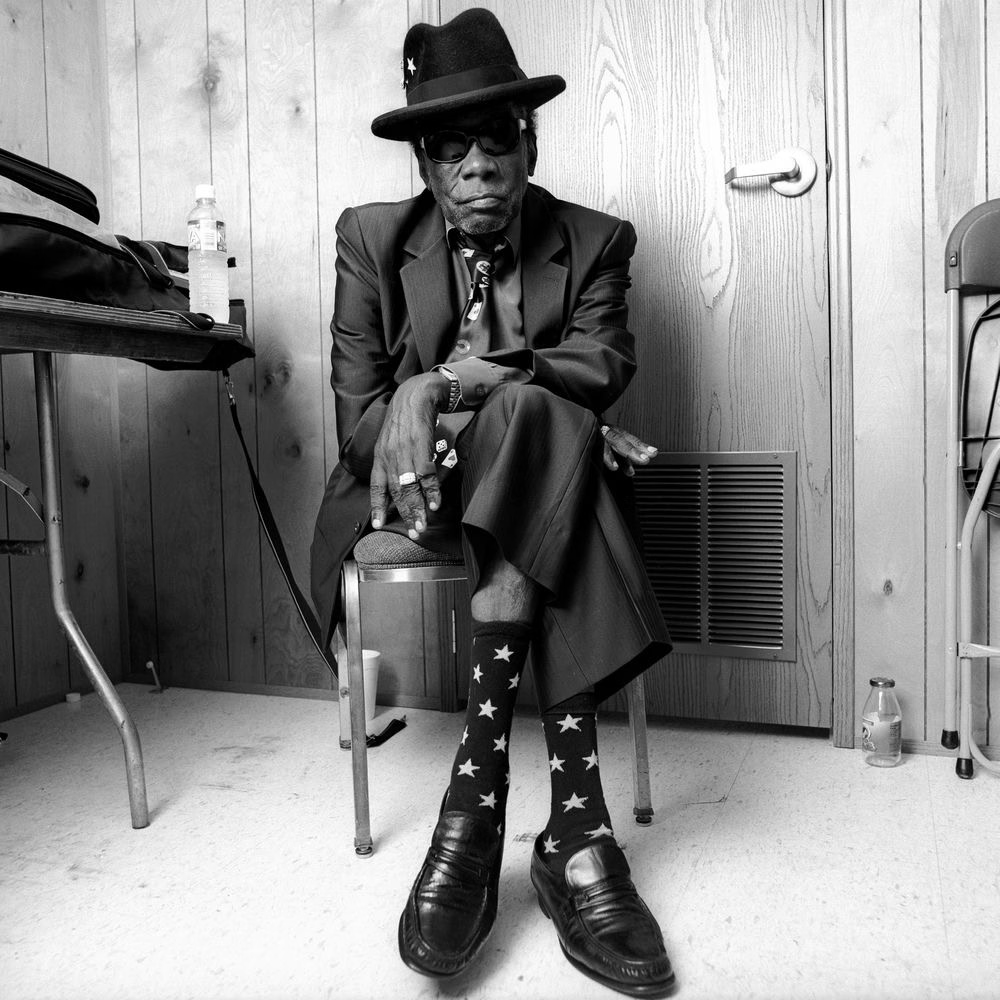
Image Credits

1,414 artist portraits across 5 genres (Rock, Jazz, Soul, Blues, Folk). 1,363 sourced from Wikipedia (Creative Commons / Public Domain), 50 from Deezer (promotional artwork).

Full attribution breakdown →

John Lee Hooker

1912 – 2001 (89)
The Boogie Man

Your feet start tapping before your brain catches up. That one-chord drone, that stomping boot-heel, that voice like gravel wrapped in midnight -- John Lee Hooker didn't play blues so much as he summoned it from the dirt. The man born August 22, 1912 in Coahoma County, Mississippi and died June 21, 2001, but between those two dates he rewired what a guitar could do with one string and a whole lot of sweat.

0:30
0:30
0:30
0:30

He took the minimal and made it sound like everything you ever needed to hear. Nobody needed more notes. Nobody wanted them.

The cost of freedom was isolation. Hooker left the Delta as a teenager and landed in Memphis, then Cincinnati, then Detroit. He worked factory floors by day and played juke joints by night. The money was thin. The whiskey was thick. He learned fast that a solo artist who could hold a room needed no band, no rehearsals, no permission from anyone. He cut his first record in 1948 -- "Boogie Chillen'" -- and it sold a million copies. The label paid him a flat fee. No royalties. No name on the contract. That was the game then. You took what they gave or you went back to the assembly line. Hooker took it and kept playing. He recorded on borrowed equipment, in cheap studios, for whatever the man with the checkbook offered. The music was rich. The musician was broke. That was the Delta deal from cradle to grave.

John Lee Hooker interview 1990

But what Hooker gave back was bottomless. "Boogie Chillen'" was one riff, one rhythm, one voice calling up the Delta from a Detroit basement. He never needed more than one chord. His guitar hummed like a generator.

The Healer (1989)

His voice told stories about women, whiskey, the devil, and the long road between them. He kept recording for five decades, through the folk revival, the blues boom, the MTV era. He played with Carlos Santana and Van Morrison. He never learned to read music. Never needed to. The groove lived in his blood, not on a page. His 1989 album "The Healer" brought him a late-career Grammy and a whole new audience. But the sound never changed. That one-chord stomp was the same in 1989 as it was in 1948. It had always been enough.

John Lee Hooker cost himself his health, his privacy, and decades of fair pay. He left behind a sound so pure that every blues guitarist since has had to reckon with it. That one-chord stomp still echoes in every bar band that ever locked into a trance. Put on "Boogie Chillen'" and try not to move. You can't. That's the church. That's the testimony. That's his alone. He traded money for freedom. He would do it again.

John Lee Hooker was profiled in the documentary, John Lee Hooker: The Boogie Man.
The Healer (1989) The Healer (1989)
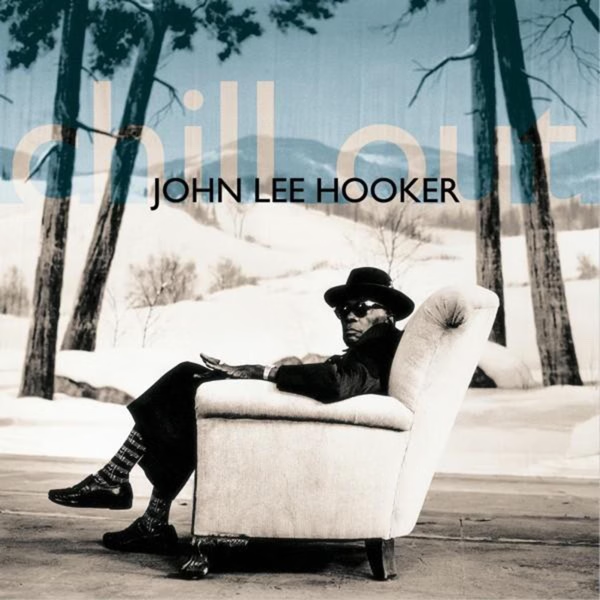
Chill Out (1995) Chill Out (1995)
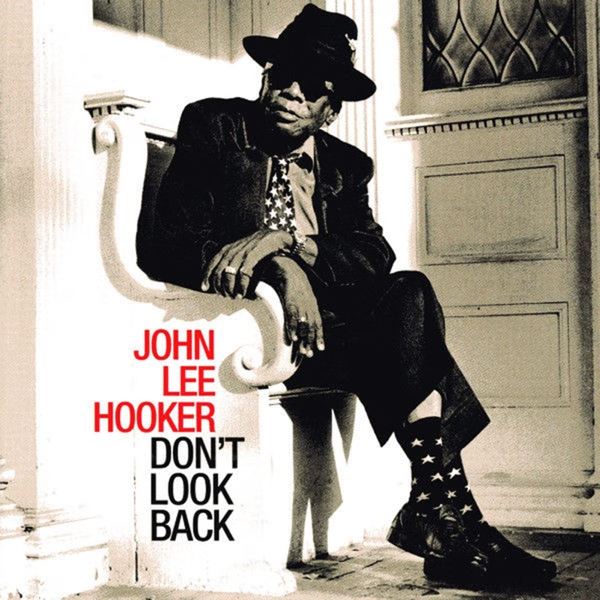
Don't Look Back (1997) Don't Look Back (1997)
The Healer (1989)
Chill Out (1995)
Don't Look Back (1997)
bluesdelta blues
The Sunday Drop
One song. One story. Every Sunday.

No algorithms. No trending sections. Just a song someone loved and the story behind it. Delivered Sunday morning.

Free. No spam. Unsubscribe anytime.

Image Credits

1,414 artist portraits across 5 genres (Rock, Jazz, Soul, Blues, Folk). 1,363 sourced from Wikipedia (Creative Commons / Public Domain), 50 from Deezer (promotional artwork).

Full attribution breakdown →

0:00
0:00