Jimmy Reed
1925 – 1976 (51)
Jimmy Reed made the blues sound like a lazy Saturday afternoon. Big Boss Man. Bright Lights Big City.
Honest I Do
You Don't Have to Go
Big Boss Man
I Found My Baby
Good Lover
Go on to School

Jimmy Reed tracklist updated 07/2026

Baby What You Want Me to Do. His songs didn't sound like work -- they sounded like a man sitting on a porch with a cold drink and nothing to do. The most relaxed groove in the blues, and the hardest thing to pull off.

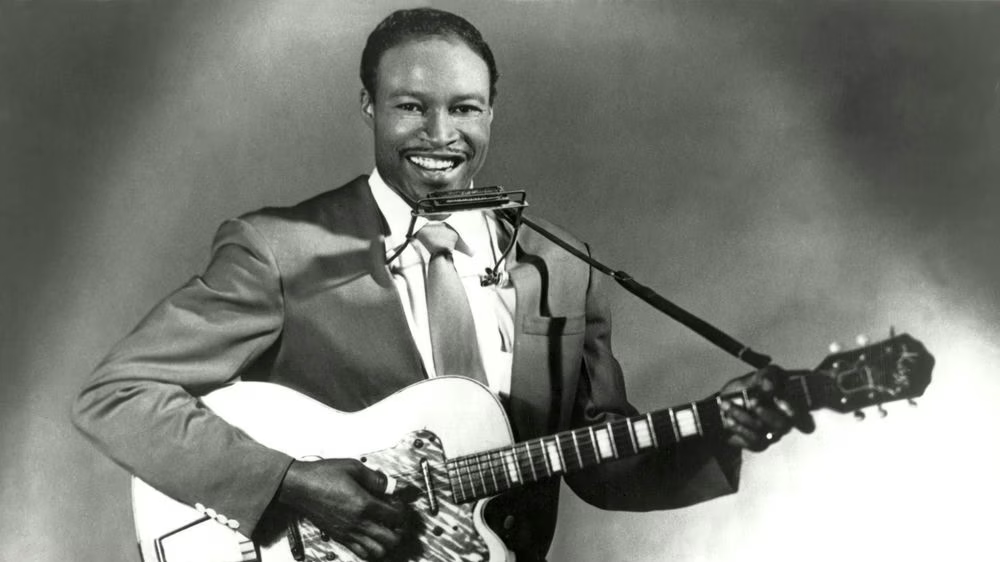
Mathis James Reed from Dunleith, Mississippi moved to Chicago in 1943, served in the Navy, and came back to find his childhood friend Eddie Taylor playing guitar in the clubs. They formed a partnership that lasted decades: Jimmy singing and blowing harmonica, Eddie providing the steady rhythm guitar behind him. Vee-Jay Records signed him in 1953, and the hits came steadily -- Ain't That Lovin' You Baby, Honest I Do, Shame Shame Shame.

Epilepsy complicated his career. He'd have seizures onstage, and his wife Mary -- who sometimes sat behind him onstage whispering the lyrics into his ear because Jimmy couldn't remember them -- would guide him through. She wrote some of his songs too, uncredited. The epilepsy and alcoholism took their toll. He died at 50. But those records -- those impossibly relaxed, simple grooves -- are the sound of the blues at its most comfortable. Jimmy Reed made it sound easy. It wasn't.
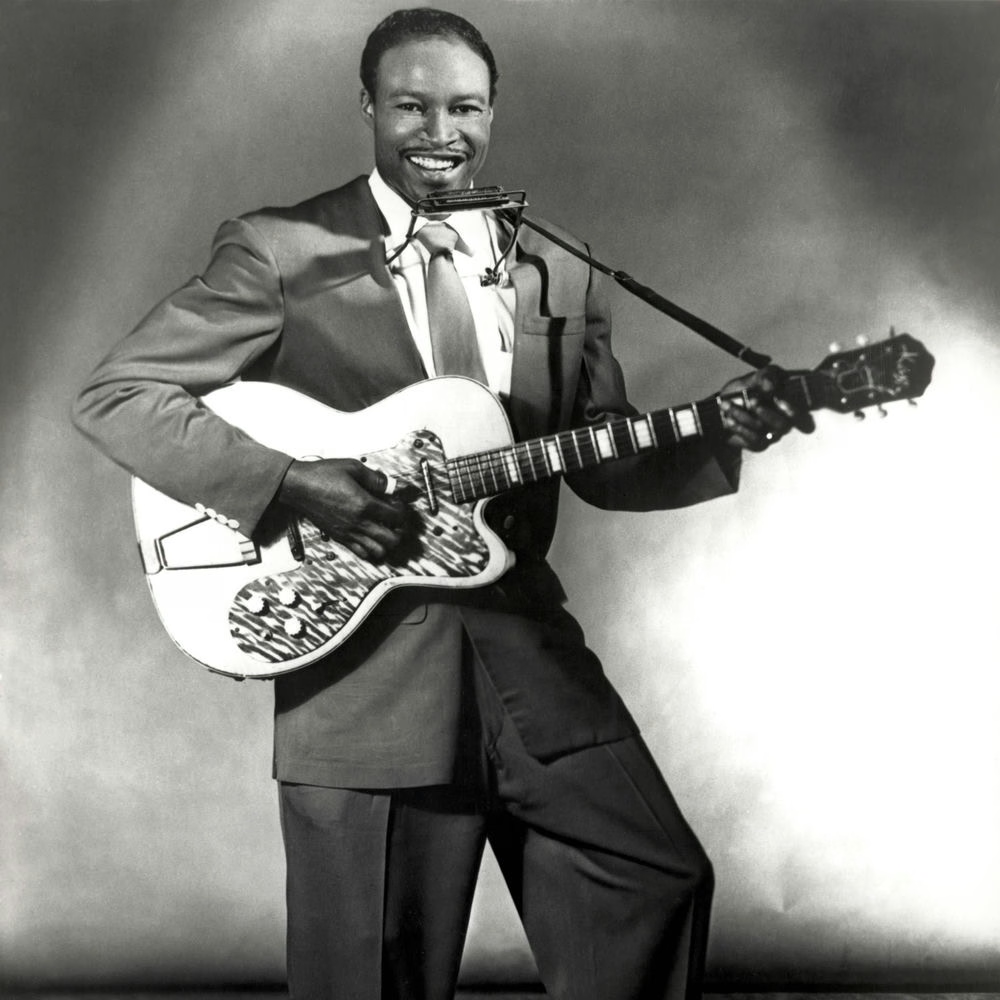
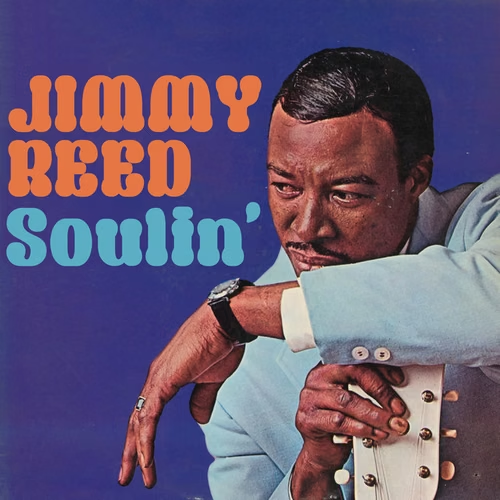
Image Credits

1,449 artist portraits across 5 genres (Rock, Jazz, Soul, Blues, Folk). 1,363 sourced from Wikipedia (Creative Commons / Public Domain), 50 from Deezer (promotional artwork).

Full attribution breakdown →

Jimmy Reed

1925 – 1976 (51)
Jimmy Reed made the blues sound like a lazy Saturday afternoon. Big Boss Man. Bright Lights Big City.
Honest I Do
You Don't Have to Go
Big Boss Man
I Found My Baby
Good Lover
Go on to School

Jimmy Reed tracklist updated 07/2026

Baby What You Want Me to Do. His songs didn't sound like work -- they sounded like a man sitting on a porch with a cold drink and nothing to do. The most relaxed groove in the blues, and the hardest thing to pull off.

Mathis James Reed from Dunleith, Mississippi moved to Chicago in 1943, served in the Navy, and came back to find his childhood friend Eddie Taylor playing guitar in the clubs. They formed a partnership that lasted decades: Jimmy singing and blowing harmonica, Eddie providing the steady rhythm guitar behind him. Vee-Jay Records signed him in 1953, and the hits came steadily -- Ain't That Lovin' You Baby, Honest I Do, Shame Shame Shame.

Epilepsy complicated his career. He'd have seizures onstage, and his wife Mary -- who sometimes sat behind him onstage whispering the lyrics into his ear because Jimmy couldn't remember them -- would guide him through. She wrote some of his songs too, uncredited. The epilepsy and alcoholism took their toll.

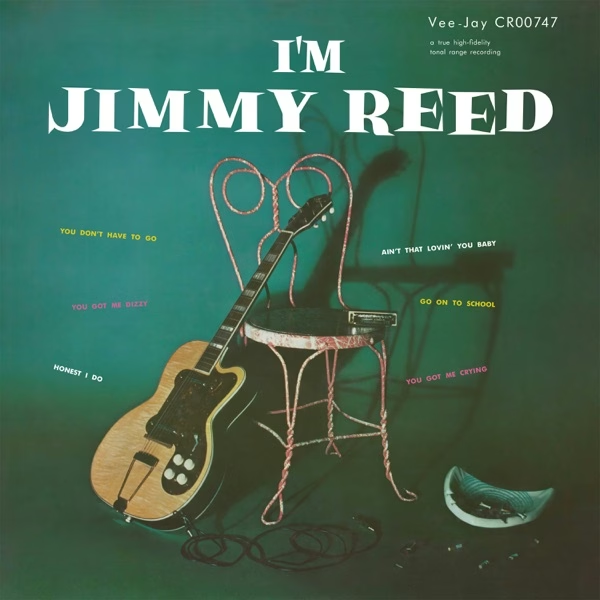
I'm Jimmy Reed (1958)

He died at 50. But those records -- those impossibly relaxed, simple grooves -- are the sound of the blues at its most comfortable. Jimmy Reed made it sound easy. It wasn't.
I'm Jimmy Reed (1958) I'm Jimmy Reed (1958)
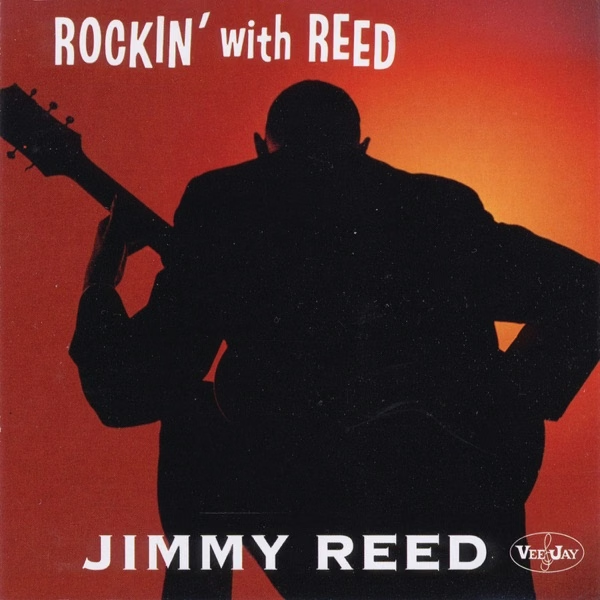
Rockin' With Reed (1959) Rockin' With Reed (1959)
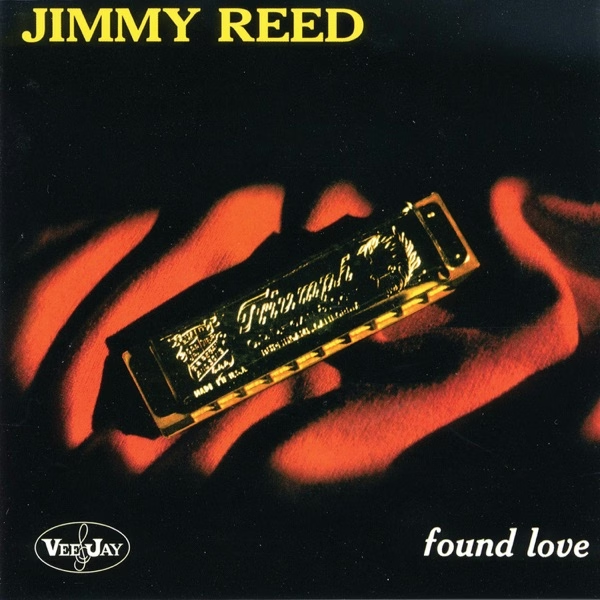
Found Love (1960) Found Love (1960)
I'M Jimmy Reed (1958)
Rockin' With Reed (1959)
Found Love (1960)
Now Appearing (1960)
Just Jimmy Reed (1962)
T'Ain'T No Big Thing But He Is Jimmy Reed (1963)
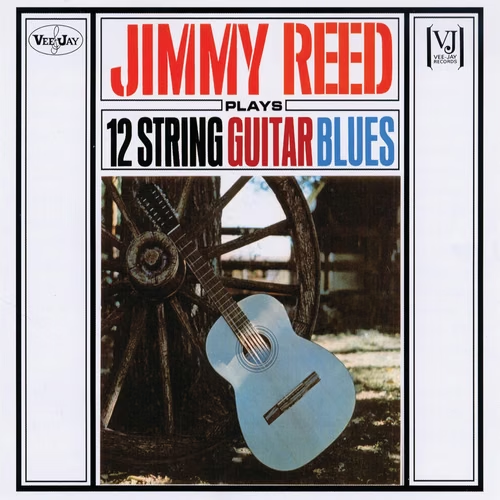
Jimmy Reed Plays 12 String Guitar Blues (1963)
At Soul City (1964)
The New Jimmy Reed Album (1967)
Soulin’ (1967)
Wailin' The Blues (1969)
Down In Virginia (1969)
Let The Bossman Speak! (1971)
I Ain’T From Chicago (1973)
Blues Is My Business (1974)
Street Talkin' (1975)
Upside Your Head (1980)
Big Boss Blues (1986)
Jimmy Reed Is Back (1994)
As Jimmy Is (1995)
Night Train Revisited (1999)
Blues Legends - Back To Back Vol. Three
blueschicago blues
The Sunday Drop
One song. One story. Every Sunday.

No algorithms. No trending sections. Just a song someone loved and the story behind it. Delivered Sunday morning.

Free. No spam. Unsubscribe anytime.

Image Credits

1,449 artist portraits across 5 genres (Rock, Jazz, Soul, Blues, Folk). 1,363 sourced from Wikipedia (Creative Commons / Public Domain), 50 from Deezer (promotional artwork).

Full attribution breakdown →

0:00
0:00
The Sunday Drop One song. One story. Every Sunday.
Click any song to hear it in full or in part.