Gil Scott-Heron
1949 – 2011 (62)
The Revolution Will Not Be Televised

Chicago, 1949. A boy born to a professional soccer player father and a librarian mother who sang opera, raised in Tennessee by his grandmother, then shuttled back to New York. Gil Scott-Heron learned early that language was a weapon and a shelter.

0:30
0:30
0:30
0:30

By the time he was at Lincoln University he was writing novels. By the time he was recording he was making music that sounded like nothing else -- not quite jazz, not quite funk, not quite poetry, but a blend that became its own category. Alongside The Last Poets, he helped create the blueprint for Black political music. He called his work "bluesology" and the term stuck because nobody had a better one.

The music industry of the early 1970s had begun to absorb radical Black politics into commodified forms -- slick soul songs with mild protest lyrics, safe enough for radio. Gil Scott-Heron walked into that room and refused to be absorbed. He recorded "The Revolution Will Not Be Televised" in 1970, a track that was barely a track: his voice, Brian Jackson's piano and flute, a conga drum, and a razor blade. No verse-chorus structure. No hook. Just a torrent of lines aimed at consumer culture, television, and the comfortable lie that change happens passively. The cost was that he never became a star in the conventional sense. He was too political for pop, too musical for the poetry scene, too idiosyncratic for jazz radio. He spent decades fighting addiction, serving time, and watching his influence grow while his career stalled.

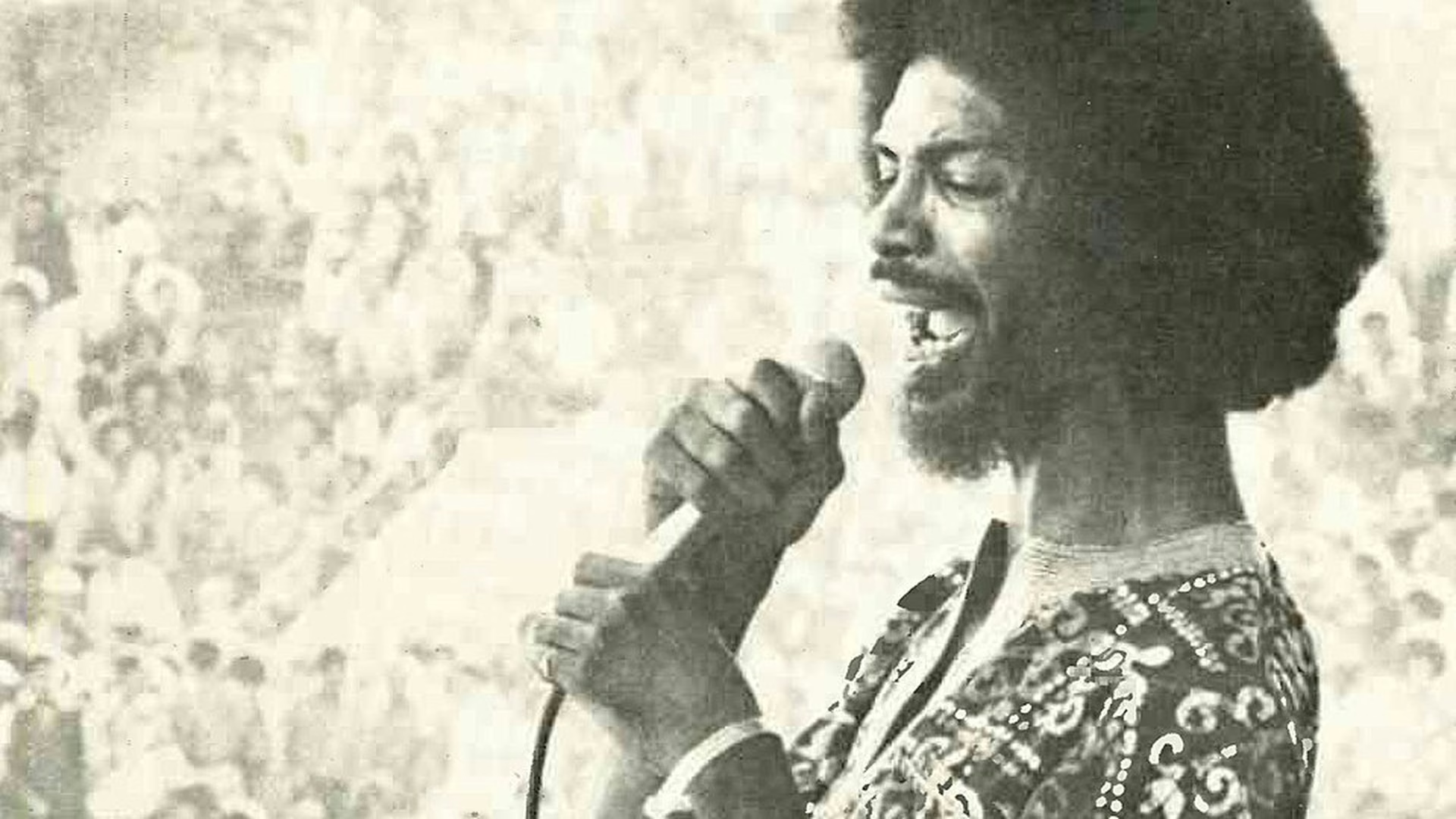
Gil Scott-Heron interview 1990

"The Revolution Will Not Be Televised" is the document that keeps his name alive, and it deserves the attention -- but it is not the whole picture. The track works because Scott-Heron understood rhythm as persuasion. His delivery sits on Jackson's piano like a second instrument, syncopated, conversational, relentless. He does not shout.

Pieces of a Man (1971)

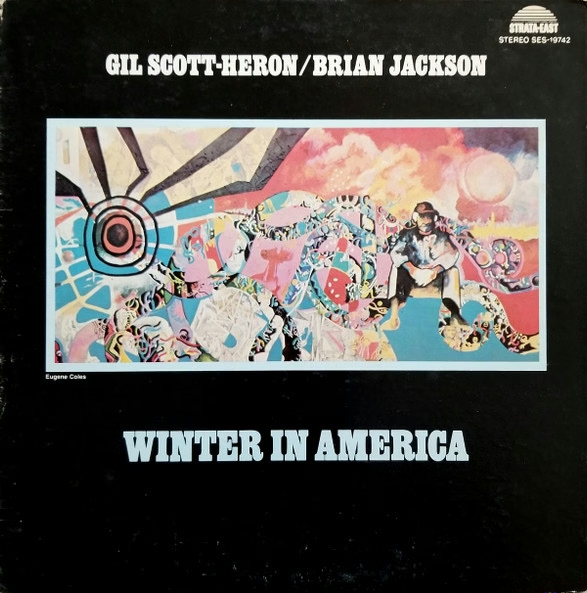
He does not plead. He states facts with the dry confidence of someone who has already done the math. "You will not be able to stay home, brother." That is not a threat. It is a weather report. His later work with Jackson deepened the palette -- "Winter in America," "Johannesburg" -- moving into fuller arrangements that proved he could make beauty as well as argument. He wrote songs that felt like essays and essays that felt like songs.

Gil Scott-Heron died in 2011, clean and working again, having just released "I'm New Here," a late-career album that found him still searching. The obituaries called him the godfather of rap, which he rejected -- he was a poet who worked in sound, not a rapper -- but the lineage is undeniable. Every MC who has ever stopped the track to say something real, every artist who has understood that politics and rhythm belong together, every voice that has refused the distance between art and argument -- they are all walking through a door that Gil Scott-Heron opened. The revolution was not televised. But it was recorded.

Gil Scott-Heron was profiled in the documentary, The Revolution Will Not Be Televised, in 2012.
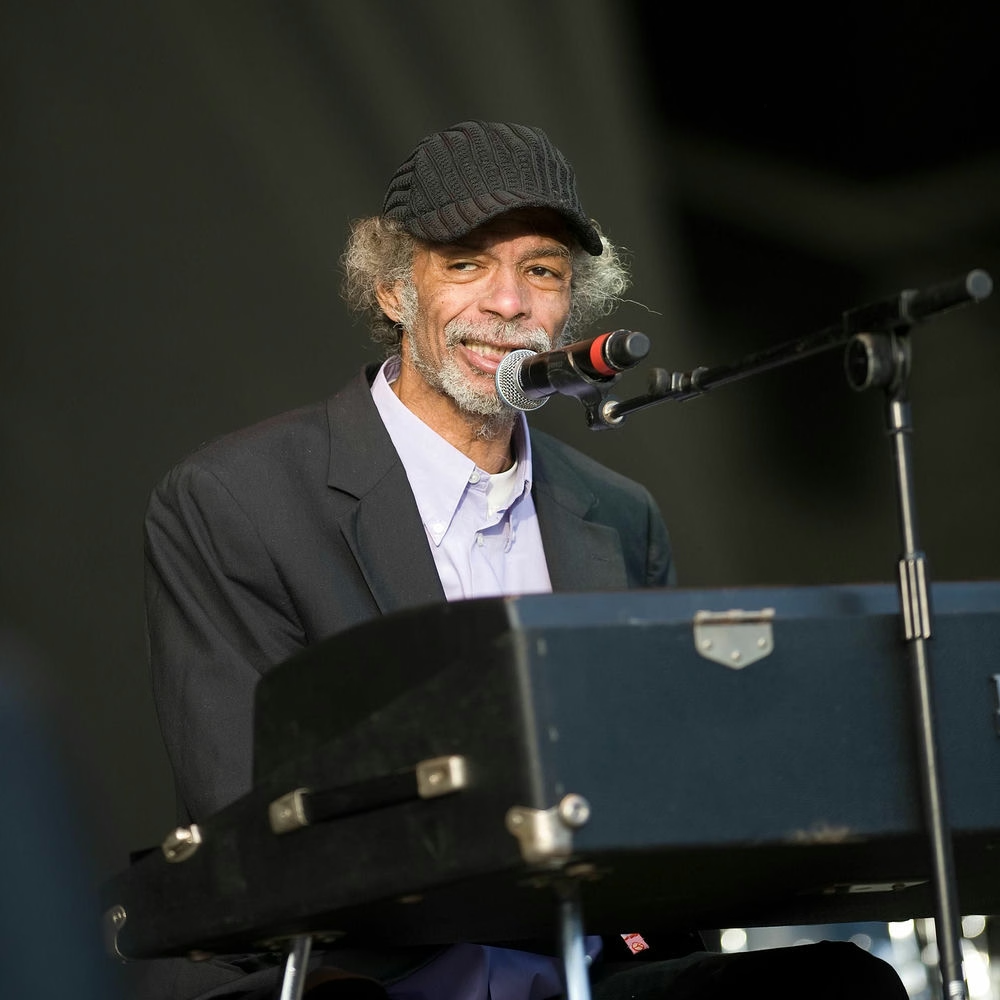
Image Credits

1,414 artist portraits across 5 genres (Rock, Jazz, Soul, Blues, Folk). 1,363 sourced from Wikipedia (Creative Commons / Public Domain), 50 from Deezer (promotional artwork).

Full attribution breakdown →

Gil Scott-Heron

1949 – 2011 (62)
The Revolution Will Not Be Televised

Chicago, 1949. A boy born to a professional soccer player father and a librarian mother who sang opera, raised in Tennessee by his grandmother, then shuttled back to New York. Gil Scott-Heron learned early that language was a weapon and a shelter.

0:30
0:30
0:30
0:30

By the time he was at Lincoln University he was writing novels. By the time he was recording he was making music that sounded like nothing else -- not quite jazz, not quite funk, not quite poetry, but a blend that became its own category. Alongside The Last Poets, he helped create the blueprint for Black political music. He called his work "bluesology" and the term stuck because nobody had a better one.

The music industry of the early 1970s had begun to absorb radical Black politics into commodified forms -- slick soul songs with mild protest lyrics, safe enough for radio. Gil Scott-Heron walked into that room and refused to be absorbed. He recorded "The Revolution Will Not Be Televised" in 1970, a track that was barely a track: his voice, Brian Jackson's piano and flute, a conga drum, and a razor blade. No verse-chorus structure. No hook. Just a torrent of lines aimed at consumer culture, television, and the comfortable lie that change happens passively. The cost was that he never became a star in the conventional sense. He was too political for pop, too musical for the poetry scene, too idiosyncratic for jazz radio. He spent decades fighting addiction, serving time, and watching his influence grow while his career stalled.

Gil Scott-Heron interview 1990

"The Revolution Will Not Be Televised" is the document that keeps his name alive, and it deserves the attention -- but it is not the whole picture. The track works because Scott-Heron understood rhythm as persuasion. His delivery sits on Jackson's piano like a second instrument, syncopated, conversational, relentless. He does not shout.

Pieces of a Man (1971)

He does not plead. He states facts with the dry confidence of someone who has already done the math. "You will not be able to stay home, brother." That is not a threat. It is a weather report. His later work with Jackson deepened the palette -- "Winter in America," "Johannesburg" -- moving into fuller arrangements that proved he could make beauty as well as argument. He wrote songs that felt like essays and essays that felt like songs.

Gil Scott-Heron died in 2011, clean and working again, having just released "I'm New Here," a late-career album that found him still searching. The obituaries called him the godfather of rap, which he rejected -- he was a poet who worked in sound, not a rapper -- but the lineage is undeniable. Every MC who has ever stopped the track to say something real, every artist who has understood that politics and rhythm belong together, every voice that has refused the distance between art and argument -- they are all walking through a door that Gil Scott-Heron opened. The revolution was not televised. But it was recorded.

Gil Scott-Heron was profiled in the documentary, The Revolution Will Not Be Televised, in 2012.

Pieces of a Man (1971) Pieces of a Man (1971)
Winter in America (1974) Winter in America (1974)
I’m New Here (2010) I’m New Here (2010)
Pieces of a Man (1971)
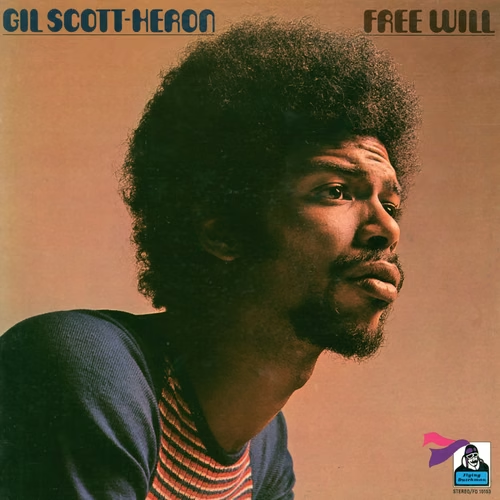
Free Will (1972)
Winter in America (1974)
The First Minute of a New Day (1975)
From South Africa to South Carolina (1975)
It's Your World (1976)
Bridges (1977)
The Mind of Gil Scott Heron (1978)
Secrets (1978)
1980 (1980)
Real Eyes (1980)
Reflections (1981)
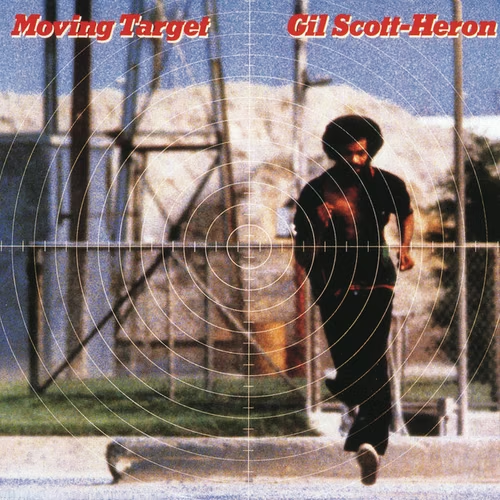
Moving Target (1982)
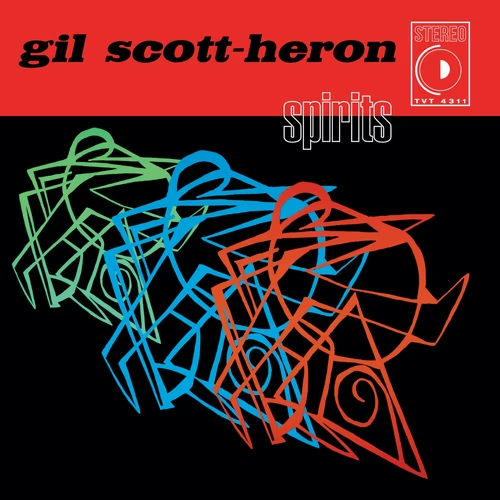
Spirits (1994)
I’m New Here (2010)
funkspoken wordjazzfunk-soul
The Sunday Drop
One song. One story. Every Sunday.

No algorithms. No trending sections. Just a song someone loved and the story behind it. Delivered Sunday morning.

Free. No spam. Unsubscribe anytime.

Image Credits

1,414 artist portraits across 5 genres (Rock, Jazz, Soul, Blues, Folk). 1,363 sourced from Wikipedia (Creative Commons / Public Domain), 50 from Deezer (promotional artwork).

Full attribution breakdown →

0:00
0:00