Chuck Berry
1926 – 2017 (91)
The Poet of the Teenage Dream

Before Chuck Berry, the electric guitar was a rhythm instrument in the hands of most Black players. It sat in the background. It supported the vocal.

0:30
0:30
0:30
0:30

It did not tell the story. Berry was born in St. Louis in 1926, and he took that instrument and turned it into a lead voice, a narrator, a comedian, a preacher. He did not just play the guitar. He made the guitar say things. The opening riff of "Johnny B. Goode" is not just a riff. It is a declaration. It is the sound of a Black man from the Midwest saying: I am here. I have something to say. And you are going to listen to every note of it.

Berry walked into a segregated America where white artists were covering Black music and getting the credit and the money. He did not fight that by protesting. He fought it by being undeniable. He wrote songs about cars and school and teenage life -- subjects that white America could not pretend were alien. He took the rhythm and blues of the Black church and the Black club circuit and made it into something that the whole country recognized. The cost was constant pressure, legal battles, the weight of being a pioneer while the system was designed to stop you. Berry paid those bills without slowing down. He kept writing. He kept touring with Johnnie Johnson at the piano, the perfect foil, the man who held the rhythm steady while Berry flew.

Chuck Berry interview 1990

"Johnny B. Goode" is the most famous guitar riff in rock and roll history. It is also a Black fantasy of upward mobility -- a country boy who cannot read or write so well but can play a guitar like a ringing bell. Berry wrote himself into that song.

After School Session

He wrote every musician who came after him into that song. The riff is simple. That is the point. It does not need complexity because it has confidence. Berry's music did not just make people dance. It made people want to be musicians. It created the template for what a rock and roll frontman should be: the showmanship, the charisma, the way he made the guitar an extension of his body. He invented the visual vocabulary of rock as surely as he invented its musical vocabulary.

He died in 2017 at ninety, having performed into his final years. The tributes poured in from every corner of music. He was not just a founder of rock and roll. He was the architect. Without Chuck Berry, the music that followed would have sounded completely different. He took the blues and the boogie-woogie of his St. Louis upbringing and he accelerated it, electrified it, and turned it into a language that the whole world could speak. The guitar still talks because he taught it how. Every time someone picks up an electric guitar and plays a riff that sounds like a sentence, they are continuing a conversation that Chuck Berry started.
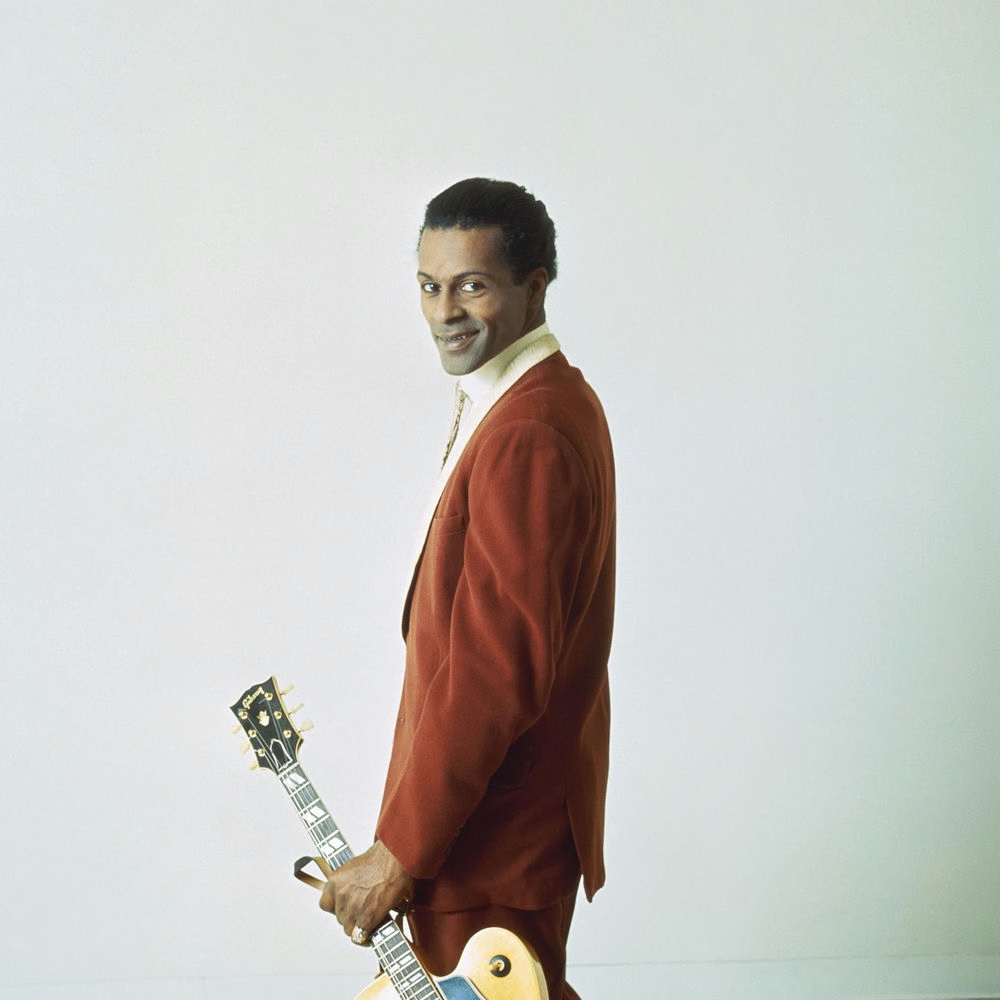
Image Credits

1,414 artist portraits across 5 genres (Rock, Jazz, Soul, Blues, Folk). 1,363 sourced from Wikipedia (Creative Commons / Public Domain), 50 from Deezer (promotional artwork).

Full attribution breakdown →

Chuck Berry

1926 – 2017 (91)
The Poet of the Teenage Dream

Before Chuck Berry, the electric guitar was a rhythm instrument in the hands of most Black players. It sat in the background. It supported the vocal.

0:30
0:30
0:30
0:30

It did not tell the story. Berry was born in St. Louis in 1926, and he took that instrument and turned it into a lead voice, a narrator, a comedian, a preacher. He did not just play the guitar. He made the guitar say things. The opening riff of "Johnny B. Goode" is not just a riff. It is a declaration. It is the sound of a Black man from the Midwest saying: I am here. I have something to say. And you are going to listen to every note of it.

Berry walked into a segregated America where white artists were covering Black music and getting the credit and the money. He did not fight that by protesting. He fought it by being undeniable. He wrote songs about cars and school and teenage life -- subjects that white America could not pretend were alien. He took the rhythm and blues of the Black church and the Black club circuit and made it into something that the whole country recognized. The cost was constant pressure, legal battles, the weight of being a pioneer while the system was designed to stop you. Berry paid those bills without slowing down. He kept writing. He kept touring with Johnnie Johnson at the piano, the perfect foil, the man who held the rhythm steady while Berry flew.

Chuck Berry interview 1990

"Johnny B. Goode" is the most famous guitar riff in rock and roll history. It is also a Black fantasy of upward mobility -- a country boy who cannot read or write so well but can play a guitar like a ringing bell. Berry wrote himself into that song.

After School Session

He wrote every musician who came after him into that song. The riff is simple. That is the point. It does not need complexity because it has confidence. Berry's music did not just make people dance. It made people want to be musicians. It created the template for what a rock and roll frontman should be: the showmanship, the charisma, the way he made the guitar an extension of his body. He invented the visual vocabulary of rock as surely as he invented its musical vocabulary.

He died in 2017 at ninety, having performed into his final years. The tributes poured in from every corner of music. He was not just a founder of rock and roll. He was the architect. Without Chuck Berry, the music that followed would have sounded completely different. He took the blues and the boogie-woogie of his St. Louis upbringing and he accelerated it, electrified it, and turned it into a language that the whole world could speak. The guitar still talks because he taught it how. Every time someone picks up an electric guitar and plays a riff that sounds like a sentence, they are continuing a conversation that Chuck Berry started.
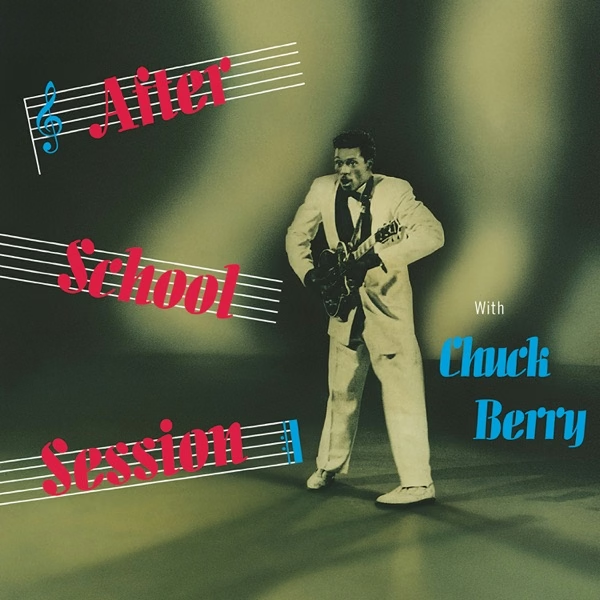
After School Session After School Session
One Dozen Berrys One Dozen Berrys
Berry Is on Top Berry Is on Top
After School Session
One Dozen Berrys
Berry Is on Top
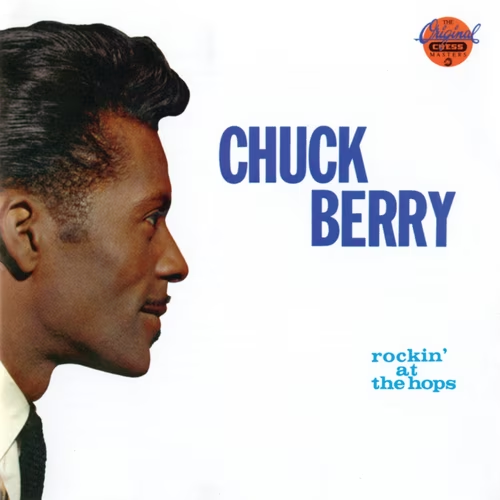
Rockin' at the Hops
New Juke Box Hits
Two Great Guitars
St. Louis to Liverpool
Chuck Berry in London
Fresh Berry's
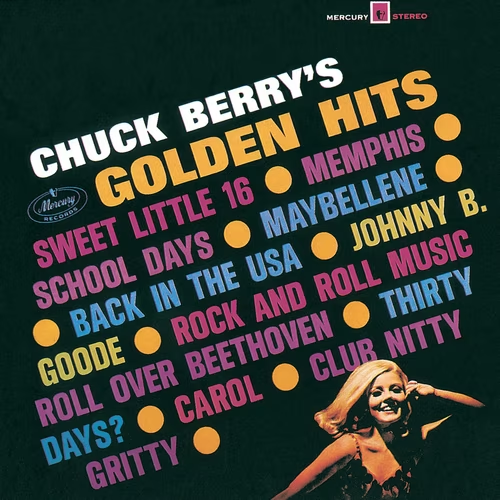
Chuck Berry's Golden Hits
Chuck Berry in Memphis
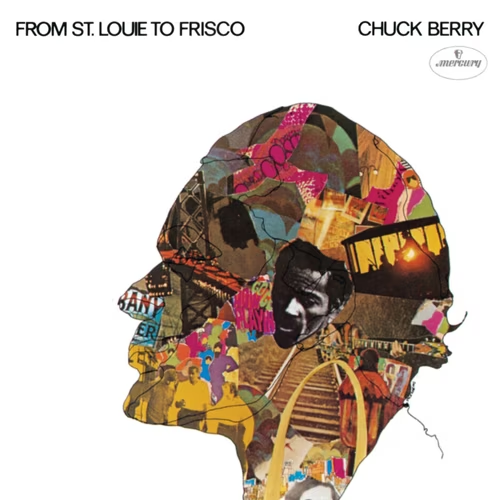
From St. Louie to Frisco
Concerto in 'B Goode'
Back Home
San Francisco Dues
The London Chuck Berry Sessions
Bio
Chuck Berry
Rockit
Chuck
rock and rollr&bblues
The Sunday Drop
One song. One story. Every Sunday.

No algorithms. No trending sections. Just a song someone loved and the story behind it. Delivered Sunday morning.

Free. No spam. Unsubscribe anytime.

Image Credits

1,414 artist portraits across 5 genres (Rock, Jazz, Soul, Blues, Folk). 1,363 sourced from Wikipedia (Creative Commons / Public Domain), 50 from Deezer (promotional artwork).

Full attribution breakdown →

0:00
0:00