Booker T. & the M.G.'s
1962 –
Stax's House Band That Was Better Than the Headliners

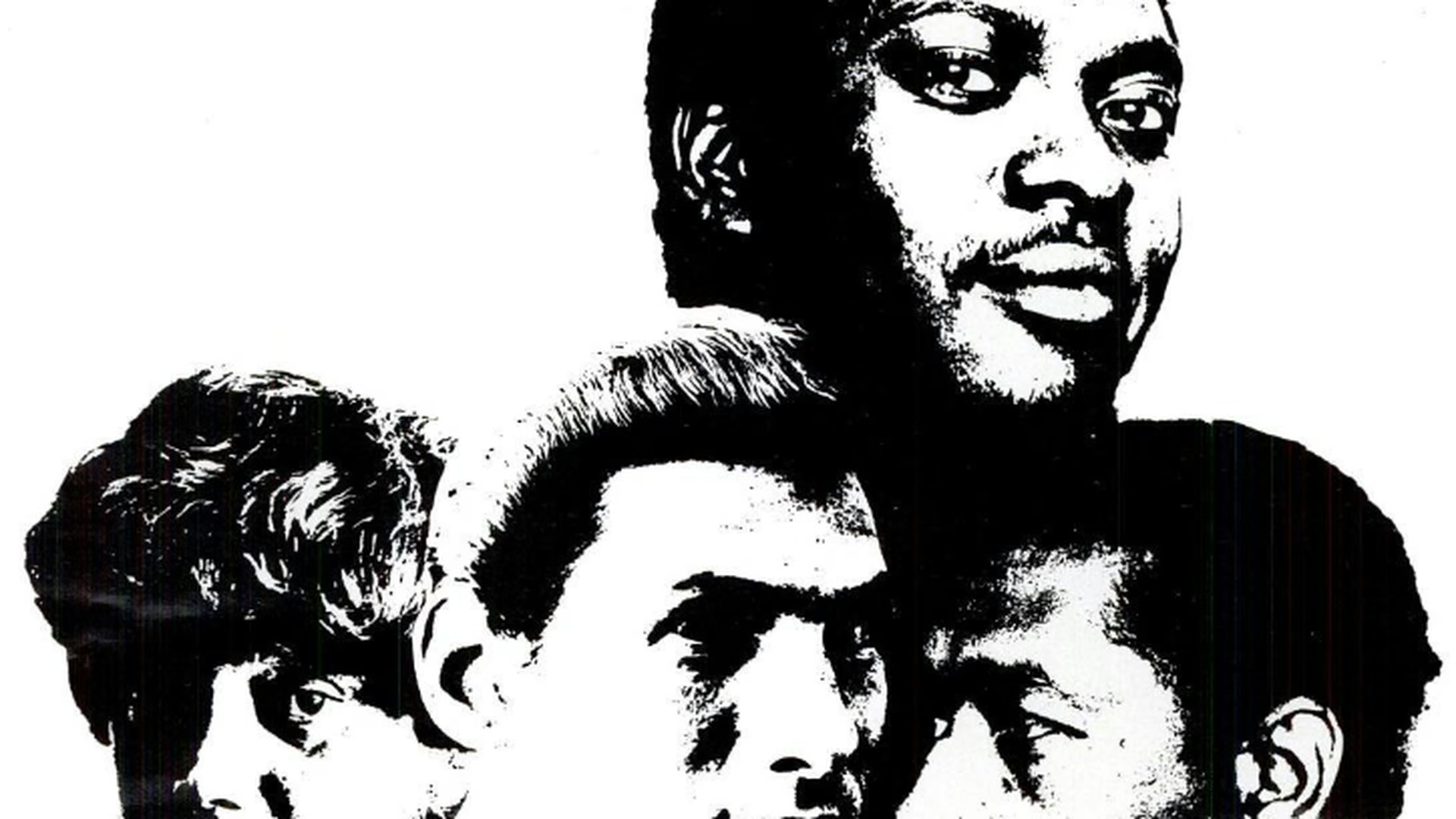
The band formed in Memphis in 1962 with no name, no singer, and no idea that they were about to define the sound of Southern soul. Booker T. Jones was a teenage multi-instrumentalist with perfect instincts.

0:30
0:30
0:30
0:30

Steve Cropper played guitar like he was carving wood. Duck Dunn held the bass like it was the foundation of a house. Al Jackson Jr. played drums like a man who had been keeping time since birth. They were the house band at a label that was becoming the heart of soul music. They were not the show. They were the floor the show stood on. And then one afternoon, during a break, they started playing a simple blues riff and "Green Onions" was born.

The cost of being the house band was anonymity. They made other people famous. They wrote the grooves that launched hundreds of records and they watched the singers take the credit and the money. Al Jackson Jr. was killed in his own home in 1975, a violent end for a man who had kept the pocket for an entire musical generation. The M.G.'s paid in the currency of being background. They were the engine, not the hood ornament. They accepted that role because they understood that the engine matters more. Without the rhythm section, the star is just a person standing on an empty stage. The M.G.'s were the reason that stage had a floor.

Booker T. & the M.G.'s interview 1990

What "Green Onions" did was prove that instrumental soul could grab you by the collar as hard as any vocal. The Hammond organ growled. The guitar was a blade. The bass was a heartbeat.

Green Onions (1962)

The drums never rushed. The track had no chorus, no bridge, no words. It did not need them. It said everything it needed to say in two minutes and change. It became one of the most recognized instrumental records in history. Every time a producer pulls that Hammond organ sound, every time a guitarist digs into that chunky rhythm, they are opening a door that Booker T. and the M.G.'s built. The band did not just back the greatest singers of the soul era. They taught those singers what a groove could be.

The group is still active in various forms, though the original members have passed or moved on. Booker T. Jones still carries the torch. The M.G.'s were recognized as architects of an entire sound. They proved that a group of instrumentalists could be as important as any star with a microphone. They proved that the pocket is sacred. They gave soul music its spine, its backbone, its steady heartbeat. If you listen to soul music from the 1960s, you are listening to the influence of four men who understood that the best musicians are the ones who make you forget they are there. They disappear into the groove. That is their gift. That is their genius.
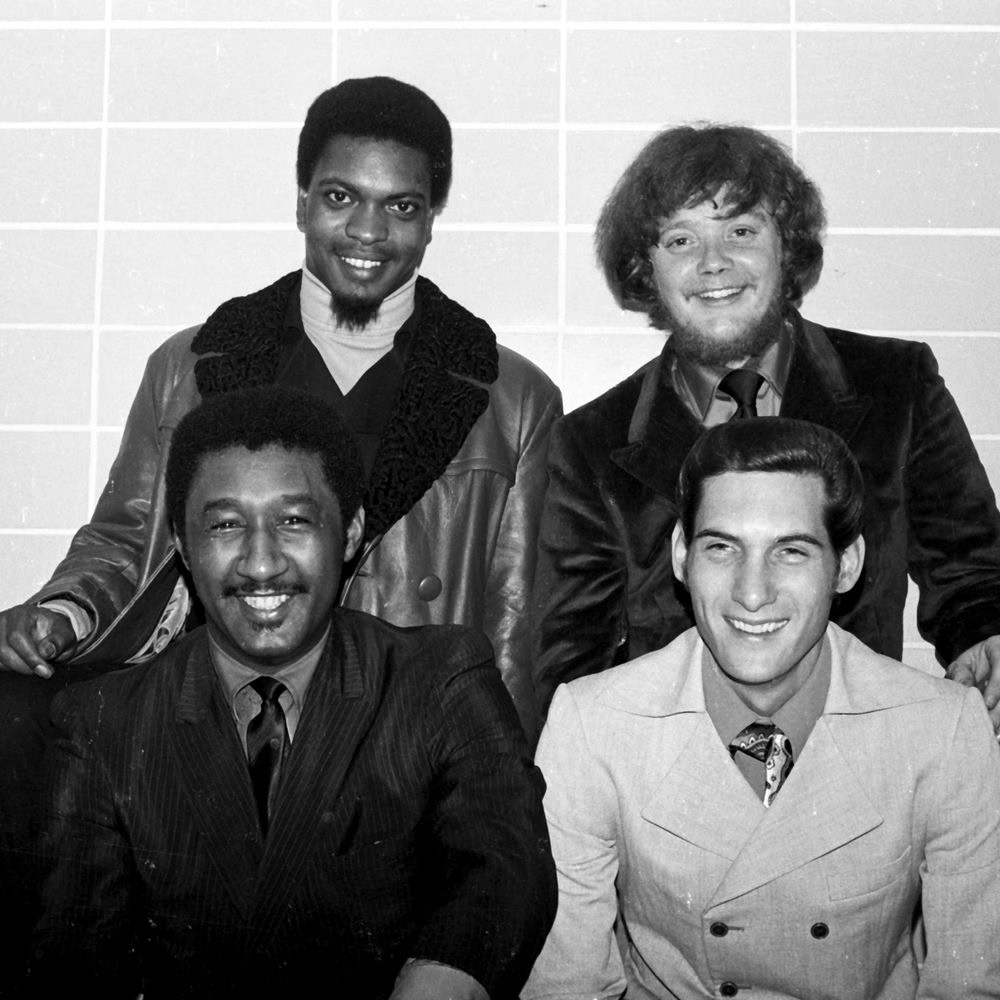
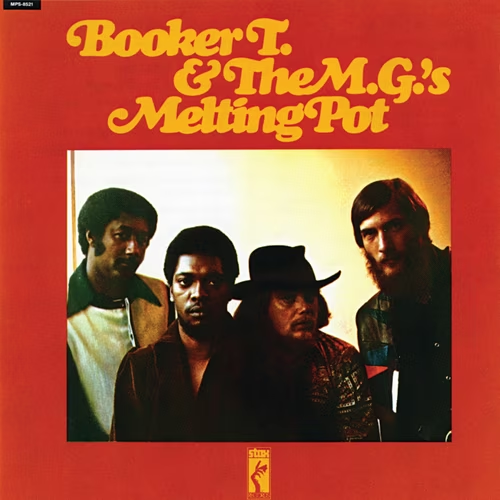
Image Credits

1,414 artist portraits across 5 genres (Rock, Jazz, Soul, Blues, Folk). 1,363 sourced from Wikipedia (Creative Commons / Public Domain), 50 from Deezer (promotional artwork).

Full attribution breakdown →

Booker T. & the M.G.'s

1962 –
Stax's House Band That Was Better Than the Headliners

The band formed in Memphis in 1962 with no name, no singer, and no idea that they were about to define the sound of Southern soul. Booker T. Jones was a teenage multi-instrumentalist with perfect instincts.

0:30
0:30
0:30
0:30

Steve Cropper played guitar like he was carving wood. Duck Dunn held the bass like it was the foundation of a house. Al Jackson Jr. played drums like a man who had been keeping time since birth. They were the house band at a label that was becoming the heart of soul music. They were not the show. They were the floor the show stood on. And then one afternoon, during a break, they started playing a simple blues riff and "Green Onions" was born.

The cost of being the house band was anonymity. They made other people famous. They wrote the grooves that launched hundreds of records and they watched the singers take the credit and the money. Al Jackson Jr. was killed in his own home in 1975, a violent end for a man who had kept the pocket for an entire musical generation. The M.G.'s paid in the currency of being background. They were the engine, not the hood ornament. They accepted that role because they understood that the engine matters more. Without the rhythm section, the star is just a person standing on an empty stage. The M.G.'s were the reason that stage had a floor.

Booker T. & the M.G.'s interview 1990

What "Green Onions" did was prove that instrumental soul could grab you by the collar as hard as any vocal. The Hammond organ growled. The guitar was a blade. The bass was a heartbeat.

Green Onions (1962)

The drums never rushed. The track had no chorus, no bridge, no words. It did not need them. It said everything it needed to say in two minutes and change. It became one of the most recognized instrumental records in history. Every time a producer pulls that Hammond organ sound, every time a guitarist digs into that chunky rhythm, they are opening a door that Booker T. and the M.G.'s built. The band did not just back the greatest singers of the soul era. They taught those singers what a groove could be.

The group is still active in various forms, though the original members have passed or moved on. Booker T. Jones still carries the torch. The M.G.'s were recognized as architects of an entire sound. They proved that a group of instrumentalists could be as important as any star with a microphone. They proved that the pocket is sacred. They gave soul music its spine, its backbone, its steady heartbeat. If you listen to soul music from the 1960s, you are listening to the influence of four men who understood that the best musicians are the ones who make you forget they are there. They disappear into the groove. That is their gift. That is their genius.

Green Onions (1962) Green Onions (1962)
Soul Limbo (1968) Soul Limbo (1968)
Hip Hug Her (1967) Hip Hug Her (1967)
Green Onions (1962)
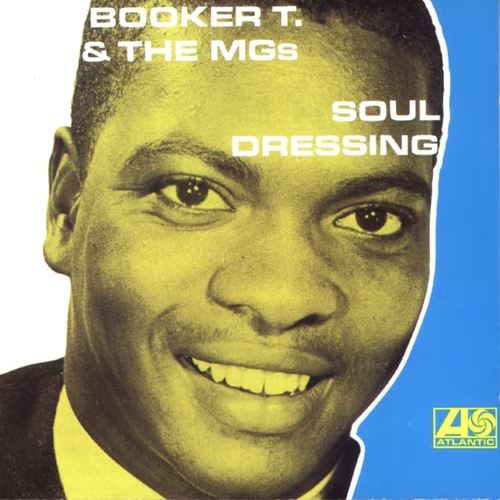
Soul Dressing (1965)
And Now! (1966)
In the Christmas Spirit (1966)
Hip Hug‐Her (1967)
Soul Limbo (1968)
Doin’ Our Thing (1968)
The Booker T. Set (1969)
McLemore Avenue (1970)
Melting Pot (1971)
Union Extended (1976)
Universal Language (1977)
16 Original Hits (1991)
That’s the Way It Should Be (1994)
Hip Hug Her (1967)
soulr&binstrumental
The Sunday Drop
One song. One story. Every Sunday.

No algorithms. No trending sections. Just a song someone loved and the story behind it. Delivered Sunday morning.

Free. No spam. Unsubscribe anytime.

Image Credits

1,414 artist portraits across 5 genres (Rock, Jazz, Soul, Blues, Folk). 1,363 sourced from Wikipedia (Creative Commons / Public Domain), 50 from Deezer (promotional artwork).

Full attribution breakdown →

0:00
0:00