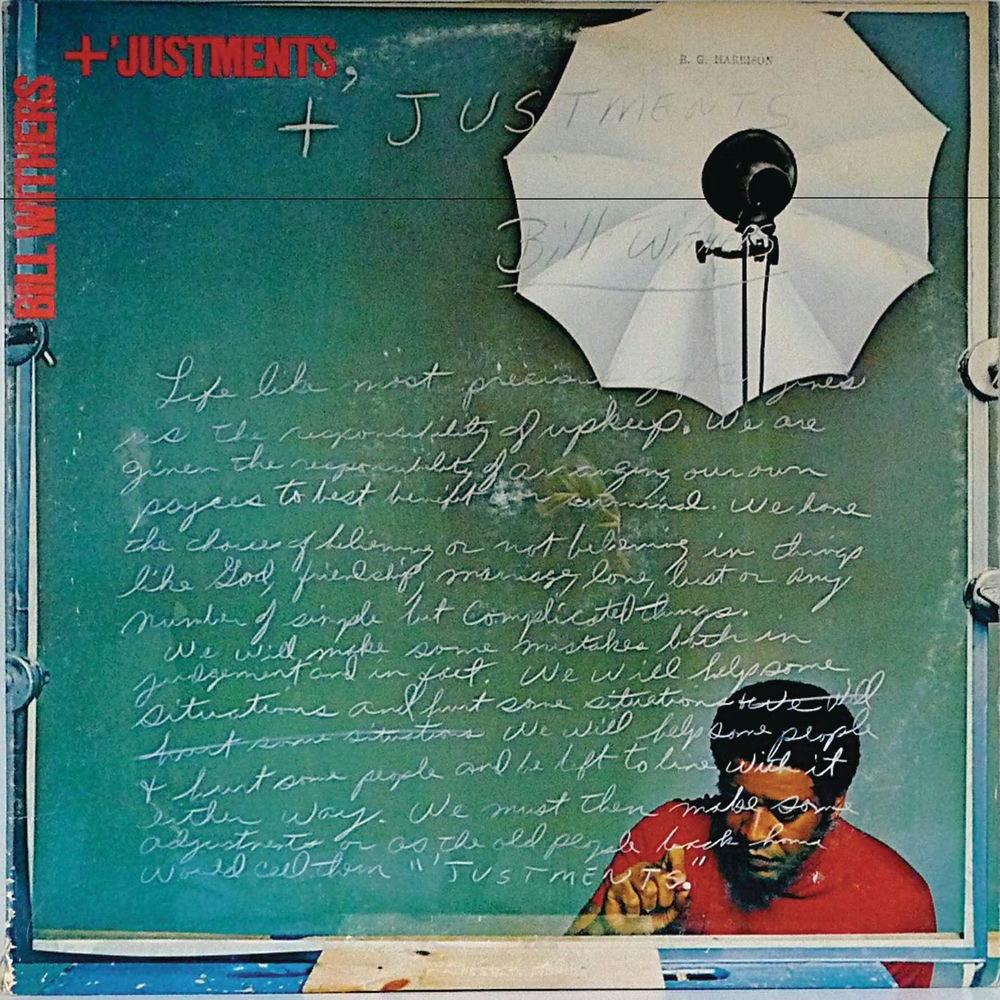
Bill Withers wrote by hand, on the back of his own album cover, what the title meant. Life hands you gifts, he said, and you have to maintain them. God, friendship, marriage, love, lust -- any number of simple but complicated things. You make mistakes. You hurt people. You are left to live with it. Then you make some adjustments. Or as the old people back home called them: +'JUSTMENTS. That handwritten note, reproduced on the sleeve of his third album, is the key to the whole room. Every song on +'Justments is a different kind of repair work. And Can We Pretend -- written by his wife, Denise Nicholas, the actress from Room 222 -- is the most radical adjustment of all: the request to erase the past entirely and start over, as if the damage had never happened.
Nicholas wrote the lyric. Withers sang it, in his baritone that never rushes, the voice of a man who has already decided he will carry whatever weight arrives. The song floats at walking pace. James Gadson’s brushes on snare. Melvin Dunlap’s bass refusing to rush the changes. And what Nicholas is asking for cannot exist -- to paint a portrait of tomorrow with no colors from today. She knows it. The song knows it. But the act of asking, of standing in front of someone and saying the weight is real and you wish it were not, that is the adjustment the old people were talking about.
Can we pretend That from now on There is no yesterday Paint a portrait of tomorrow With no colors from today
Can We Pretend
Listen while you read: Can We Pretend | +'Justments | 1974
The Light and the Shadow
The first verse describes a contradiction: a light in your face that wraps feelings around your knee, and a shadow in your heart that makes those same feelings turn back on themselves. This is not a simple love song. This is a document of a marriage in trouble. Nicholas wrote it in 1973, the year she married Withers. By 1974 the album was out and the marriage was already dissolving. She wrote the question. He sang it. And within a year, the yesterday she wanted to erase had become the precise thing neither of them could escape.
The full lyrics reveal a second request the old article missed entirely. After the chorus about erasing yesterday, Nicholas pivots: Can we pretend the pain is gone, and go our merry way. Paint a portrait of tomorrow with the colors bright and gay. Not erasure anymore. Healing instead. The first chorus is a door slamming shut. The second chorus is a window cracked open. That is the entire emotional arc of the song in two verses: first, the wish that none of it happened. Then, the acceptance that it did happen and the hope that the colors can still be bright.
There’s a light that shines in your face sometimes That takes my feelings, wraps them around your knee But there’s shadow hiding in your heart sometimes That makes my feelings turn back in on me
The metaphor is architectural. Light wraps around a knee -- not a chest, not a head. The knee is the hinge of the body, the joint that bends but does not break. Feelings being wrapped around it suggests being tied to someone at the point of movement. And the shadow in the heart turns those feelings back inward. They do not leave the room. They rebound, unresolved, back to the person who offered them. Nicholas is describing the geometry of a relationship where love enters one door and exits the same door, having never reached the other person.
The Room Full of Legends
Recorded at the Record Plant in Los Angeles, with additional sessions at Dijobe Sound in Orange and at Withers’ own home, the track is a masterclass in what Bill Withers called the adjustment. Jose Feliciano, the blind Puerto Rican guitarist who turned the Doors’ Light My Fire into a soft-rock standard, plays a liquid electric piano part that sounds like rain on a window. Withers had returned the favor: he was a guest musician on Feliciano’s 1973 album Compartments. These two men, both working outside the industry’s idea of the marketable, kept trading favors in the margins, and the margins produced the deepest cuts.
Underneath Feliciano, barely audible unless you listen for it, Dorothy Ashby’s harp picks single notes that hang in the air like a question mark you can hear. Ashby played on Stevie Wonder’s Visions. She recorded with Earth, Wind & Fire. Her harp on Can We Pretend is the sound of someone paying attention to the silence between notes -- the space where the answer to a question that cannot be answered might live. John Myles handled the string arrangements, Chip Steen added congas, and the whole thing was produced by Withers himself alongside the rhythm section of Dunlap and Gadson. A session hall of fame, and the arrangements never advertise it.
THE PLAYERS
Melvin Dunlap -- bass
James Gadson -- drums
Benorce Blackmon -- guitar
Jose Feliciano -- electric piano
Bill Withers -- vocals, guitar
John Barnes -- acoustic piano
John Myles -- electric piano, string arrangements
Ray Jackson -- electric piano
Dorothy Ashby -- harp
Chip Steen -- percussion
The Lost Album
The legal battle between Withers and Sussex Records began almost immediately after +'Justments shipped. The label contract was a trap. Withers could not record for anyone else, and Sussex would not promote his work. He was frozen, his career held hostage by a contract dispute that would take a year to resolve. Columbia Records eventually bought his catalog, but +'Justments did not travel with the deal. The album went out of print. It was not reissued on CD until 2010 -- thirty-six years after its release. A song about erasing the past, locked away in the past for more than three decades. Robert Christgau gave the album a B+. Most of his readers never had a chance to hear it.
The irony sits on the page. Denise Nicholas wrote a song asking to pretend the past does not exist. The album containing it was itself erased from the catalog by litigation, unavailable to the very audience who might have needed to hear it. Withers knew what that felt like -- a thing you made, that mattered to you, that the world could not access because of forces outside your control. This is the adjustment the old people talked about. Not pretending the past away, but learning to live with what the past left behind.
The Adjustment
Withers quit the industry in 1985. Not a retirement. A walkout. He hated the execs, the schmoozing, the machine that demanded product on a schedule. He went home, lived a quiet life as a man who had said what he needed to say, and let the songs speak for themselves. Denise Nicholas wrote the question. Bill Withers lived the answer. The proof is in the title of the album: not erasure, but adjustment. Not pretending the past was different, but learning to carry it differently. The light wraps around your knee and the shadow turns your feelings back. You make adjustments. You keep going. The song floats, no climax, no big finish. The harp fades. The question hangs in the air unanswered. That is the whole argument: not the answer, but the courage to keep asking, to keep adjusting, to paint a portrait of tomorrow with whatever colors you have left.
One song delivered to your inbox every Sunday morning.
Join the readers who start their Sunday with a story they didn't know they needed.
The Sunday Drop
One song. One story. Every Sunday.
No algorithms. No trending sections. Just a song someone loved and the story behind it. Delivered Sunday morning.
✓Check your email to confirm.
Free. No spam. Unsubscribe anytime.
Image Credits
1,449 artist portraits across 5 genres (Rock, Jazz, Soul, Blues, Folk).
1,363 sourced from Wikipedia (Creative Commons / Public Domain), 50 from
Deezer (promotional artwork).
Bill Withers wrote by hand, on the back of his own album cover, what the title meant. Life hands you gifts, he said, and you have to maintain them. God, friendship, marriage, love, lust -- any number of simple but complicated things. You make mistakes. You hurt people. You are left to live with it. Then you make some adjustments. Or as the old people back home called them: +'JUSTMENTS. That handwritten note, reproduced on the sleeve of his third album, is the key to the whole room. Every song on +'Justments is a different kind of repair work. And Can We Pretend -- written by his wife, Denise Nicholas, the actress from Room 222 -- is the most radical adjustment of all: the request to erase the past entirely and start over, as if the damage had never happened.
Nicholas wrote the lyric. Withers sang it, in his baritone that never rushes, the voice of a man who has already decided he will carry whatever weight arrives. The song floats at walking pace. James Gadson’s brushes on snare. Melvin Dunlap’s bass refusing to rush the changes. And what Nicholas is asking for cannot exist -- to paint a portrait of tomorrow with no colors from today. She knows it. The song knows it. But the act of asking, of standing in front of someone and saying the weight is real and you wish it were not, that is the adjustment the old people were talking about.
Can we pretend That from now on There is no yesterday Paint a portrait of tomorrow With no colors from today
Can We Pretend
Listen while you read: Can We Pretend | +'Justments | 1974
The Light and the Shadow
The first verse describes a contradiction: a light in your face that wraps feelings around your knee, and a shadow in your heart that makes those same feelings turn back on themselves. This is not a simple love song. This is a document of a marriage in trouble. Nicholas wrote it in 1973, the year she married Withers. By 1974 the album was out and the marriage was already dissolving. She wrote the question. He sang it. And within a year, the yesterday she wanted to erase had become the precise thing neither of them could escape.
The full lyrics reveal a second request the old article missed entirely. After the chorus about erasing yesterday, Nicholas pivots: Can we pretend the pain is gone, and go our merry way. Paint a portrait of tomorrow with the colors bright and gay. Not erasure anymore. Healing instead. The first chorus is a door slamming shut. The second chorus is a window cracked open. That is the entire emotional arc of the song in two verses: first, the wish that none of it happened. Then, the acceptance that it did happen and the hope that the colors can still be bright.
There’s a light that shines in your face sometimes That takes my feelings, wraps them around your knee But there’s shadow hiding in your heart sometimes That makes my feelings turn back in on me
The metaphor is architectural. Light wraps around a knee -- not a chest, not a head. The knee is the hinge of the body, the joint that bends but does not break. Feelings being wrapped around it suggests being tied to someone at the point of movement. And the shadow in the heart turns those feelings back inward. They do not leave the room. They rebound, unresolved, back to the person who offered them. Nicholas is describing the geometry of a relationship where love enters one door and exits the same door, having never reached the other person.
The Room Full of Legends
Recorded at the Record Plant in Los Angeles, with additional sessions at Dijobe Sound in Orange and at Withers’ own home, the track is a masterclass in what Bill Withers called the adjustment. Jose Feliciano, the blind Puerto Rican guitarist who turned the Doors’ Light My Fire into a soft-rock standard, plays a liquid electric piano part that sounds like rain on a window. Withers had returned the favor: he was a guest musician on Feliciano’s 1973 album Compartments. These two men, both working outside the industry’s idea of the marketable, kept trading favors in the margins, and the margins produced the deepest cuts.
Underneath Feliciano, barely audible unless you listen for it, Dorothy Ashby’s harp picks single notes that hang in the air like a question mark you can hear. Ashby played on Stevie Wonder’s Visions. She recorded with Earth, Wind & Fire. Her harp on Can We Pretend is the sound of someone paying attention to the silence between notes -- the space where the answer to a question that cannot be answered might live. John Myles handled the string arrangements, Chip Steen added congas, and the whole thing was produced by Withers himself alongside the rhythm section of Dunlap and Gadson. A session hall of fame, and the arrangements never advertise it.
THE PLAYERS
Melvin Dunlap -- bass
James Gadson -- drums
Benorce Blackmon -- guitar
Jose Feliciano -- electric piano
Bill Withers -- vocals, guitar
John Barnes -- acoustic piano
John Myles -- electric piano, string arrangements
Ray Jackson -- electric piano
Dorothy Ashby -- harp
Chip Steen -- percussion
The Lost Album
The legal battle between Withers and Sussex Records began almost immediately after +'Justments shipped. The label contract was a trap. Withers could not record for anyone else, and Sussex would not promote his work. He was frozen, his career held hostage by a contract dispute that would take a year to resolve. Columbia Records eventually bought his catalog, but +'Justments did not travel with the deal. The album went out of print. It was not reissued on CD until 2010 -- thirty-six years after its release. A song about erasing the past, locked away in the past for more than three decades. Robert Christgau gave the album a B+. Most of his readers never had a chance to hear it.
The irony sits on the page. Denise Nicholas wrote a song asking to pretend the past does not exist. The album containing it was itself erased from the catalog by litigation, unavailable to the very audience who might have needed to hear it. Withers knew what that felt like -- a thing you made, that mattered to you, that the world could not access because of forces outside your control. This is the adjustment the old people talked about. Not pretending the past away, but learning to live with what the past left behind.
The Adjustment
Withers quit the industry in 1985. Not a retirement. A walkout. He hated the execs, the schmoozing, the machine that demanded product on a schedule. He went home, lived a quiet life as a man who had said what he needed to say, and let the songs speak for themselves. Denise Nicholas wrote the question. Bill Withers lived the answer. The proof is in the title of the album: not erasure, but adjustment. Not pretending the past was different, but learning to carry it differently. The light wraps around your knee and the shadow turns your feelings back. You make adjustments. You keep going. The song floats, no climax, no big finish. The harp fades. The question hangs in the air unanswered. That is the whole argument: not the answer, but the courage to keep asking, to keep adjusting, to paint a portrait of tomorrow with whatever colors you have left.