Who Did It Better
Fingertips
Fingertips
Fingertips
Fingertips 0:30 is a child demanding to be heard. Nothing more than that call-and-response impulse ... the simplest word repeated until the whole room catches it. The chant becomes a declaration: I am here, I exist, and you will know it.
Every repetition carries the joy of being seen. A young voice finding its power through persistence. Before he knew what he was doing, he learned how to command a room with just one word.
The Original -- 1963
Stevie Wonder
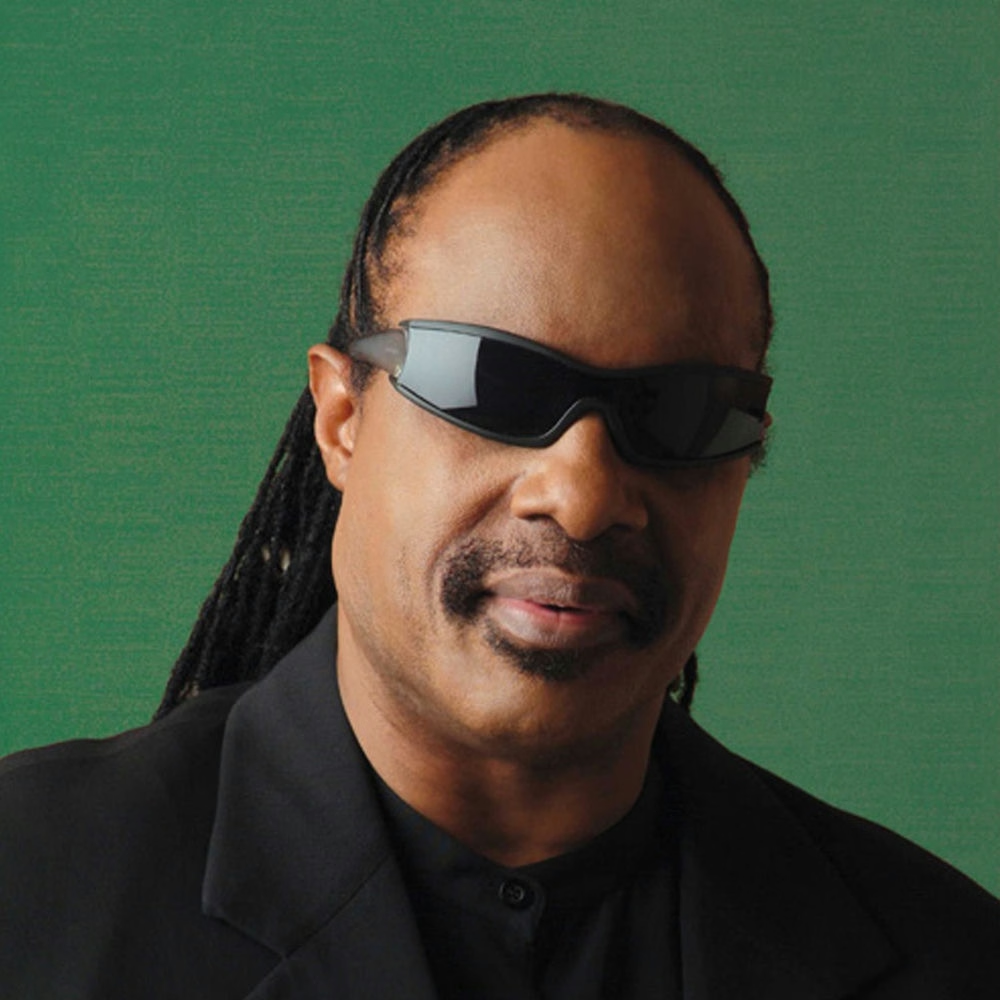
"Fingertips" is the sound of a 12-year-old Stevie Wonder proving he belongs. Recorded live in 1963 at the Regal Theater in Chicago, the song is a harmonica feature that turns into a call-and-response with an audience that cannot believe what they are hearing. A child onstage, blind, playing with the confidence of a man who has been doing this for decades. The lyrics serve as setup. The moment is the substance. The energy in that room travels through the recording like a live wire.
Beyonce paid homage to that moment when she performed the same song decades later, understanding that the performance itself -- commanding a stage at an age when most children are still learning arithmetic -- is the meaning. Stevie proved it first. Beyonce proved it can be done again. Fingertips is a document of arrival dressed as a song.
The Cover -- 2005
Beyonce
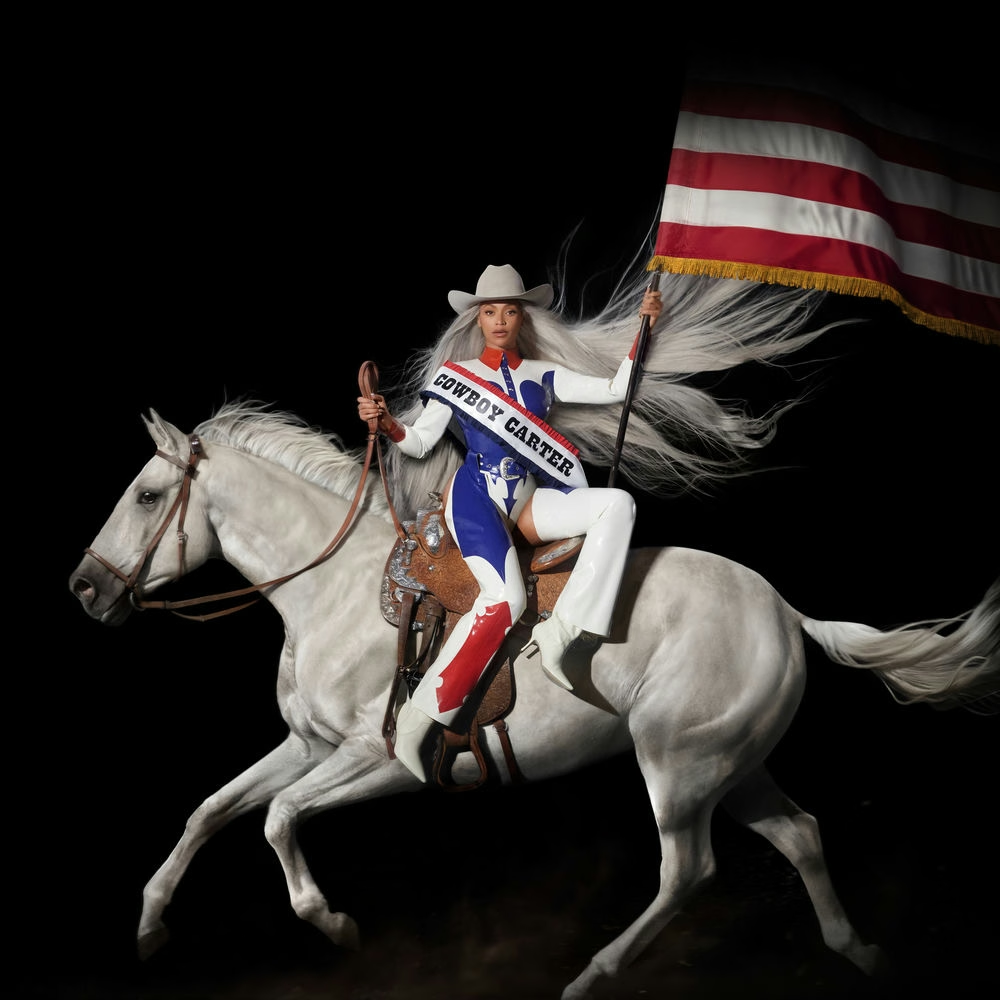
Beyonce paid homage to that moment when she performed the same song decades later, understanding that the performance itself -- commanding a stage at an age when most children are still learning arithmetic -- is the meaning. Stevie proved it first. Beyonce proved it can be done again. Fingertips is a document of arrival dressed as a song.
Image Credits
1,414 artist portraits across 5 genres (Rock, Jazz, Soul, Blues, Folk). 1,363 sourced from Wikipedia (Creative Commons / Public Domain), 50 from Deezer (promotional artwork).