Willie Dixon
1915 – 1992 (77)
The Man Who Wrote the Blues Canon

The whole room shakes before anyone opens their mouth. That low-end thrum coming through the floorboards, that pulse that makes the chest cavity vibrate -- it's the sound of a man turning the bass guitar into a pulpit. Willie Dixon understood that the blues was church music for people who got thrown out of church.

0:30
0:30
0:30
0:30

He wrote songs that sounded like they had existed before language, carved them out of the Mississippi clay he was born into, and let them sweat in the Chicago clubs until they became something else entirely. The groove was the sermon and the bass was the preacher. Nobody in Chicago could touch what he was doing with the low end.

The cost was the credit. Dixon wrote "I'm Your Hoochie Coochie Man" for Muddy Waters and watched it become a classic while the royalty statements told a different story. His compositions powered Chess Records -- "Little Red Rooster," "Spoonful," "Back Door Man" -- but the man who wrote them spent decades fighting for what was his. He kept writing anyway, kept pushing that upright bass into the pocket where the groove lives, kept the Chicago blues breathing when the city wanted to pave over its roots. The sweat in those clubs was real, the fight was real, and the music outlasted every argument about money. He was the engine that most people never saw, the bass player in the back who made everyone else sound better.

Willie Dixon interview 1990

"I'm Your Hoochie Coochie Man" is the one. That bass line is a warning and an invitation at the same time -- the groove so deep you can't step around it. Dixon's compositions became the foundation that British rock bands built their careers on: the Rolling Stones covered him, Led Zeppelin borrowed from him, and every blues-rock band since has been playing in the house he built. He didn't just write songs -- he wrote the grammar that popular music would speak for the next sixty years.

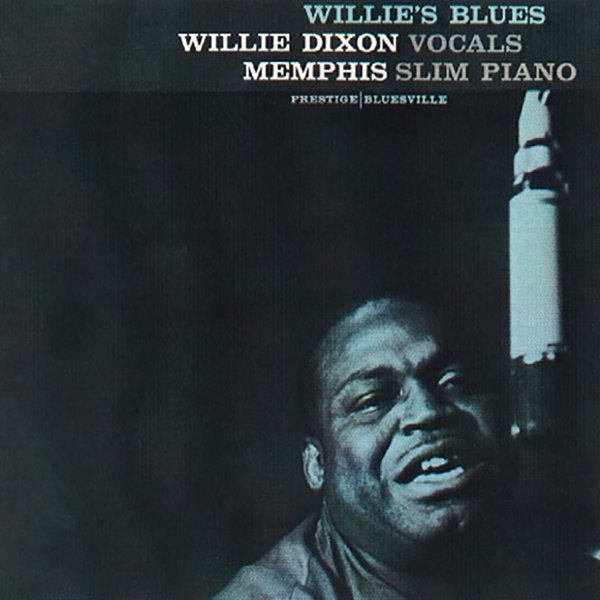
Willie’s Blues (1960)

The urgent love in those lyrics, the punchy testimony of lines that sound like folk proverbs, the church sweat of a man who knew the difference between a lie and a truth -- that was Dixon's fingerprint on every note he touched.

Willie Dixon died in 1992 but the bass line never stopped. Every time a garage band kicks into that simple, perfect riff, every time a bass player locks into the pocket and refuses to let go, they're walking through a door Dixon left open. He grooved so the world could feel what came from the Mississippi soil. He testified in the language of the low end, turned the bass into a voice that could preach without using words. The church he built didn't need a building -- just a stage, a bass, and the urgent love of a man who knew the truth when he felt it vibrating through the floor.

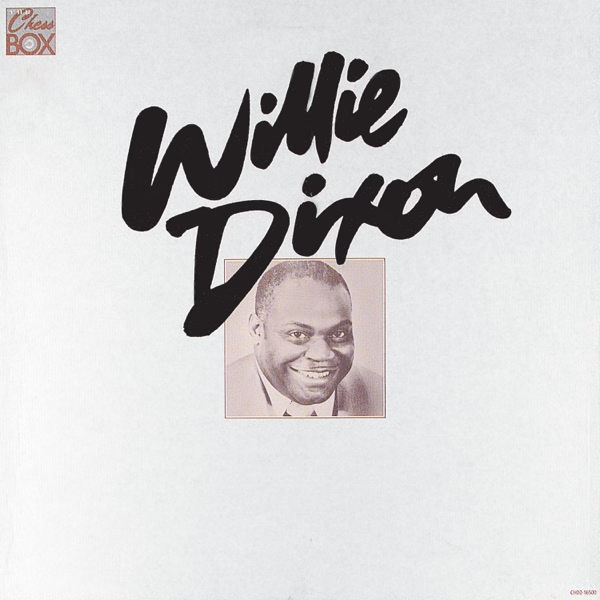
Image Credits

1,414 artist portraits across 5 genres (Rock, Jazz, Soul, Blues, Folk). 1,363 sourced from Wikipedia (Creative Commons / Public Domain), 50 from Deezer (promotional artwork).

Full attribution breakdown →

Willie Dixon

1915 – 1992 (77)
The Man Who Wrote the Blues Canon

The whole room shakes before anyone opens their mouth. That low-end thrum coming through the floorboards, that pulse that makes the chest cavity vibrate -- it's the sound of a man turning the bass guitar into a pulpit. Willie Dixon understood that the blues was church music for people who got thrown out of church.

0:30
0:30
0:30
0:30

He wrote songs that sounded like they had existed before language, carved them out of the Mississippi clay he was born into, and let them sweat in the Chicago clubs until they became something else entirely. The groove was the sermon and the bass was the preacher. Nobody in Chicago could touch what he was doing with the low end.

The cost was the credit. Dixon wrote "I'm Your Hoochie Coochie Man" for Muddy Waters and watched it become a classic while the royalty statements told a different story. His compositions powered Chess Records -- "Little Red Rooster," "Spoonful," "Back Door Man" -- but the man who wrote them spent decades fighting for what was his. He kept writing anyway, kept pushing that upright bass into the pocket where the groove lives, kept the Chicago blues breathing when the city wanted to pave over its roots. The sweat in those clubs was real, the fight was real, and the music outlasted every argument about money. He was the engine that most people never saw, the bass player in the back who made everyone else sound better.

Willie Dixon interview 1990

"I'm Your Hoochie Coochie Man" is the one. That bass line is a warning and an invitation at the same time -- the groove so deep you can't step around it. Dixon's compositions became the foundation that British rock bands built their careers on: the Rolling Stones covered him, Led Zeppelin borrowed from him, and every blues-rock band since has been playing in the house he built. He didn't just write songs -- he wrote the grammar that popular music would speak for the next sixty years.

Willie’s Blues (1960)

The urgent love in those lyrics, the punchy testimony of lines that sound like folk proverbs, the church sweat of a man who knew the difference between a lie and a truth -- that was Dixon's fingerprint on every note he touched.

Willie Dixon died in 1992 but the bass line never stopped. Every time a garage band kicks into that simple, perfect riff, every time a bass player locks into the pocket and refuses to let go, they're walking through a door Dixon left open. He grooved so the world could feel what came from the Mississippi soil. He testified in the language of the low end, turned the bass into a voice that could preach without using words. The church he built didn't need a building -- just a stage, a bass, and the urgent love of a man who knew the truth when he felt it vibrating through the floor.
Willie’s Blues (1960) Willie’s Blues (1960)
I Am the Blues (1970) I Am the Blues (1970)
The Chess Box (1989) The Chess Box (1989)
Willie’s Blues (1960)
The Blues Every Which Way (1960)
Songs of Memphis Slim & Willie Dixon (1960)
I Am the Blues (1970)
Peace? (1971)
I Think I Got the Blues (1973)
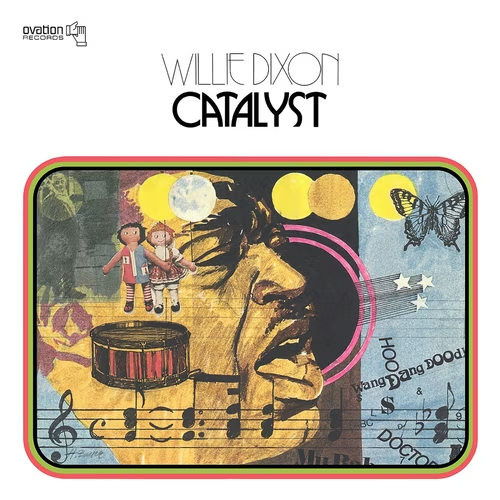
Catalyst (1973)
What Happened to My Blues (1976)
Blues Anytime! (1980)
Mighty Earthquake and Hurricane (1984)
Hidden Charms (1988)
Ginger Ale Afternoon (1989)
Chicago All Stars (1998)
The Deluxe Collection (2020)
Essential Classics
Vol. 448: Willie Dixon (2024)
The Chess Box (1989)
blueschicago blues
The Sunday Drop
One song. One story. Every Sunday.

No algorithms. No trending sections. Just a song someone loved and the story behind it. Delivered Sunday morning.

Free. No spam. Unsubscribe anytime.

Image Credits

1,414 artist portraits across 5 genres (Rock, Jazz, Soul, Blues, Folk). 1,363 sourced from Wikipedia (Creative Commons / Public Domain), 50 from Deezer (promotional artwork).

Full attribution breakdown →

0:00
0:00