The Jackson 5 tracklist updated 08/2026
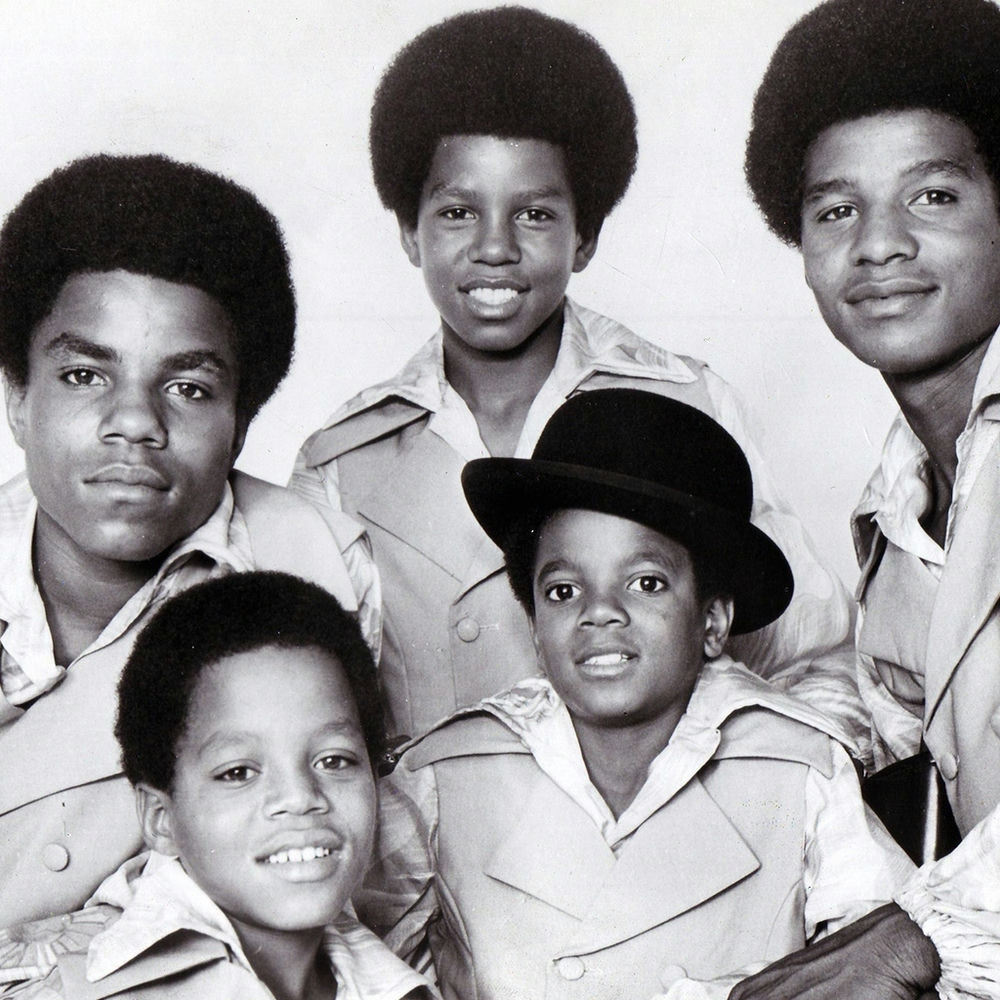
Childhood was the entry fee. Michael spent his adolescence in recording booths and hotel rooms while other kids went to school. Jackie, Jermaine, Tito, Marlon -- each one traded something to the machine their father Joe built and drove hard. The contradictions are brutal on paper: a family band that was never quite allowed to be a family, a sound so joyful it made you forget the sweat it cost. Berry Gordy recognized the commodity immediately, and Motown's assembly line had to retool around a kid who could do in one take what most singers needed a career to reach. The pressure was immense and the expectations heavier than any of them should have carried at those ages, but the music kept coming.
"I Want You Back" is the one. That bass intro is the pocket, the mothership call, a handshake that becomes a grip before you know you're caught. The song kicked off four straight number-one singles -- "ABC," "The Love You Save," "I'll Be There" -- a run no group had matched before them. Michael's voice on those records is a tutorial in how to sell a song before you understand what selling means. The harmonies locked together like a machine built for exactly this purpose: Jermaine's lower register grounding the high end, Jackie's fills filling the spaces between, the precision of the choreography turning every performance into a weapon that left the audience defenseless. They made it look easy, which is the hardest trick of all.
The group ended in 1989 but the signal never stopped transmitting. Every boy band since, every family group that harmonizes on a stage, traces a line back to those brothers from Gary. The blueprint got drawn at Motown, torn apart, and redrawn again by everyone who came after. They didn't just make pop history -- they made the crate that holds the one, the template that every vocal group since has been trying to answer or escape. Five kids from a steel town who turned their living room into a recording studio and changed the world from the inside out.
The group ended in 1989 but the signal never stopped transmitting. Every boy band since, every family group that harmonizes on a stage, traces a line back to those brothers from Gary. The blueprint got drawn at Motown, torn apart, and redrawn again by everyone who came after. They didn't just make pop history -- they made the crate that holds the one, the template that every vocal group since has been trying to answer or escape. Five kids from a steel town who turned their living room into a recording studio and changed the world from the inside out.