T-Bone Walker
1910 – 1975 (65)
Invented the Electric Blues Guitar

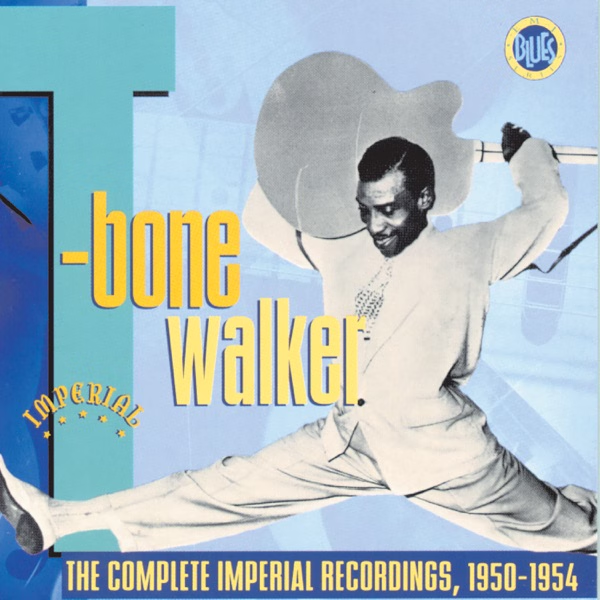
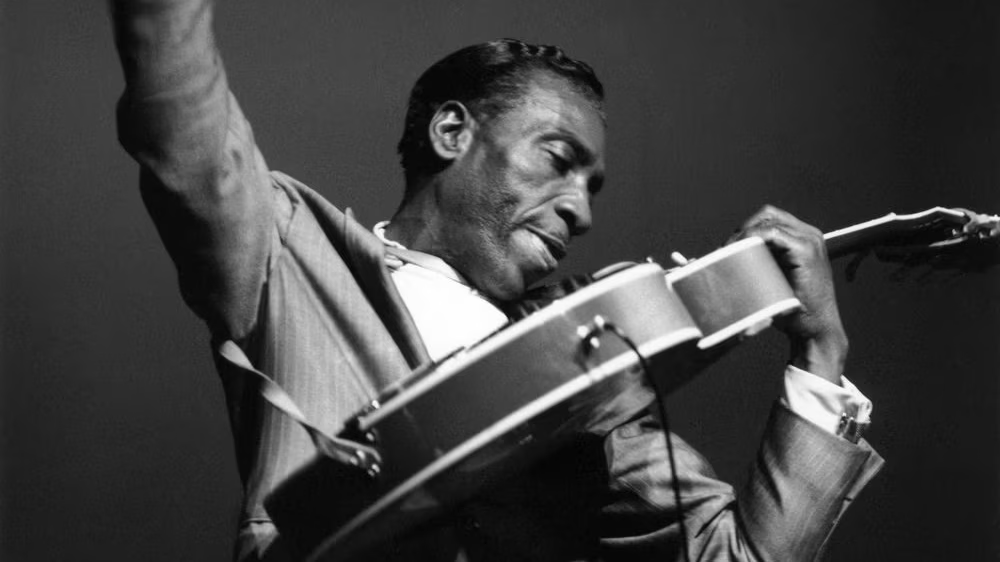
The guitar wasn't a lead instrument before Aaron Thibeaux Walker got his hands on it. It was background, rhythm, something to fill space while the horns did the real work. Then T-Bone leaned back, extended that electric six-string out in front of him like a preacher extending a Bible -- and played single-note lines that cut through the smoke and the noise like a blade through butter.

0:30
0:30
0:30
0:30

Every blues guitarist you've ever loved is standing on this man's shoulders, and they know it. The electric guitar as we know it was born in that stance.

Born in Linden, Texas in 1910, Walker grew up in a musical family -- his stepfather was a guitarist who taught him the basics, and by his teens he was guiding blind street singer Blind Lemon Jefferson around the Dallas bars. That apprenticeship in the acoustic blues tradition gave him the vocabulary; what he needed was the volume. When electric amplification arrived, T-Bone was the first to understand what it meant for the guitar: it could now wail, sustain, bend, and sing like a human voice. He joined Les Hite's orchestra in the late 1930s and began to develop a style that combined the big band's swing with the blues's moan. The cost was that he never got the credit he deserved in his own lifetime, but the invention was bigger than the recognition. He was building the future in real time, one bent note at a time.

T-Bone Walker interview 1990

"Call It Stormy Monday**" is the gospel of the electric blues. Recorded in 1947, the track is built around a minor-key progression that feels like rain on a tin roof and a guitar solo that every blues player since has had to learn note for note. Walker's vocal carries the weariness of a man who has been through every day of the week and found trouble at each stop. But it's the guitar -- bending strings, playing behind the beat, dropping into a lower register for emphasis -- that steals the show.

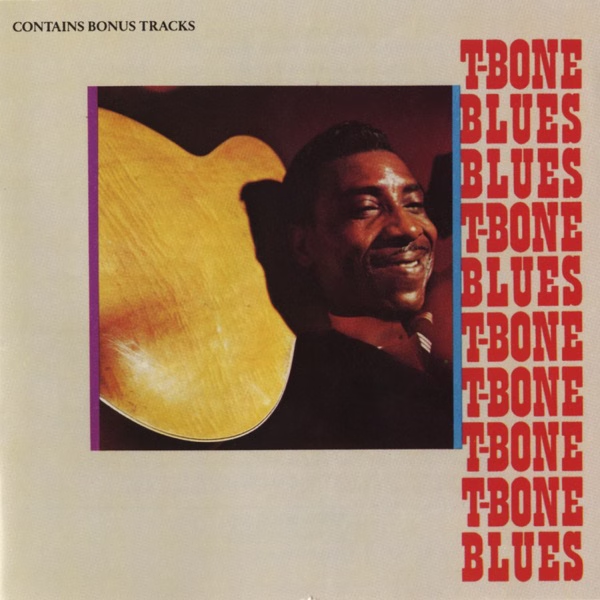
T‐Bone Blues (1959)

He played the instrument like he was having a conversation with it, and the guitar always got the last word. The song became the standard that defined an era, the benchmark that every guitar player measured themselves against.

He died in 1975, but every musician who has ever stepped on a stage with an electric guitar has to answer to what T-Bone Walker started. B.B. King said Walker was his primary influence. Chuck Berry took the showmanship and turned it into rock and roll. Jimi Hendrix took the freedom and turned it into psychedelia. The electric guitar as lead instrument, as voice, as personality -- that's T-Bone's invention. He didn't just play the blues. He wired the blues for sound and turned a piece of wood and wire into the most expressive instrument of the twentieth century.
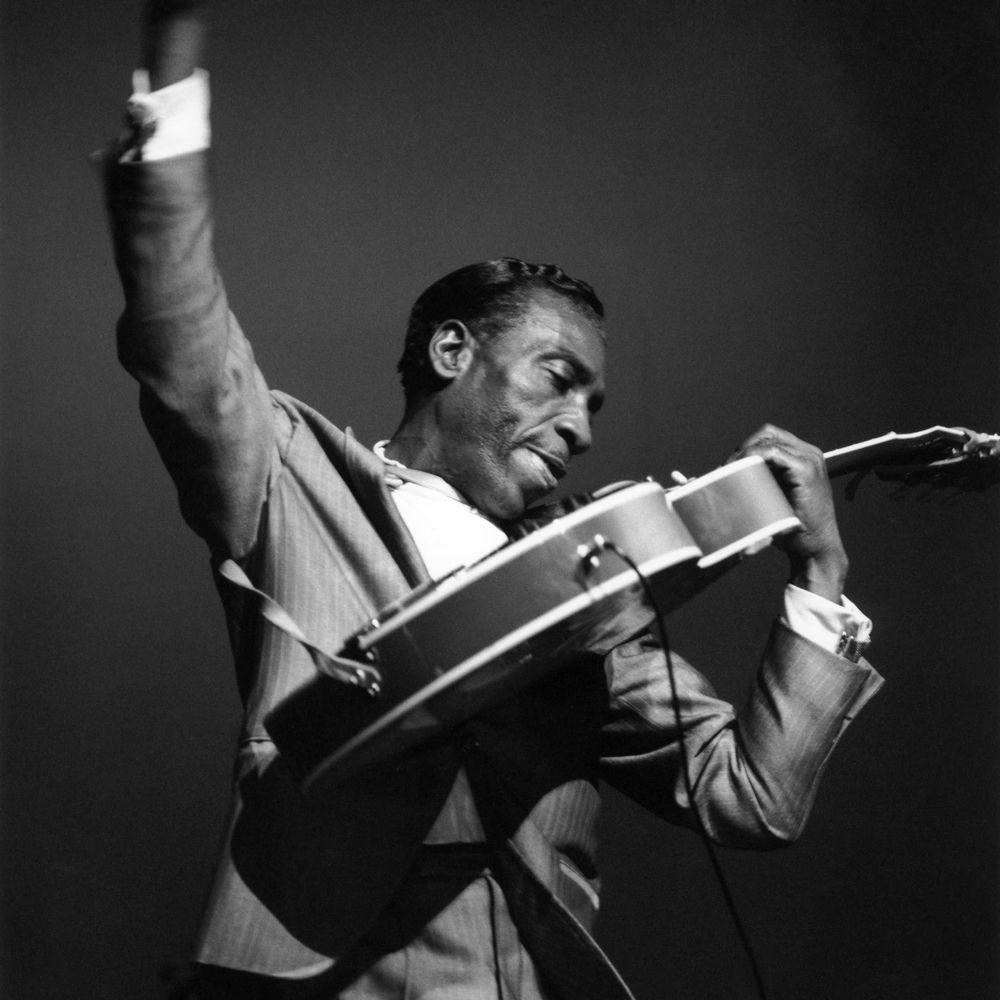
Image Credits

1,414 artist portraits across 5 genres (Rock, Jazz, Soul, Blues, Folk). 1,363 sourced from Wikipedia (Creative Commons / Public Domain), 50 from Deezer (promotional artwork).

Full attribution breakdown →

T-Bone Walker

1910 – 1975 (65)
Invented the Electric Blues Guitar

The guitar wasn't a lead instrument before Aaron Thibeaux Walker got his hands on it. It was background, rhythm, something to fill space while the horns did the real work. Then T-Bone leaned back, extended that electric six-string out in front of him like a preacher extending a Bible -- and played single-note lines that cut through the smoke and the noise like a blade through butter.

0:30
0:30
0:30
0:30

Every blues guitarist you've ever loved is standing on this man's shoulders, and they know it. The electric guitar as we know it was born in that stance.

Born in Linden, Texas in 1910, Walker grew up in a musical family -- his stepfather was a guitarist who taught him the basics, and by his teens he was guiding blind street singer Blind Lemon Jefferson around the Dallas bars. That apprenticeship in the acoustic blues tradition gave him the vocabulary; what he needed was the volume. When electric amplification arrived, T-Bone was the first to understand what it meant for the guitar: it could now wail, sustain, bend, and sing like a human voice. He joined Les Hite's orchestra in the late 1930s and began to develop a style that combined the big band's swing with the blues's moan. The cost was that he never got the credit he deserved in his own lifetime, but the invention was bigger than the recognition. He was building the future in real time, one bent note at a time.

T-Bone Walker interview 1990

"Call It Stormy Monday**" is the gospel of the electric blues. Recorded in 1947, the track is built around a minor-key progression that feels like rain on a tin roof and a guitar solo that every blues player since has had to learn note for note. Walker's vocal carries the weariness of a man who has been through every day of the week and found trouble at each stop. But it's the guitar -- bending strings, playing behind the beat, dropping into a lower register for emphasis -- that steals the show.

T‐Bone Blues (1959)

He played the instrument like he was having a conversation with it, and the guitar always got the last word. The song became the standard that defined an era, the benchmark that every guitar player measured themselves against.

He died in 1975, but every musician who has ever stepped on a stage with an electric guitar has to answer to what T-Bone Walker started. B.B. King said Walker was his primary influence. Chuck Berry took the showmanship and turned it into rock and roll. Jimi Hendrix took the freedom and turned it into psychedelia. The electric guitar as lead instrument, as voice, as personality -- that's T-Bone's invention. He didn't just play the blues. He wired the blues for sound and turned a piece of wood and wire into the most expressive instrument of the twentieth century.
T‐Bone Blues (1959) T‐Bone Blues (1959)
Sings the Blues (1960) Sings the Blues (1960)
I Get So Weary (1961) I Get So Weary (1961)
T‐Bone Blues (1959)
Sings the Blues (1960)
I Get So Weary (1961)
Stormy Monday Blues (1967)
Funky Town (1968)
Every Day I Have the Blues (1969)
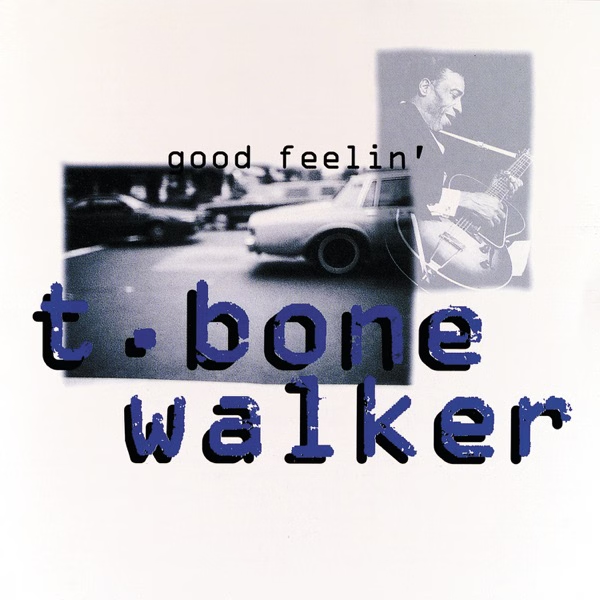
Good Feelin’ (1969)
I Want a Little Girl (1973)
Very Rare (1973)
I Giganti Del Jazz
Vol. 59 (1981)
Feeling the Blues (1988)
Back on the Scene: Texas 1966 (2001)
Super Black Blues (2001)
bluesjump blues
The Sunday Drop
One song. One story. Every Sunday.

No algorithms. No trending sections. Just a song someone loved and the story behind it. Delivered Sunday morning.

Free. No spam. Unsubscribe anytime.

Image Credits

1,414 artist portraits across 5 genres (Rock, Jazz, Soul, Blues, Folk). 1,363 sourced from Wikipedia (Creative Commons / Public Domain), 50 from Deezer (promotional artwork).

Full attribution breakdown →

0:00
0:00