Lauryn Hill
1975 –
The Miseducation

The album that broke everything. In 1998, Lauryn Hill -- released "The Miseducation of Lauryn Hill" and the whole room stopped breathing. It was hip-hop.

0:30
0:30
0:30
0:30

It was soul. It was reggae. It was a woman clearing her throat and telling the truth about love, God, and the music business in the same breath. She had already made her name with The Fugees and their landmark album "The Score" in 1996. This was different. This was a solo artist stepping out of the group and announcing herself as a force that needed no one else.

The cost of that album was the price of total honesty. Hill grew up in East Orange, sang in church, joined the Fugees as a teenager. The group blew up fast. She was the standout and she knew it. The group fractured under the pressure. The label wanted another hit, wanted to keep the machine running. Hill wanted to make something that mattered more than a chart position. She wrote "Doo Wop (That Thing) 0:30" as a warning to young women and men about the traps of fame and sex and money. The song hit number one. The album went multi-platinum. But the machinery of celebrity demanded she keep producing, keep touring, keep smiling. She stopped instead. She walked away from the stage when the spotlight was hottest. That cost her millions. That cost her the momentum that most artists would kill for.

Lauryn Hill interview 1990

"Doo Wop (That Thing)" is the peak -- a track that splits the difference between a 1950s doo-wop harmony and a hard 1990s hip-hop beat. The video shows two eras colliding. The lyrics cut both ways, dissecting the hypocrisy she saw in the industry and in her audience. Hill produced it herself, arranged the vocals herself, directed the video herself.

The Miseducation Of Lauryn Hill (1998)

She controlled every element of her statement. The album won five Grammys. She was the first woman to be nominated for ten Grammys in one night. The critical establishment bowed. Then she walked away from the stage for years at a time. When she returned, it was for irregular tours that frustrated fans and vindicated her reputation for artistic stubbornness.

Lauryn Hill cost herself the easy path. She could have made a dozen sequels. She could have cashed the checks and smiled for the cameras. Instead she fought the industry over artistic control and pricing and the right to say no. Her catalog is small -- one solo album, one live record, a handful of singles. The influence is bottomless. Every neo-soul artist who came after -- Erykah Badu, Alicia Keys, Jazmine Sullivan -- owes the pocket of "Miseducation." She did not make enough records. She made the one that mattered. The one is enough.

Lauryn Hill was profiled in the documentary, The Miseducation of Lauryn Hill, in 2021.
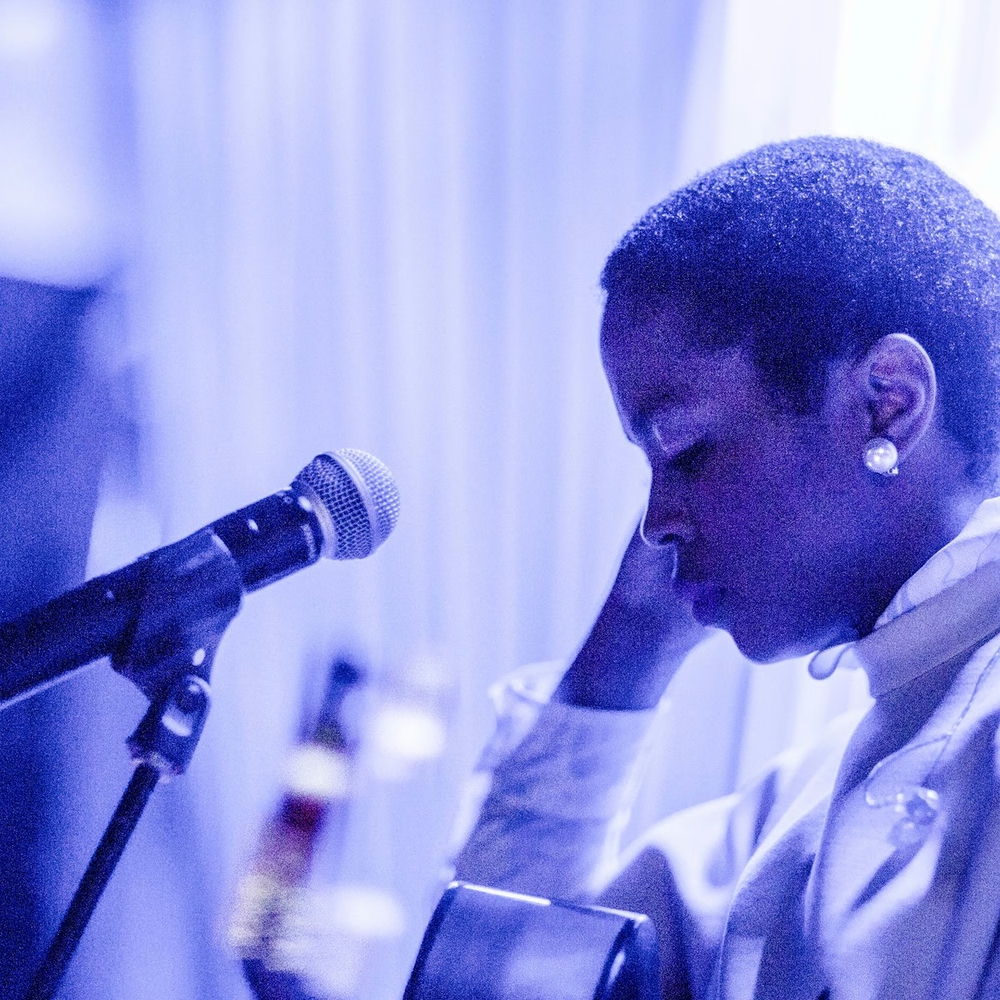
Image Credits

1,414 artist portraits across 5 genres (Rock, Jazz, Soul, Blues, Folk). 1,363 sourced from Wikipedia (Creative Commons / Public Domain), 50 from Deezer (promotional artwork).

Full attribution breakdown →

Lauryn Hill

1975 –
The Miseducation

The album that broke everything. In 1998, Lauryn Hill -- released "The Miseducation of Lauryn Hill" and the whole room stopped breathing. It was hip-hop.

0:30
0:30
0:30
0:30

It was soul. It was reggae. It was a woman clearing her throat and telling the truth about love, God, and the music business in the same breath. She had already made her name with The Fugees and their landmark album "The Score" in 1996. This was different. This was a solo artist stepping out of the group and announcing herself as a force that needed no one else.

The cost of that album was the price of total honesty. Hill grew up in East Orange, sang in church, joined the Fugees as a teenager. The group blew up fast. She was the standout and she knew it. The group fractured under the pressure. The label wanted another hit, wanted to keep the machine running. Hill wanted to make something that mattered more than a chart position. She wrote "Doo Wop (That Thing) 0:30" as a warning to young women and men about the traps of fame and sex and money. The song hit number one. The album went multi-platinum. But the machinery of celebrity demanded she keep producing, keep touring, keep smiling. She stopped instead. She walked away from the stage when the spotlight was hottest. That cost her millions. That cost her the momentum that most artists would kill for.

Lauryn Hill interview 1990

"Doo Wop (That Thing)" is the peak -- a track that splits the difference between a 1950s doo-wop harmony and a hard 1990s hip-hop beat. The video shows two eras colliding. The lyrics cut both ways, dissecting the hypocrisy she saw in the industry and in her audience. Hill produced it herself, arranged the vocals herself, directed the video herself.

The Miseducation Of Lauryn Hill (1998)

She controlled every element of her statement. The album won five Grammys. She was the first woman to be nominated for ten Grammys in one night. The critical establishment bowed. Then she walked away from the stage for years at a time. When she returned, it was for irregular tours that frustrated fans and vindicated her reputation for artistic stubbornness.

Lauryn Hill cost herself the easy path. She could have made a dozen sequels. She could have cashed the checks and smiled for the cameras. Instead she fought the industry over artistic control and pricing and the right to say no. Her catalog is small -- one solo album, one live record, a handful of singles. The influence is bottomless. Every neo-soul artist who came after -- Erykah Badu, Alicia Keys, Jazmine Sullivan -- owes the pocket of "Miseducation." She did not make enough records. She made the one that mattered. The one is enough.

Lauryn Hill was profiled in the documentary, The Miseducation of Lauryn Hill, in 2021.
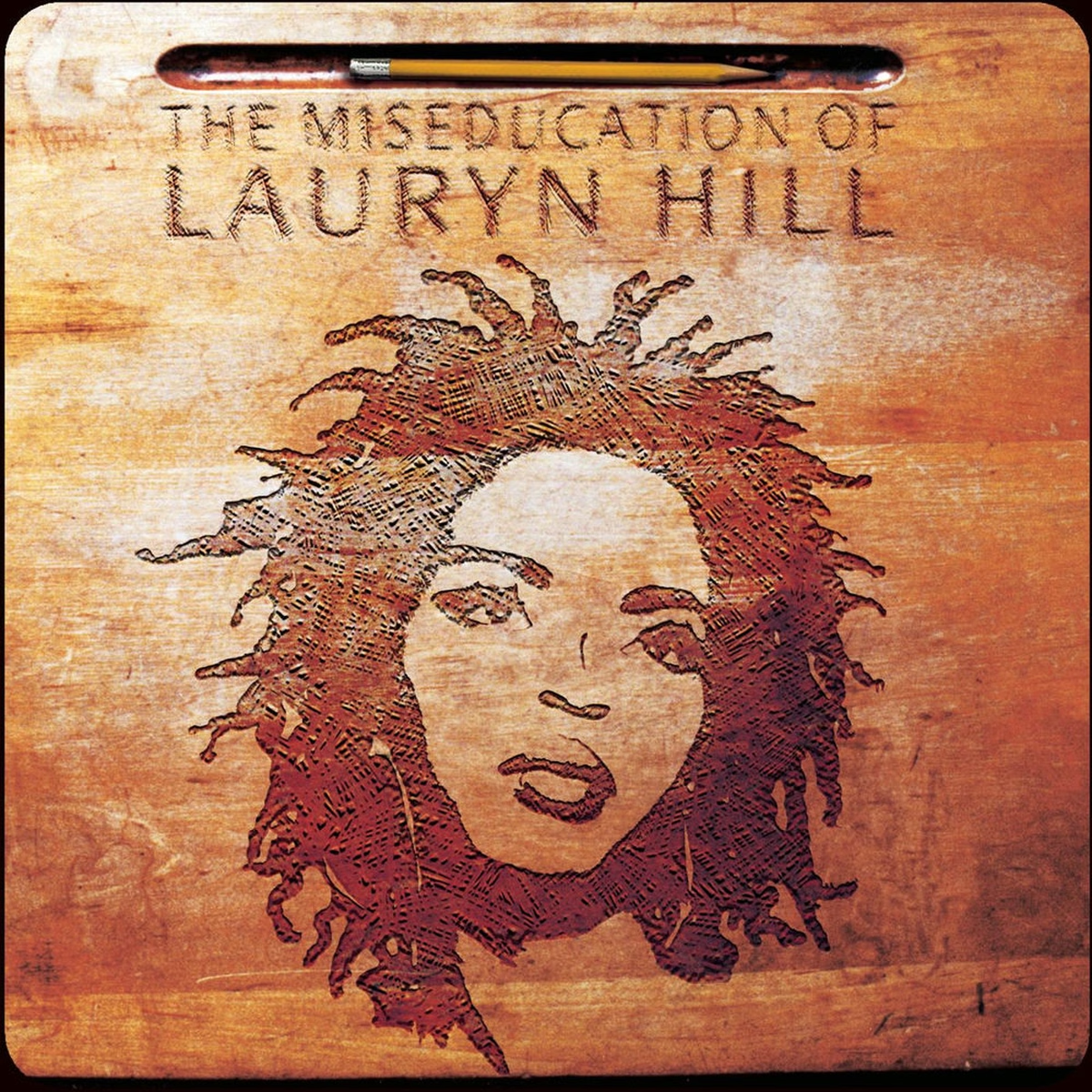
The Miseducation Of Lauryn Hill (1998) The Miseducation Of Lauryn Hill (1998)
Mtv Unplugged No 2 0 (2002) Mtv Unplugged No 2 0 (2002)
The Miseducation Of Lauryn Hill (1998)
Mtv Unplugged No 2 0 (2002)
r&bhip hopsoulneo-soul
The Sunday Drop
One song. One story. Every Sunday.

No algorithms. No trending sections. Just a song someone loved and the story behind it. Delivered Sunday morning.

Free. No spam. Unsubscribe anytime.

Image Credits

1,414 artist portraits across 5 genres (Rock, Jazz, Soul, Blues, Folk). 1,363 sourced from Wikipedia (Creative Commons / Public Domain), 50 from Deezer (promotional artwork).

Full attribution breakdown →

0:00
0:00