Isaac Hayes tracklist updated 08/2026
The Stax operation of the 1960s was built on Booker T. & the M.G.'s and the Memphis Horns -- a lean, hard-grooving sound that left space for the singer to fill. Hayes walked into that room wanted more space. He pushed Stax to let him make extended tracks with orchestral arrangements, string sections, spoken word interludes, and song structures that owed more to classical music than to the three-minute single. The label resisted. The cost was a constant negotiation between Hayes's ambition and commercial reality. "Walk On By" from 1969 is twelve minutes long. That was not a single. That was a statement. He proved that Black music could be epic, could be cinematic, could stretch out in ways that jazz had pioneered but soul had not yet considered.
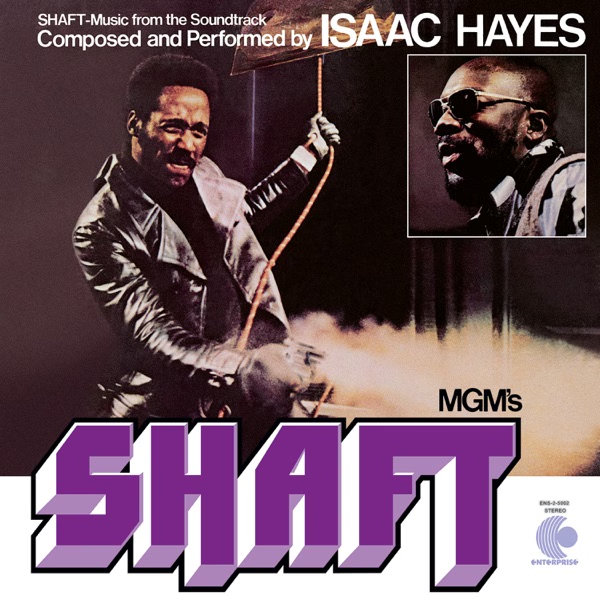
"Theme from Shaft" from 1971 is the peak of that ambition made commercial. That opening -- the wah-wah guitar, the hi-hat, the bassline that walks like it owns the street -- is seventeen seconds of perfection before a single word is sung. Then Hayes enters in that cool baritone, talking about a cat who is a sex machine to all the chicks, and the song becomes a cartoon and a masterpiece at the same time. The arrangement is dense: horns, strings, female backing vocals, multiple sections. Hayes produced it, arranged it, wrote it, and sang it. The track won the Academy Award for Best Original Song -- Hayes was the first Black composer to win a non-acting Oscar. "Shaft" made him a superstar and defined the blaxploitation sound, but it also trapped him. He spent the rest of his career trying to match an impossible peak.
Isaac Hayes died in 2008, collapsing at his home in Memphis. He had been working on a new album. He left behind a catalog that proved Black music could be as ambitious as any art form. He opened the door for every soul singer who wanted to make albums instead of singles, every songwriter who heard orchestral arrangements in their head, every artist who understood that Black Moses was not arrogance -- it was responsibility. The theme still plays. The cat still owns the street.
Isaac Hayes died in 2008, collapsing at his home in Memphis. He had been working on a new album. He left behind a catalog that proved Black music could be as ambitious as any art form. He opened the door for every soul singer who wanted to make albums instead of singles, every songwriter who heard orchestral arrangements in their head, every artist who understood that Black Moses was not arrogance -- it was responsibility. The theme still plays. The cat still owns the street.