Fats Domino tracklist updated 08/2026
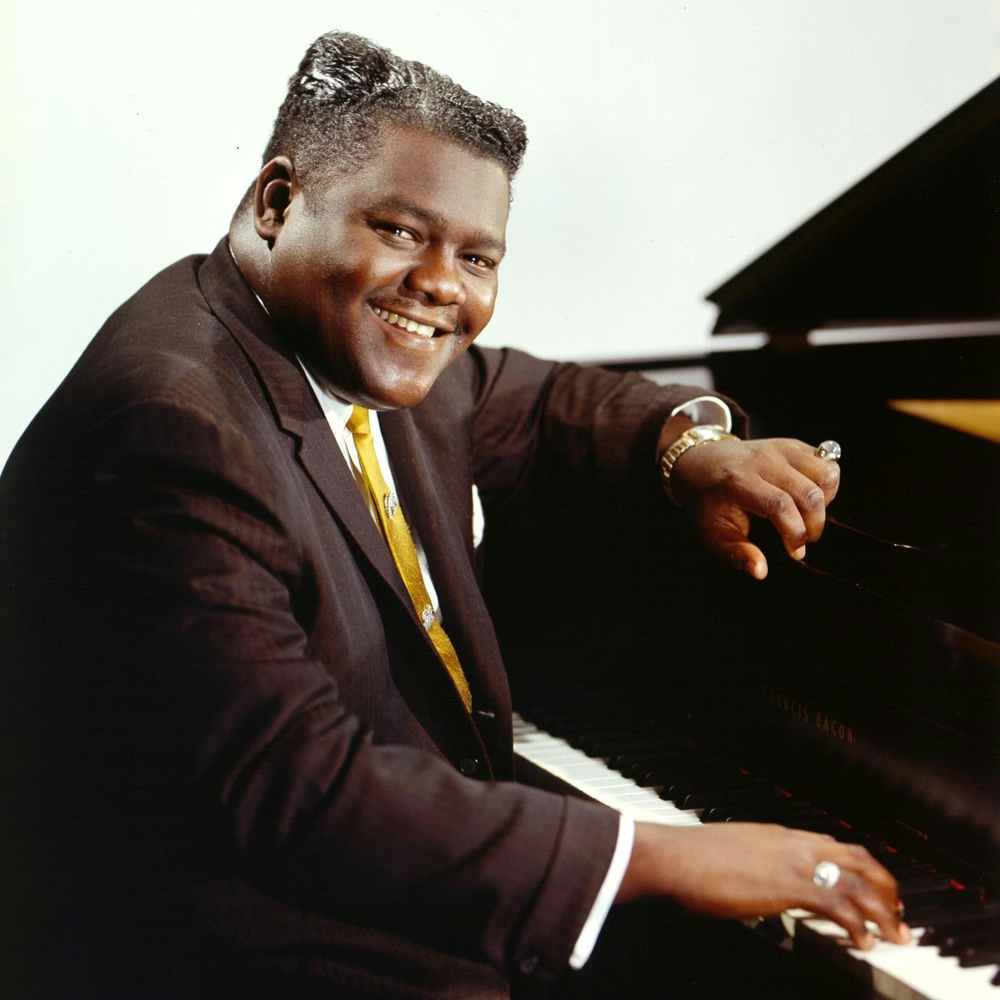
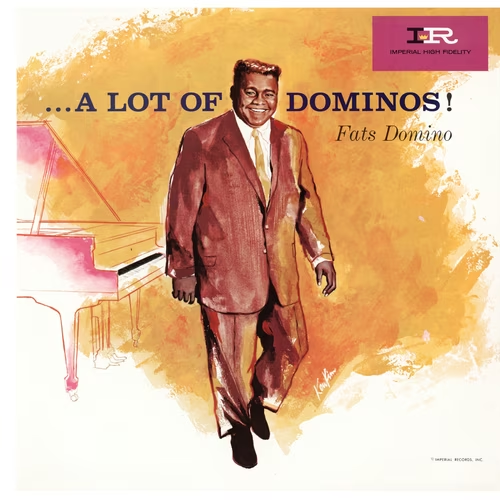
The music industry in the late 1940s was segregated in ways both legal and architectural. Black R&B artists could make records but they could not make them for white audiences -- not directly, not without a cover version by Pat Boone or some other sanitizer. Fats Domino walked into that system with producer Dave Bartholomew at J&M Studio on Rampart Street, and together they built a sound that made the segregation of taste impossible. "The Fat Man" hit in 1949, a song that sounded like nothing else on radio -- that rolling piano, that creole drawl, that rhythm that seemed to come from the Mississippi River itself. The cost was that Fats never got the credit he deserved as an architect of rock and roll, because he was too Black and too New Orleans and too unapologetically himself.
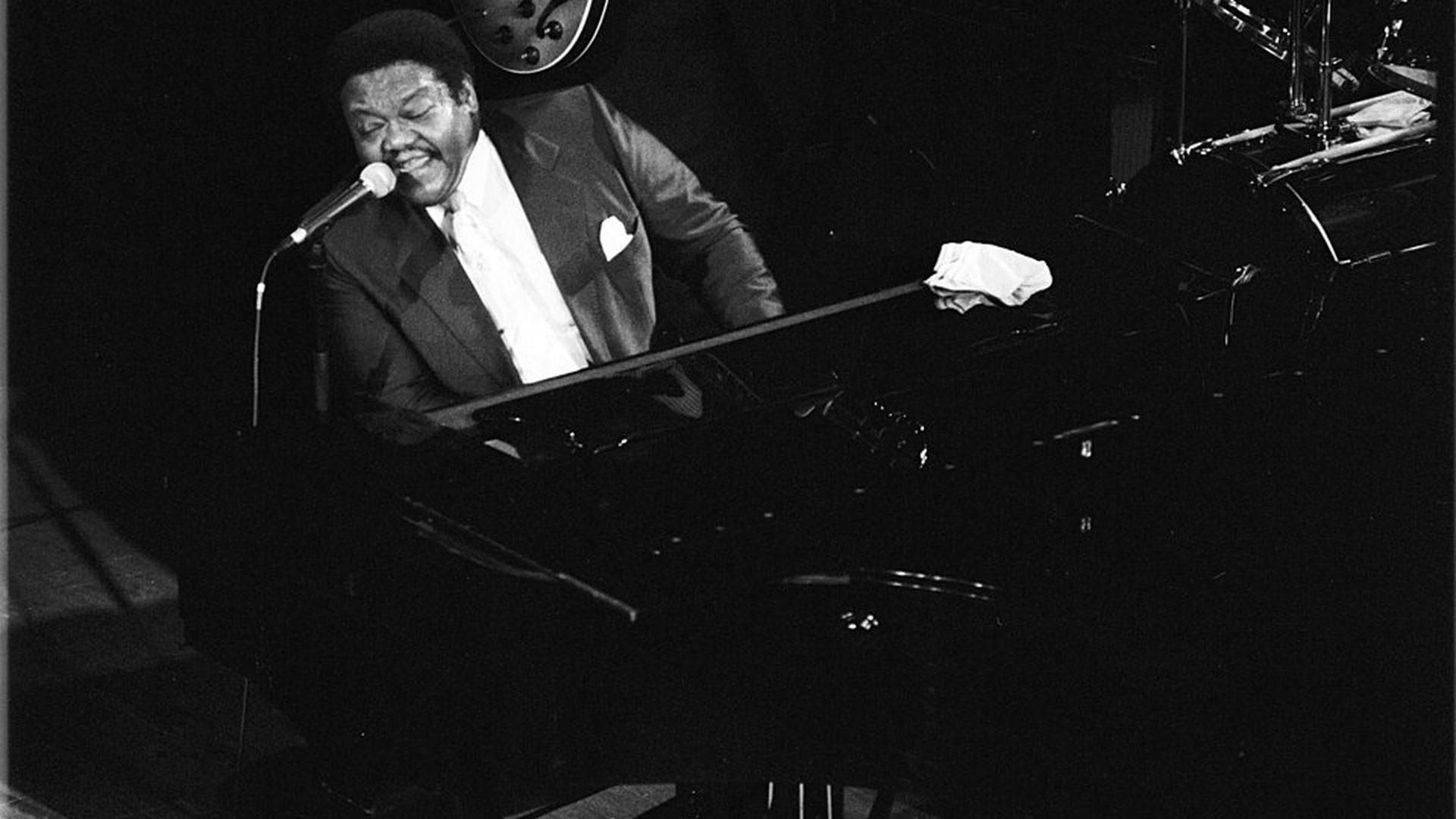
"Blueberry Hill" is the song that broke him through and it is the song that still tells the truth about what he could do. A Glenn Miller standard from 1940, completely remade in his image. That piano intro is four bars of pure New Orleans -- the triplets, the swing, the way he lets the right hand wander while the left hand locks the groove. His voice is deceptively gentle, almost shy, and that is the trick. He makes it sound easy, like anyone could do it, and that ease is the most sophisticated thing about him. He sold a million copies and became a crossover star, but the white teenagers buying the record were not hearing a sanitized version of Black music. They were hearing the real thing, straight from the Ninth Ward, and they did not even know it.
Fats Domino lived until 2017, outlasting nearly every peer from his era. Hurricane Katrina flooded his house in 2005 and the nation briefly remembered he was still alive, still in New Orleans, still refusing to leave. He died at eighty-nine, having sold 110 million records and changed the shape of popular music without ever leaving his hometown. The history of rock and roll is written by people who want to tell a story about rebellion and electricity. Fats Domino told a different story: that the whole thing started with a piano, a New Orleans beat, and a voice that sounded like home. He was right. The records prove it.
Fats Domino lived until 2017, outlasting nearly every peer from his era. Hurricane Katrina flooded his house in 2005 and the nation briefly remembered he was still alive, still in New Orleans, still refusing to leave. He died at eighty-nine, having sold 110 million records and changed the shape of popular music without ever leaving his hometown. The history of rock and roll is written by people who want to tell a story about rebellion and electricity. Fats Domino told a different story: that the whole thing started with a piano, a New Orleans beat, and a voice that sounded like home. He was right. The records prove it.