Thomas A. Dorsey
1899 – 1993 (94)

Before he was the father of gospel, Thomas A. Dorsey was Georgia Tom -- a piano player in the rent parties and barrelhouses of Atlanta, playing blues for people who needed to forget their troubles. He was born in 1899 in Villa Rica, Georgia, the son of a sharecropper and a Baptist organist, and the two halves of that inheritance spent the first thirty years of his life fighting each other.

0:30
0:30
0:30
0:30

He moved to Chicago in the Great Migration, played behind Ma Rainey on her tours, wrote bawdy blues numbers, and learned how to make a piano sound like a room full of people. Then his wife died in childbirth. His baby son died weeks later. Dorsey fell apart, and what he found on the other side of the falling was the music he was meant to make.

He sat down at the piano in 1932 and wrote "Take My Hand 0:30, Precious Lord 0:30." The song is simple, almost too simple -- a hymn built from longing and trust, the language of someone who has stopped asking why and started asking for help. It became the most recorded gospel song of the 20th century. Mahalia Jackson recorded it. Aretha Franklin recorded it. Elvis Presley recorded it. Dr. Martin Luther King Jr. asked for it to be sung at his funeral the night before he was assassinated. Dorsey wrote "Peace in the Valley" and "There Will Be Peace in the Valley" and dozens of other songs that became the gospel canon, but "Take My Hand 0:30" was the one that would not die. It was the song a grieving father wrote to God, and it became the song that millions of grieving people sang back.

Thomas A. Dorsey interview 1990

Dorsey founded the National Convention of Gospel Choirs and Choruses in 1932, built the infrastructure that let gospel music grow from storefront churches into stadiums. He mentored Mahalia Jackson, taught her Dorsey's own songs, and watched her become the voice that carried his music to the world. He trained a generation of choir directors, established the Gospel Music Workshop of America with Rev. James Cleveland, and made sure the music had a structure that would outlive him.
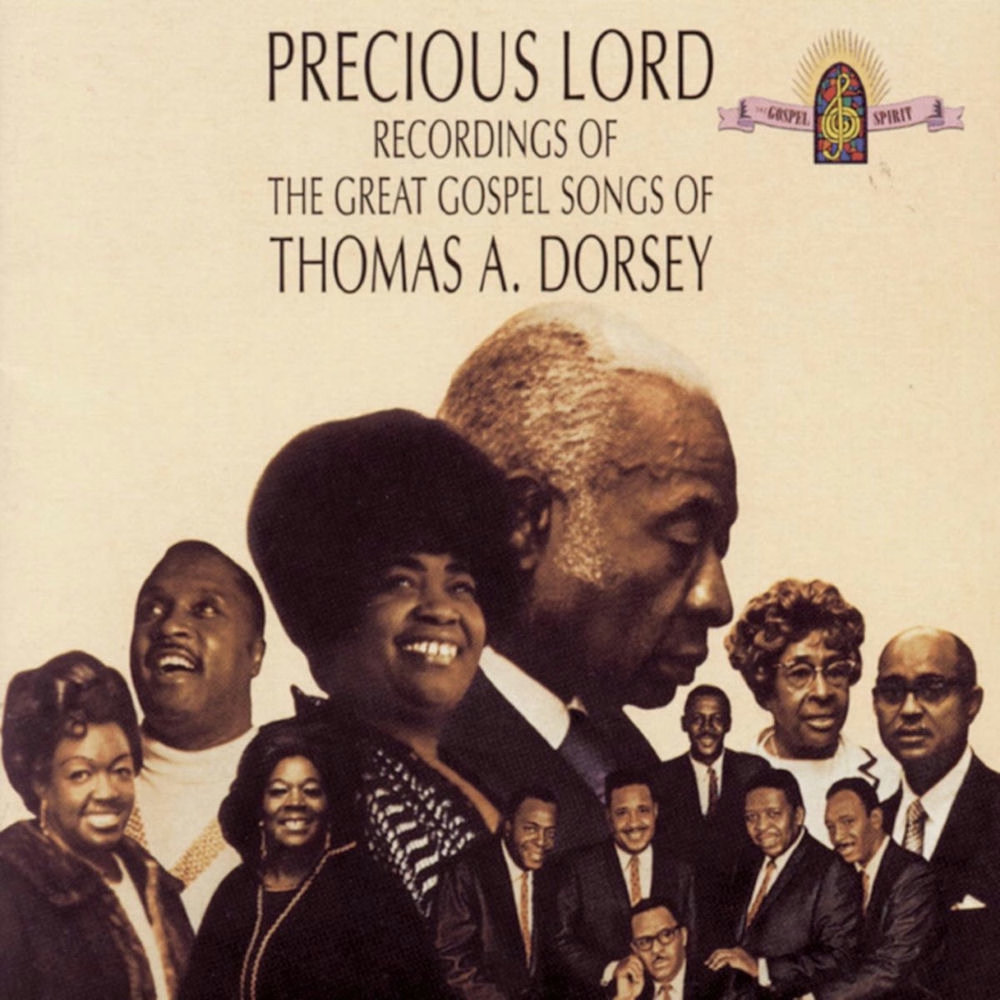
Precious Lord Recordings Of The Great Gospel Songs Of Thomas A Dorsey (1973)

The blues never really left his playing -- his piano style was rooted in the boogie-woogie he'd learned in the juke joints. He just redirected it. The same hands that played for Ma Rainey's tent shows were playing for the Lord, and the Lord got the better version.

He died in 1993, at 93, having outlived every phase of the music he'd created. The Father of Gospel is not an honorary title. Thomas A. Dorsey was a working blues musician who lost everything, found God, and wrote songs that became the soundtrack of the Civil Rights Movement. Every gospel choir that ever raised a roof is standing on his shoulders. Every time a congregation sways to a Dorsey song, the bluesman and the preacher are shaking hands one more time.
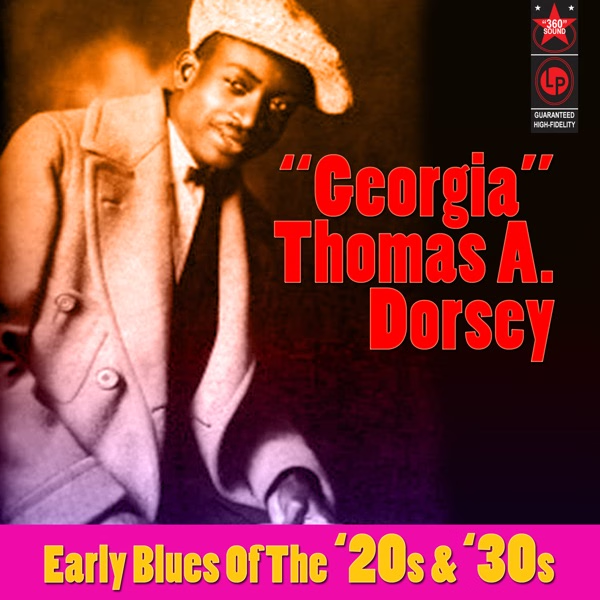
Image Credits

1,414 artist portraits across 5 genres (Rock, Jazz, Soul, Blues, Folk). 1,363 sourced from Wikipedia (Creative Commons / Public Domain), 50 from Deezer (promotional artwork).

Full attribution breakdown →

Thomas A. Dorsey

1899 – 1993 (94)

Before he was the father of gospel, Thomas A. Dorsey was Georgia Tom -- a piano player in the rent parties and barrelhouses of Atlanta, playing blues for people who needed to forget their troubles. He was born in 1899 in Villa Rica, Georgia, the son of a sharecropper and a Baptist organist, and the two halves of that inheritance spent the first thirty years of his life fighting each other.

0:30
0:30
0:30
0:30

He moved to Chicago in the Great Migration, played behind Ma Rainey on her tours, wrote bawdy blues numbers, and learned how to make a piano sound like a room full of people. Then his wife died in childbirth. His baby son died weeks later. Dorsey fell apart, and what he found on the other side of the falling was the music he was meant to make.

He sat down at the piano in 1932 and wrote "Take My Hand 0:30, Precious Lord 0:30." The song is simple, almost too simple -- a hymn built from longing and trust, the language of someone who has stopped asking why and started asking for help. It became the most recorded gospel song of the 20th century. Mahalia Jackson recorded it. Aretha Franklin recorded it. Elvis Presley recorded it. Dr. Martin Luther King Jr. asked for it to be sung at his funeral the night before he was assassinated. Dorsey wrote "Peace in the Valley" and "There Will Be Peace in the Valley" and dozens of other songs that became the gospel canon, but "Take My Hand 0:30" was the one that would not die. It was the song a grieving father wrote to God, and it became the song that millions of grieving people sang back.

Thomas A. Dorsey interview 1990

Dorsey founded the National Convention of Gospel Choirs and Choruses in 1932, built the infrastructure that let gospel music grow from storefront churches into stadiums. He mentored Mahalia Jackson, taught her Dorsey's own songs, and watched her become the voice that carried his music to the world. He trained a generation of choir directors, established the Gospel Music Workshop of America with Rev. James Cleveland, and made sure the music had a structure that would outlive him.

Precious Lord Recordings Of The Great Gospel Songs Of Thomas A Dorsey (1973)

The blues never really left his playing -- his piano style was rooted in the boogie-woogie he'd learned in the juke joints. He just redirected it. The same hands that played for Ma Rainey's tent shows were playing for the Lord, and the Lord got the better version.

He died in 1993, at 93, having outlived every phase of the music he'd created. The Father of Gospel is not an honorary title. Thomas A. Dorsey was a working blues musician who lost everything, found God, and wrote songs that became the soundtrack of the Civil Rights Movement. Every gospel choir that ever raised a roof is standing on his shoulders. Every time a congregation sways to a Dorsey song, the bluesman and the preacher are shaking hands one more time.

Precious Lord Recordings Of The Great Gospel Songs Of Thomas A Dorsey (1973) Precious Lord Recordings Of The Great Gospel Songs Of Thomas A Dorsey (1973)
The Great Gospel Songs Of Thomas A Dorsey (2008) The Great Gospel Songs Of Thomas A Dorsey (2008)
Early Blues Of The And X27 20s & And X27 30s (2010) Early Blues Of The And X27 20s & And X27 30s (2010)
Precious Lord Recordings Of The Great Gospel Songs Of Thomas A Dorsey (1973)
The Great Gospel Songs Of Thomas A Dorsey (2008)
Early Blues Of The And X27 20s & And X27 30s (2010)
gospeltraditional gospel
The Sunday Drop
One song. One story. Every Sunday.

No algorithms. No trending sections. Just a song someone loved and the story behind it. Delivered Sunday morning.

Free. No spam. Unsubscribe anytime.

Image Credits

1,414 artist portraits across 5 genres (Rock, Jazz, Soul, Blues, Folk). 1,363 sourced from Wikipedia (Creative Commons / Public Domain), 50 from Deezer (promotional artwork).

Full attribution breakdown →

0:00
0:00