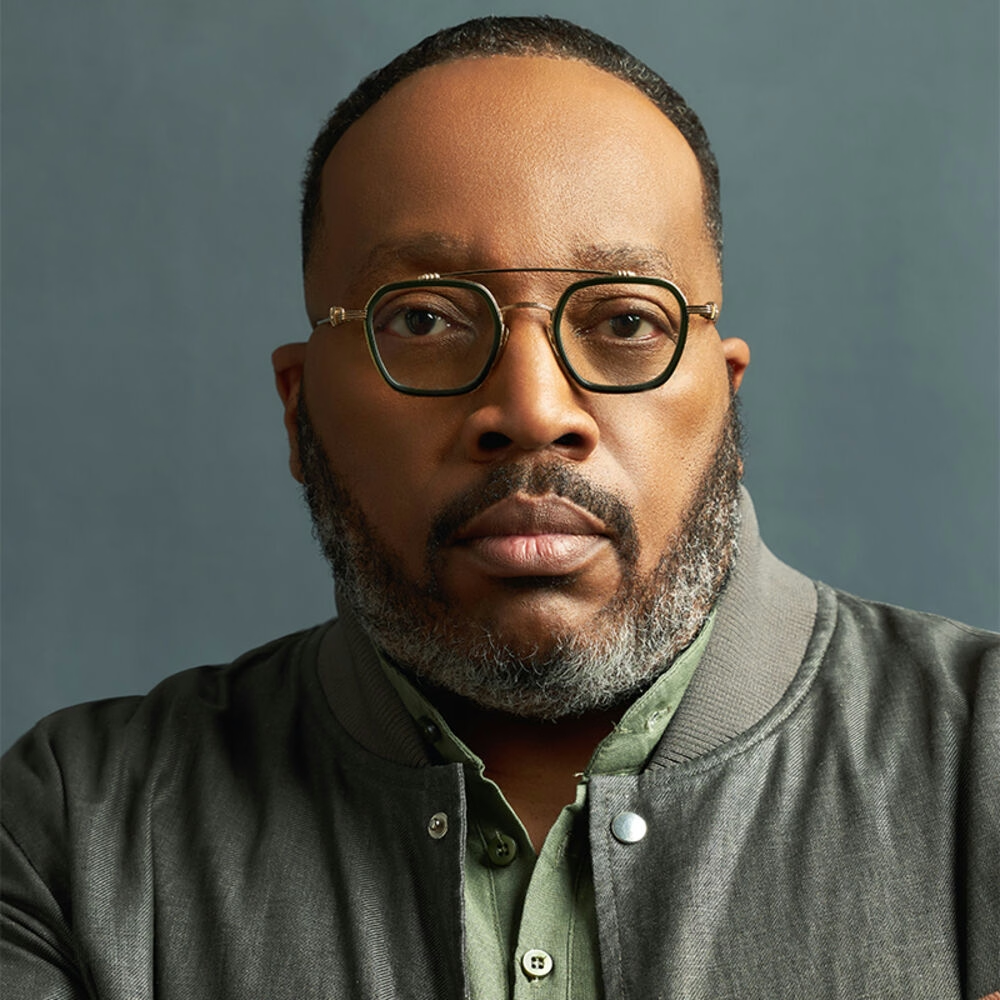
Marvin Sapp
1967 –

Listen. I need to talk to you about a song that saved lives. Not metaphorically.

0:30
0:30
0:30
0:30

Not in the way people say "this song saved me" about a breakup anthem. I mean people have told Marvin Sapp to his face that "Never Would Have Made It 0:30" kept them from ending their own existence. That is the weight of what this man carries. Born January 28, 1967, Marvin Sapp discovered music in the church and discovered ministry in the choir loft. He was a pastor before he was a recording artist, and that sequence is everything. He did not become a gospel singer because he wanted a career. He became a gospel singer because he had something to say and the sanctuary was too small to hold it.

He walked into a gospel scene that had already been reshaped by Kirk Franklin and Fred Hammond. The boundaries had been pushed. The urban contemporary sound was established. What was left for a new voice to do? Sapp answered by going deeper instead of wider. He recorded with Fred Hammond, with Kirk Franklin, with the generation that came before him. But his own sound was quieter, more intimate, more focused on the individual believer's relationship with God than on the corporate praise experience. The cost of that intimacy was that his songs hit people in private moments -- in cars, in hospital rooms, in the middle of the night when nobody was watching. He became the voice of people who were too tired to shout but still believed.

Marvin Sapp interview 1990

"Never Would Have Made It" was released in 2007 and became the longest-running number one single in the history of the Billboard Gospel chart. The song is a testimony, not a showpiece. Sapp sings about the moments when he wanted to give up, when the pain was too much, when the only thing he had was faith. The track builds slowly, verse by verse, until the bridge releases everything the song has been holding back.
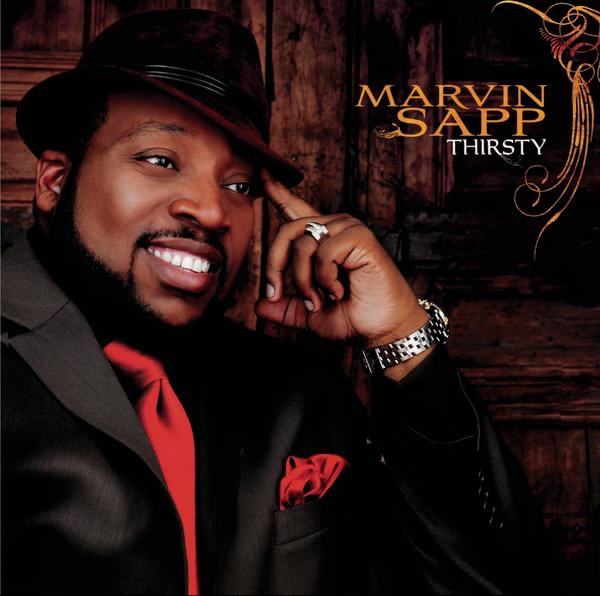
Thirsty (2007)

When Sapp sings "I would have lost my mind, I would have lost my soul" you know he means it, because you have heard the same thing from people in your own life. "The Best in Me" works the same territory -- a song about seeing yourself through God's eyes instead of your own. He did not just write hits. He wrote survival manuals set to music.

Marvin Sapp kept preaching while he was singing. He founded Lighthouse Full Life Center Church in Michigan and pastored it while selling millions of records. The combination is rare -- most artists choose one path. Sapp walked both. He showed that gospel music could be personal without being small, successful without being compromised. "Never Would Have Made It" will be sung in churches for generations, not because it won awards but because it told the truth. The song is a stone. It is permanent. It is the thing people reach for when they have nothing else left. Marvin Sapp gave them that. He gave them a song that would hold them up when they could not stand on their own. That is not a hit. That is a ministry.
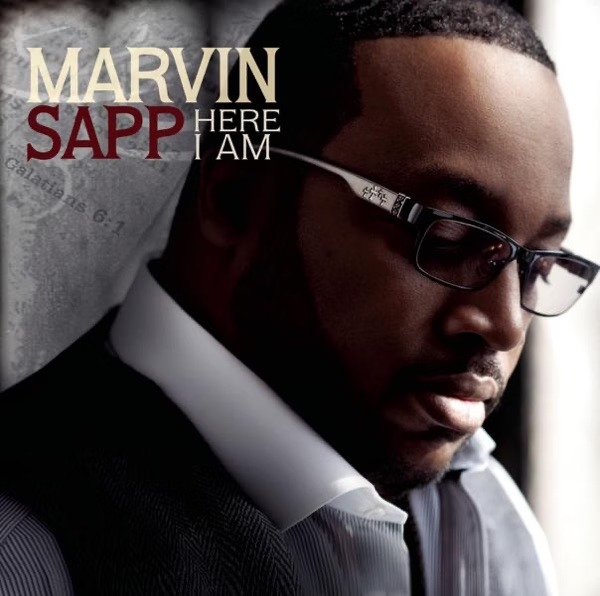
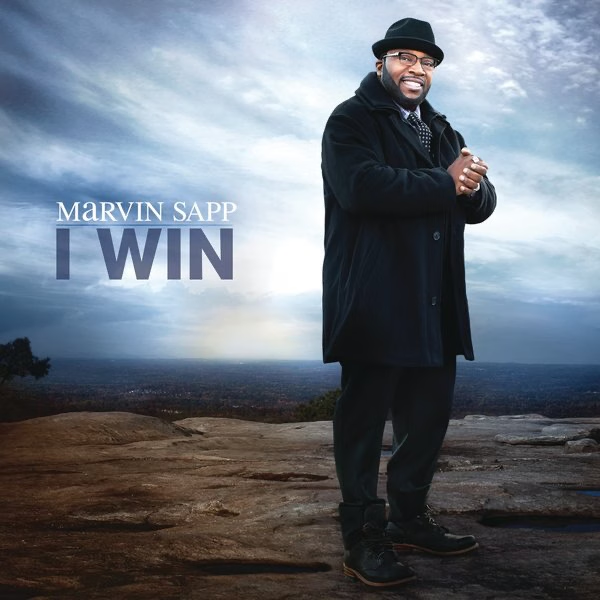
Image Credits

1,414 artist portraits across 5 genres (Rock, Jazz, Soul, Blues, Folk). 1,363 sourced from Wikipedia (Creative Commons / Public Domain), 50 from Deezer (promotional artwork).

Full attribution breakdown →

Marvin Sapp

1967 –

Listen. I need to talk to you about a song that saved lives. Not metaphorically.

0:30
0:30
0:30
0:30

Not in the way people say "this song saved me" about a breakup anthem. I mean people have told Marvin Sapp to his face that "Never Would Have Made It 0:30" kept them from ending their own existence. That is the weight of what this man carries. Born January 28, 1967, Marvin Sapp discovered music in the church and discovered ministry in the choir loft. He was a pastor before he was a recording artist, and that sequence is everything. He did not become a gospel singer because he wanted a career. He became a gospel singer because he had something to say and the sanctuary was too small to hold it.

He walked into a gospel scene that had already been reshaped by Kirk Franklin and Fred Hammond. The boundaries had been pushed. The urban contemporary sound was established. What was left for a new voice to do? Sapp answered by going deeper instead of wider. He recorded with Fred Hammond, with Kirk Franklin, with the generation that came before him. But his own sound was quieter, more intimate, more focused on the individual believer's relationship with God than on the corporate praise experience. The cost of that intimacy was that his songs hit people in private moments -- in cars, in hospital rooms, in the middle of the night when nobody was watching. He became the voice of people who were too tired to shout but still believed.

Marvin Sapp interview 1990

"Never Would Have Made It" was released in 2007 and became the longest-running number one single in the history of the Billboard Gospel chart. The song is a testimony, not a showpiece. Sapp sings about the moments when he wanted to give up, when the pain was too much, when the only thing he had was faith. The track builds slowly, verse by verse, until the bridge releases everything the song has been holding back.

Thirsty (2007)

When Sapp sings "I would have lost my mind, I would have lost my soul" you know he means it, because you have heard the same thing from people in your own life. "The Best in Me" works the same territory -- a song about seeing yourself through God's eyes instead of your own. He did not just write hits. He wrote survival manuals set to music.

Marvin Sapp kept preaching while he was singing. He founded Lighthouse Full Life Center Church in Michigan and pastored it while selling millions of records. The combination is rare -- most artists choose one path. Sapp walked both. He showed that gospel music could be personal without being small, successful without being compromised. "Never Would Have Made It" will be sung in churches for generations, not because it won awards but because it told the truth. The song is a stone. It is permanent. It is the thing people reach for when they have nothing else left. Marvin Sapp gave them that. He gave them a song that would hold them up when they could not stand on their own. That is not a hit. That is a ministry.

Thirsty (2007) Thirsty (2007)
Here I Am (2010) Here I Am (2010)
I Win (2012) I Win (2012)
Marvin Sapp (1995)
Grace and Mercy (1997)
Nothing Else Matters (1999)
Be Exalted (2000)
I Believe (2002)
Diary of a Psalmist (2003)
Thirsty (2007)
Here I Am (2010)
I Win (2012)
Christmas Card (2013)
You Shall Live (2015)
Close (2017)
Chosen Vessel (2020)
Substance (2022)
gospelcontemporary gospel
The Sunday Drop
One song. One story. Every Sunday.

No algorithms. No trending sections. Just a song someone loved and the story behind it. Delivered Sunday morning.

Free. No spam. Unsubscribe anytime.

Image Credits

1,414 artist portraits across 5 genres (Rock, Jazz, Soul, Blues, Folk). 1,363 sourced from Wikipedia (Creative Commons / Public Domain), 50 from Deezer (promotional artwork).

Full attribution breakdown →

0:00
0:00