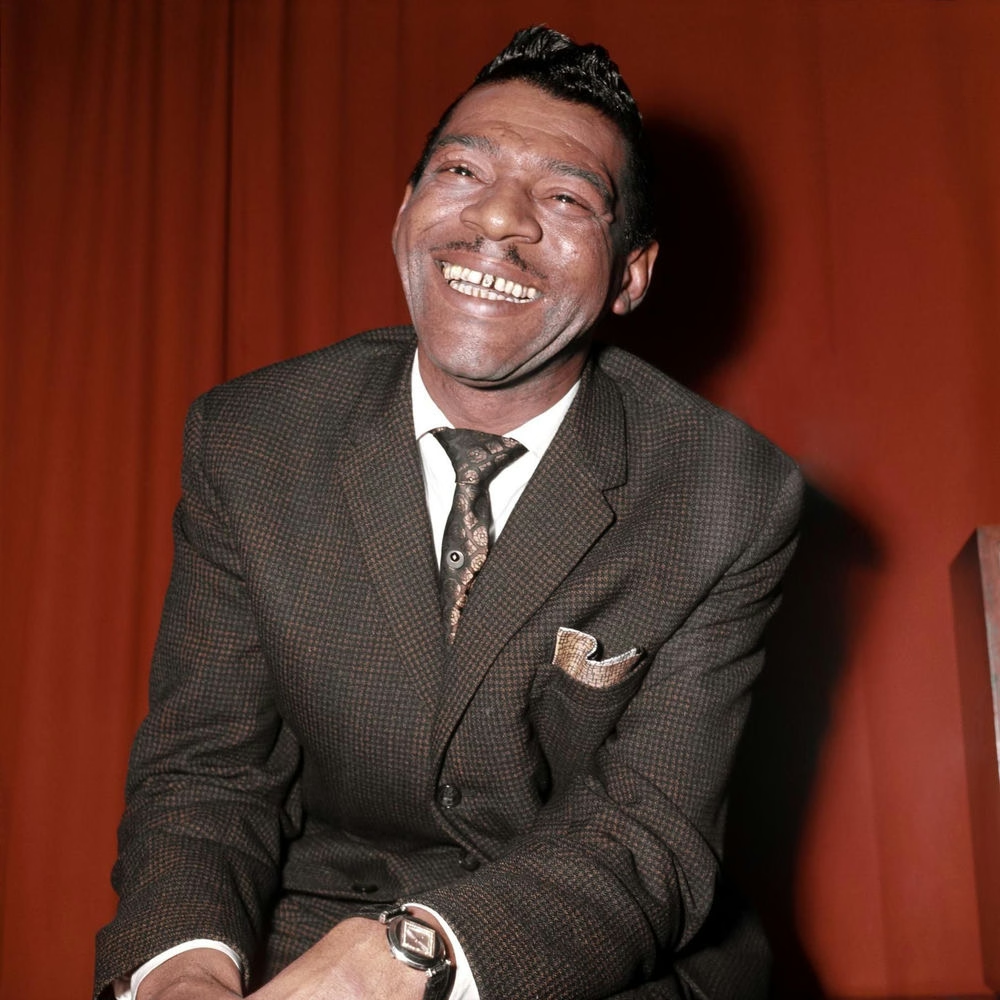
Little Walter
1930 – 1968 (38)
Made the Harmonica Dangerous

The harmonica was never supposed to sound like that. Before Little Walter, it was a toy, a sidepiece, a prop for country singers and street buskers. After him, it was a lead instrument that could wail like a saxophone and bite like a switchblade.

0:30
0:30
0:30
0:30

He was born May 1, 1930 in Marksville, Louisiana and died February 15, 1968. He changed the blues with a piece of metal no bigger than his palm. Nobody saw it coming. Nobody has matched it since.

The cost was a short life paid in full with no change back. Walter learned harp as a child and left home young, busking on street corners for dimes that barely bought a meal. He landed in Chicago as a teenager and fell in with Muddy Waters, playing on the sessions that would define electric blues for the next fifty years. But Walter wanted his own sound. He cupped a microphone and a small amplifier together and made the harmonica scream in ways nobody had heard before. He left Muddy's band in 1952 after "Juke" hit number one on the R&B charts. The money rolled in for a while. Then it rolled out even faster. Walter drank hard, fought harder, and burned through cash like it was kindling. The juke joints paid him and he paid the bar back before the night ended. He never saved a dime. He never planned for a future that he knew would be short.

Little Walter interview 1990

"Juke" was the peak. An instrumental harmonica track that climbed the charts and proved the harp could carry a whole song without a single word. Walter kept cutting classics -- "My Babe," "Blues with a Feeling," "Sad Hours." His tone was fat and round. His phrasing was vocal, bending notes like a singer who had forgotten the words.
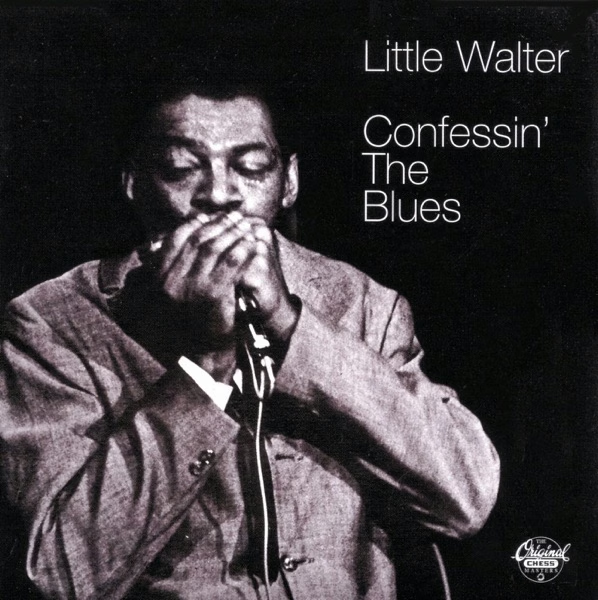
Confessin'The Blues (1996)

His attack was violent when it needed to be and tender when the song demanded it. He played with Howlin' Wolf and Muddy Waters and anyone else who could keep up with his pace. He demanded the spotlight and he earned it every time he put his mouth to the metal. The records from 1952 to 1958 are the graduate course in blues harmonica. Nobody has improved on them since. They remain the standard that every player measures against.

Little Walter died from a fight on the South Side of Chicago. He was 37 years old. He left behind a catalog of records that every blues harp player still studies like scripture. He cost himself longevity with the drinking and the fighting and the refusal to slow down. But he bought immortality with those 37 years. Every wailing harmonica solo you have ever heard in any genre starts with him. Every blues harp player who cups a microphone in both hands is doing his move. That is the cost. That is the payoff. The blues paid him back in the only currency that lasts.
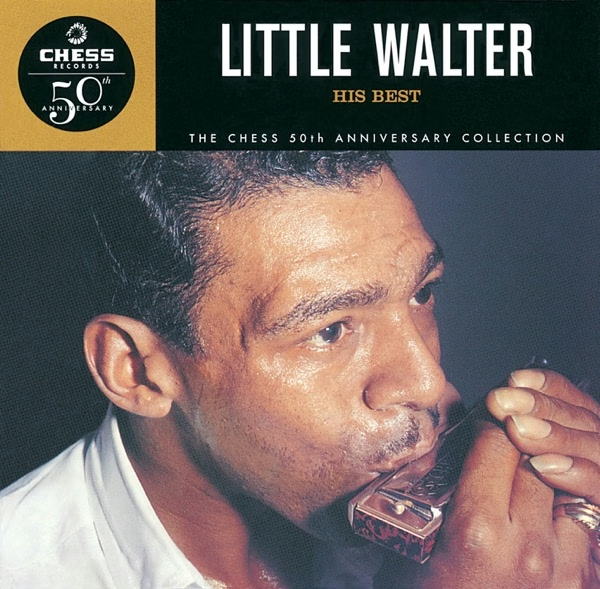
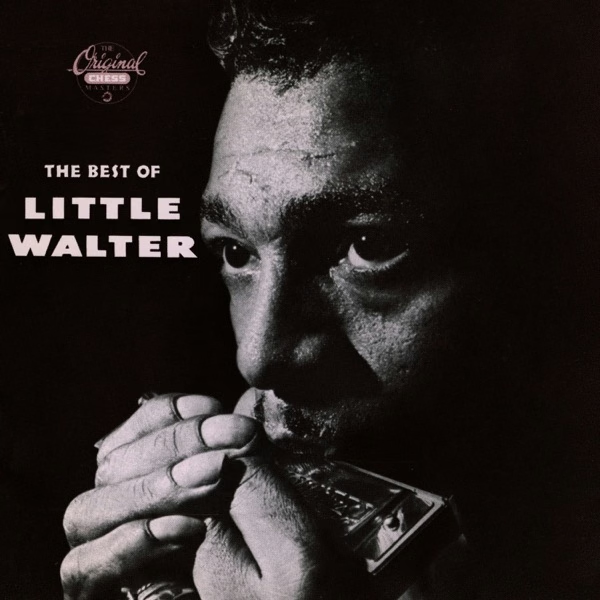
Image Credits

1,414 artist portraits across 5 genres (Rock, Jazz, Soul, Blues, Folk). 1,363 sourced from Wikipedia (Creative Commons / Public Domain), 50 from Deezer (promotional artwork).

Full attribution breakdown →

Little Walter

1930 – 1968 (38)
Made the Harmonica Dangerous

The harmonica was never supposed to sound like that. Before Little Walter, it was a toy, a sidepiece, a prop for country singers and street buskers. After him, it was a lead instrument that could wail like a saxophone and bite like a switchblade.

0:30
0:30
0:30
0:30

He was born May 1, 1930 in Marksville, Louisiana and died February 15, 1968. He changed the blues with a piece of metal no bigger than his palm. Nobody saw it coming. Nobody has matched it since.

The cost was a short life paid in full with no change back. Walter learned harp as a child and left home young, busking on street corners for dimes that barely bought a meal. He landed in Chicago as a teenager and fell in with Muddy Waters, playing on the sessions that would define electric blues for the next fifty years. But Walter wanted his own sound. He cupped a microphone and a small amplifier together and made the harmonica scream in ways nobody had heard before. He left Muddy's band in 1952 after "Juke" hit number one on the R&B charts. The money rolled in for a while. Then it rolled out even faster. Walter drank hard, fought harder, and burned through cash like it was kindling. The juke joints paid him and he paid the bar back before the night ended. He never saved a dime. He never planned for a future that he knew would be short.

Little Walter interview 1990

"Juke" was the peak. An instrumental harmonica track that climbed the charts and proved the harp could carry a whole song without a single word. Walter kept cutting classics -- "My Babe," "Blues with a Feeling," "Sad Hours." His tone was fat and round. His phrasing was vocal, bending notes like a singer who had forgotten the words.

Confessin'The Blues (1996)

His attack was violent when it needed to be and tender when the song demanded it. He played with Howlin' Wolf and Muddy Waters and anyone else who could keep up with his pace. He demanded the spotlight and he earned it every time he put his mouth to the metal. The records from 1952 to 1958 are the graduate course in blues harmonica. Nobody has improved on them since. They remain the standard that every player measures against.

Little Walter died from a fight on the South Side of Chicago. He was 37 years old. He left behind a catalog of records that every blues harp player still studies like scripture. He cost himself longevity with the drinking and the fighting and the refusal to slow down. But he bought immortality with those 37 years. Every wailing harmonica solo you have ever heard in any genre starts with him. Every blues harp player who cups a microphone in both hands is doing his move. That is the cost. That is the payoff. The blues paid him back in the only currency that lasts.
Confessin'The Blues (1996) Confessin'The Blues (1996)
His Best The Chess 50Th Anniversary Collection (1997) His Best The Chess 50Th Anniversary Collection (1997)
The Best Of Little Walter (1957) The Best Of Little Walter (1957)
Super Blues (1967)
Boss Blues Harmonica (1972)
Southern Feeling (1978)
My Babe (1991)
Blues With a Feeling (1991)
Juke (2007)
Windy City Blues
Confessin'The Blues (1996)
His Best The Chess 50Th Anniversary Collection (1997)
The Best Of Little Walter (1957)
blueschicago blues
The Sunday Drop
One song. One story. Every Sunday.

No algorithms. No trending sections. Just a song someone loved and the story behind it. Delivered Sunday morning.

Free. No spam. Unsubscribe anytime.

Image Credits

1,414 artist portraits across 5 genres (Rock, Jazz, Soul, Blues, Folk). 1,363 sourced from Wikipedia (Creative Commons / Public Domain), 50 from Deezer (promotional artwork).

Full attribution breakdown →

0:00
0:00