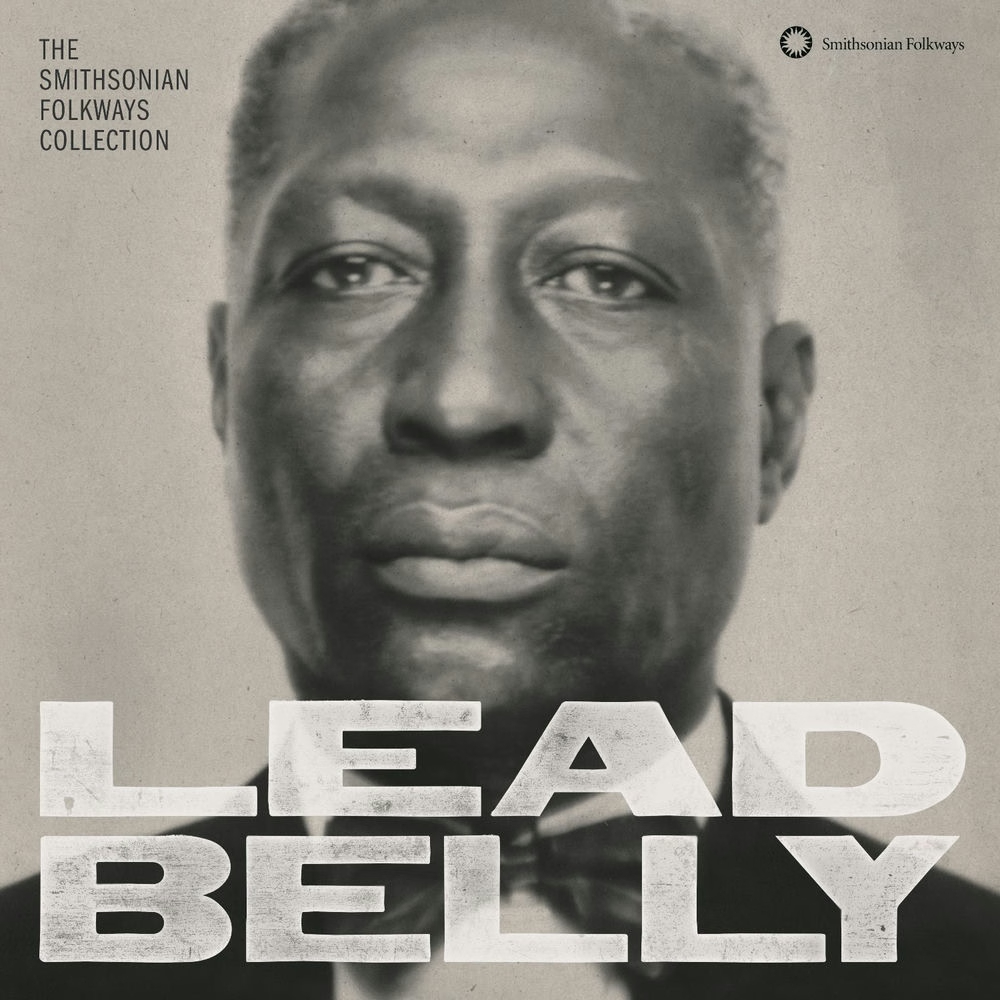
Lead Belly
1888 – 1949 (61)
The Man Who Sang His Way Out of Prison

A 12-string guitar that sounded like a full band and a voice that could holler across a prison yard. Lead Belly -- sang songs older than the records that captured them. He carried the folk music of Black America in his hands and his throat.

0:30
0:30
0:30
0:30

He died December 6, 1949, but the songs kept walking long after he stopped. He was a walking archive before anyone thought to call it preservation. He carried the music of the fields and the chain gangs and the church pews all in one body.

The cost of Lead Belly's life was written in prison sentences. He did time in Texas for murder. He did time in Louisiana for assault. Each stretch cost him years of freedom. Each stretch also gave him songs. He learned guitar from Blind Lemon Jefferson, one of the greats of early blues. He learned work songs from chain gangs, field hollers from men who would never leave the walls. John and Alan Lomax found him at Angola Penitentiary in 1933 and recorded him for the Library of Congress. That recording got him parole. The Lomaxes brought him North, put him on stage, dressed him in convict stripes for white audiences who wanted the exotic danger. The money came slow. The dignity cost extra. He played for whatever they paid and smiled through the humiliation because the alternative was silence and silence meant the songs died with him.

Lead Belly interview 1990

But what Lead Belly left in the wax is sacred ground. "Goodnight, Irene" became a hit for The Weavers a year after his death and remains a standard. He wrote and collected hundreds of songs -- "Midnight Special," "Cotton Fields," "Rock Island Line" among them. His 12-string playing was percussive and driving and full of a joy that the circumstances of his life never justified.
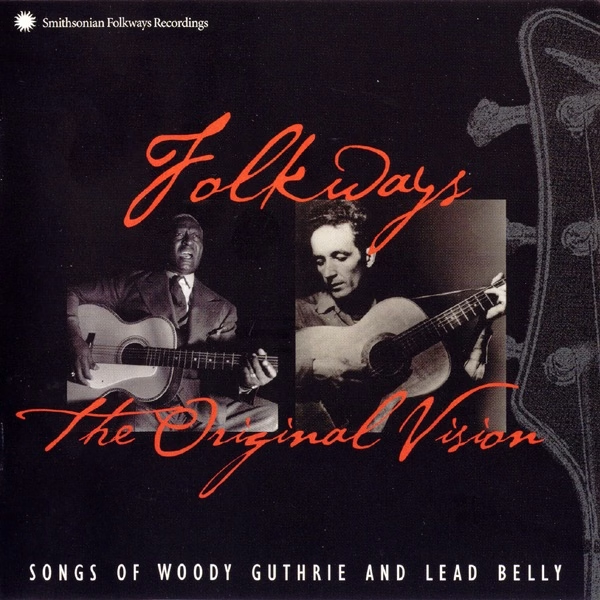
Folkways The Original Vision (1989)

He sang with a smile that made you believe the worst was already behind you. He recorded for folklorists and commercial labels and anyone who would sit still long enough to listen. He never got rich. He never got famous in his lifetime the way he should have been. But the Lomax recordings preserved a tradition that might have died with the generation that sang it in the fields. Those discs are the only reason we still know those songs.

Lead Belly paid for the preservation of American folk music with his own freedom. Every campfire singalong, every folk revival, every guitarist who picks up a 12-string owes him a debt that can never be repaid. He died broke. He died happy. He died knowing he sang the truth into the grooves of those Library of Congress discs. That is more than most people get. That is the whole damn inheritance. The songs outlasted the prison walls. They always do.
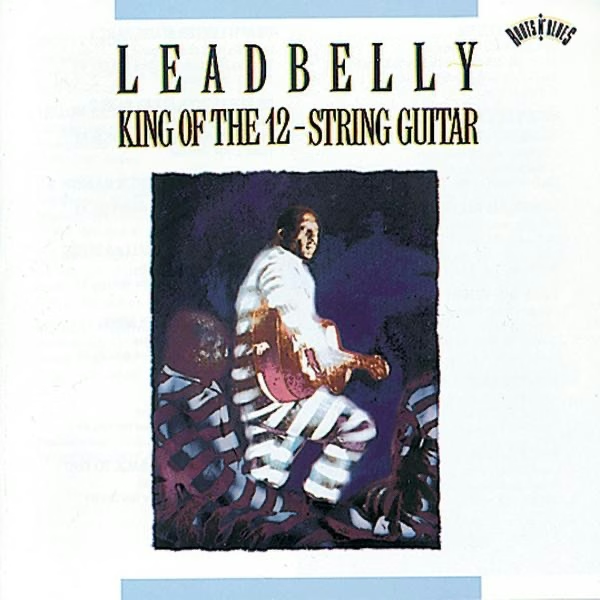
Image Credits

1,414 artist portraits across 5 genres (Rock, Jazz, Soul, Blues, Folk). 1,363 sourced from Wikipedia (Creative Commons / Public Domain), 50 from Deezer (promotional artwork).

Full attribution breakdown →

Lead Belly

1888 – 1949 (61)
The Man Who Sang His Way Out of Prison

A 12-string guitar that sounded like a full band and a voice that could holler across a prison yard. Lead Belly -- sang songs older than the records that captured them. He carried the folk music of Black America in his hands and his throat.

0:30
0:30
0:30
0:30

He died December 6, 1949, but the songs kept walking long after he stopped. He was a walking archive before anyone thought to call it preservation. He carried the music of the fields and the chain gangs and the church pews all in one body.

The cost of Lead Belly's life was written in prison sentences. He did time in Texas for murder. He did time in Louisiana for assault. Each stretch cost him years of freedom. Each stretch also gave him songs. He learned guitar from Blind Lemon Jefferson, one of the greats of early blues. He learned work songs from chain gangs, field hollers from men who would never leave the walls. John and Alan Lomax found him at Angola Penitentiary in 1933 and recorded him for the Library of Congress. That recording got him parole. The Lomaxes brought him North, put him on stage, dressed him in convict stripes for white audiences who wanted the exotic danger. The money came slow. The dignity cost extra. He played for whatever they paid and smiled through the humiliation because the alternative was silence and silence meant the songs died with him.

Lead Belly interview 1990

But what Lead Belly left in the wax is sacred ground. "Goodnight, Irene" became a hit for The Weavers a year after his death and remains a standard. He wrote and collected hundreds of songs -- "Midnight Special," "Cotton Fields," "Rock Island Line" among them. His 12-string playing was percussive and driving and full of a joy that the circumstances of his life never justified.

Folkways The Original Vision (1989)

He sang with a smile that made you believe the worst was already behind you. He recorded for folklorists and commercial labels and anyone who would sit still long enough to listen. He never got rich. He never got famous in his lifetime the way he should have been. But the Lomax recordings preserved a tradition that might have died with the generation that sang it in the fields. Those discs are the only reason we still know those songs.

Lead Belly paid for the preservation of American folk music with his own freedom. Every campfire singalong, every folk revival, every guitarist who picks up a 12-string owes him a debt that can never be repaid. He died broke. He died happy. He died knowing he sang the truth into the grooves of those Library of Congress discs. That is more than most people get. That is the whole damn inheritance. The songs outlasted the prison walls. They always do.

Folkways The Original Vision (1989) Folkways The Original Vision (1989)
King Of The 12 String Guitar (1991) King Of The 12 String Guitar (1991)
Lead Belly The Smithsonian Folkways Collection (2015) Lead Belly The Smithsonian Folkways Collection (2015)
Negro Sinful Songs (1939)
The Midnight Special (1940)
Songs by Lead Belly (1943)
Negroe Folksongs Sung by Lead Belly (1946)
Midnight Special (1947)
Easy Rider: Leadbelly Legacy Volume Four (1953)
Take This Hammer (1965)
Leadbelly (1973)
Goodnight Irene (2008)
The Essential Recordings (2018)
Masterworks
Sings Folk Songs
Negro Folk Songs For Young People
Classics in Jazz
Folkways The Original Vision (1989)
King Of The 12 String Guitar (1991)
Lead Belly The Smithsonian Folkways Collection (2015)
bluesfolk
The Sunday Drop
One song. One story. Every Sunday.

No algorithms. No trending sections. Just a song someone loved and the story behind it. Delivered Sunday morning.

Free. No spam. Unsubscribe anytime.

Image Credits

1,414 artist portraits across 5 genres (Rock, Jazz, Soul, Blues, Folk). 1,363 sourced from Wikipedia (Creative Commons / Public Domain), 50 from Deezer (promotional artwork).

Full attribution breakdown →

0:00
0:00